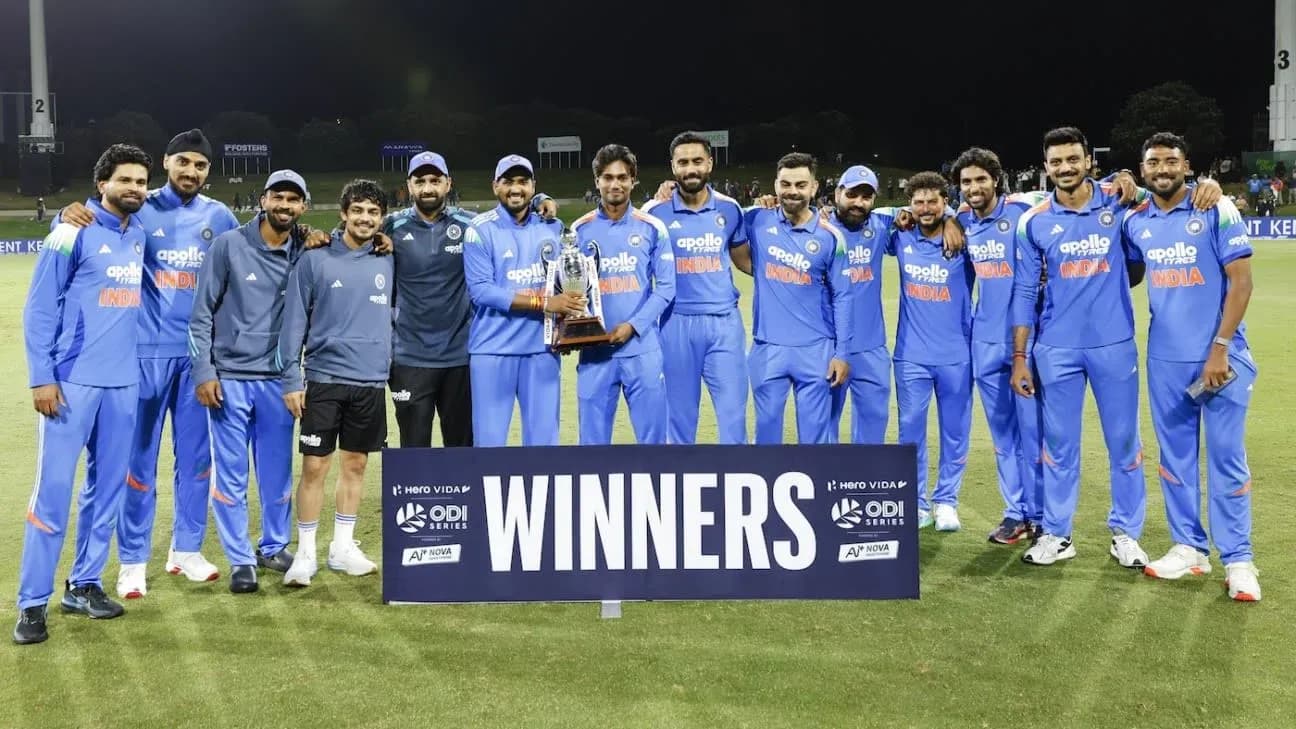
Under the Mount Maunganui lights, with both squads stripped of their biggest names and the series still on the line, India found something they had been missing all tour: nerve with the bat, and ruthlessness with the ball.
A scratchy 209 might not sound like a statement. By the end of the night, it was more than enough. India bowled New Zealand out for 187 to clinch a 22‑run win and with it their first away ODI series triumph under Gautam Gambhir.
Tail-end blows that changed the mood
For most of the afternoon, India’s innings looked stuck in second gear. The ball held in the surface, edges ballooned to close catchers, and yet again the top order misfired.
Rohit Sharma’s tour ended with a whimper, not a roar: 30 runs in four innings, two ducks, and here, a soft dismissal after a seemingly comfortable opening stand of 23. Virat Kohli, the only Indian to pass fifty in the series, fell to the pitch’s sponginess too, top‑edging a cut to give Matt Fisher his second wicket.
Ruturaj Gaikwad was beaten by movement, inside‑edging Jacob Duffy onto his stumps. At 34 for 3 in the ninth over, India were already in survival mode.
So they turned to their problem-solver. Again.
Axar Patel, promoted to No. 5, walked into the kind of situation he has come to own in white-ball cricket. He might not have survived another day: two tough chances went down when he was on 0 and 3. Once he settled, though, he gave India the spine they desperately needed, 46 off 55 balls that felt heavier than the numbers suggest.
He outlasted Shreyas Iyer, who succumbed yet again to the short ball, leaving India 86 for 4 in the 18th over. He negotiated Michael Bracewell’s clever offspin on a holding surface. He watched the ball grip, stop, and occasionally misbehave, and still found ways to push India forward.
New Zealand responded smartly. With two left-handers in, Bracewell tied one end down, using the pitch as his ally. When Axar finally miscued to short straight midwicket, his job was done, but India were still miles from safety.
Mitchell Santner delayed his own introduction until he had a right-hander to work with. It looked a curious call at first; then his guile took over. His changes of pace and angles opened up India’s lower order as he removed Naman Dhir and two bowlers, turning 150‑ish into a real possibility.
That left Ishan Kishan with a long road and not much company. He didn’t quite farm the strike, but he did what India needed: he took Duffy on, launched two sixes, and carved out a gritty 46 that dragged India towards something defendable.
Still, 200 looked a stretch.
That’s when the fast bowlers decided they weren’t done.
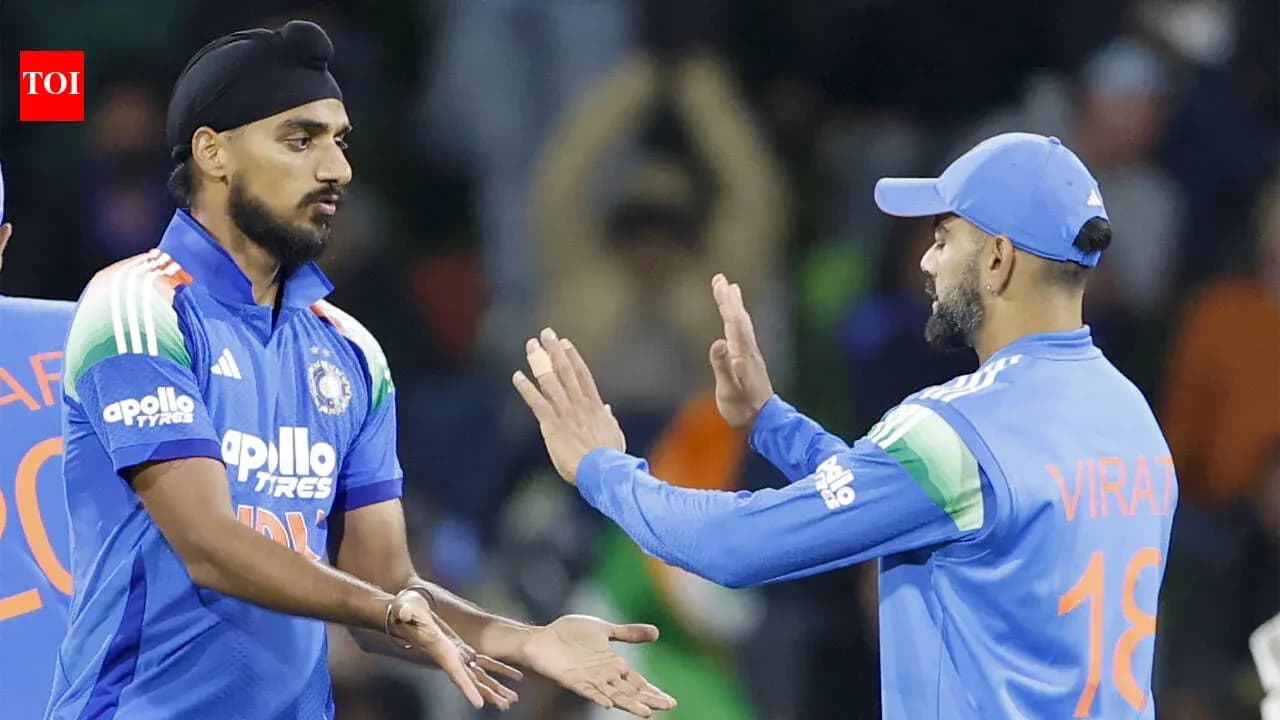
Arshdeep Singh and Mohammed Siraj, in what felt like a defiant little partnership, smashed a pair of 14s. Three sixes, two fours, and a complete rewrite of Duffy and Santner’s figures in the space of a few overs. Only a clever slower ball from Duffy, clipping the top of Arshdeep’s off stump, stopped the late‑order charge.
India finished on 209. In conditions that demanded more, New Zealand walked off believing they had the upper hand.
They were wrong.
New ball, new script
New Zealand had finally won a toss in this series and backed themselves to bat first under lights, wary of dew. The gamble flipped on them. The feared moisture never really arrived. The seam movement did.
When Arshdeep’s second over went for two fours and he was taken off, those tail-end runs felt like a footnote. The game seemed to be tilting towards the hosts.
Then the sun dipped properly, and the ball woke up.
Siraj struck first, and against the run of play too, much like India’s first wicket earlier in the day. Tim Seifert, eager to break free, slogged a length ball straight to mid-on. The dismissal opened a door India never let New Zealand close again.
Shreyas Iyer captained with intent. He kept rotating his quicks, refused to let the batters settle, and leaned hard on his seamers in conditions that finally resembled the nightmare India had endured when they were bowled out for 89 under lights earlier in the series.
Arshdeep returned for a second spell that defined the night: 6 overs, 1 maiden, 17 runs, 2 wickets. Mostly good length, just enough nip, and a bouncer that removed Will Young, one of four New Zealand batters to fall to the short ball.
The real theatre came from around the wicket. Arshdeep angled the ball in, then seamed it away, making life miserable for the right-handers. Dean Foxcroft was put down early at second slip, but Arshdeep found some compensation when a bottom-edged cut brought the wicket of Nick Kelly.
Iyer sensed blood and threw the ball back to Siraj. The response was brutal: a wobble-seam delivery that nipped in and sent Finn Allen’s off stump cartwheeling. New Zealand slid to 87 for 4, India’s quicks had their tails up, and yet there was a catch — both frontline pacers had already bowled eight overs each inside 24.
The door was open. The game was not yet done.
Debut nerves, diving stops, and a bouncer that turned the tide
With Arshdeep and Siraj held back for the death, the responsibility shifted to Yash Thakur on debut and Auqib Nabi, playing only his sixth ODI.
This was the phase when New Zealand finally found the middle of the bat. Foxcroft and Bracewell began to steady the chase against the second string. Singles turned into twos. The crowd found its voice again.
Axar, though, refused to let the game drift. Stationed at backward point, he flung himself around to save 11 runs off Foxcroft alone, tiny interventions that grew in significance as the chase tightened.
At 119 for 5, Nabi landed the punch India needed. A sharp bouncer forced Bracewell into the hook, only for him to pick out deep midwicket. One over later, Thakur, bowling with hostility as the tall replacement for Gurnoor Brar, had Foxcroft dragging a pull onto his stumps at the same score.
Thakur’s night wasn’t spotless — three no-balls for clipping the non-striker’s bail with his leg — but crucially, none of the resulting free hits went to the boundary. His 48th over cost just five runs. On a debut, with a series on the line, that matters.
Still, New Zealand weren’t done yet.
Santner fights, India hold their nerve
Santner, whose top hand Arshdeep had bruised with a fierce bouncer in his ninth over, decided to hit back the only way he knows: by counterattacking. Alongside Kristian Clarke, he added 39 for the seventh wicket, the stand that suddenly made 209 look small again.
This was the longest India had waited to introduce spin in an ODI since Auckland in 2003. When Axar finally came on, Santner went after him, reversing the pressure that India’s quicks had built. For a few overs, it felt like the series was slipping.
Naman Dhir changed that with one ball.
Called upon as a part-time option, Dhir delivered the kind of golden-arm strike captains dream of. He cramped Santner for room on the sling sweep. The shot was timed, but the lack of elevation did him in. New Zealand’s most composed batter in the chase was gone, and with him a large slice of their belief.
Iyer had held one Arshdeep over back for precisely this scenario. The left-armer came on and finally produced the wicket he had been setting Clarke up for all night: from around the wicket, angling in, seaming away, kissing the edge, and carrying to the cordon.
With Clarke gone, nine, ten and jack needed 49. New Zealand needed luck, panic, or poor captaincy from India. They got none.
Siraj and Thakur tightened the screws in their final overs. Axar, back in the game after his earlier punishment from Santner, cashed in on the pressure to clean up the tail. The last wicket fell to him, fittingly, the allrounder who had top-scored with the bat and thrown himself around in the field now closing the contest with the ball.
New Zealand, unbeaten in home ODI series for seven years, had finally been cracked again — by the same team that last beat them in their own backyard.
India did it without a single batter crossing 100 runs for the series. They did it with a patched-up XI, a debutant quick, a sixth‑game seamer, and a captain willing to back his fast bowlers deep into the night.
For Gambhir, it goes down as a first away ODI series win as India coach. For this group, it feels like something more: proof that in tough conditions, on difficult pitches, they can still find a way to win when the lights come on and the ball starts to talk.