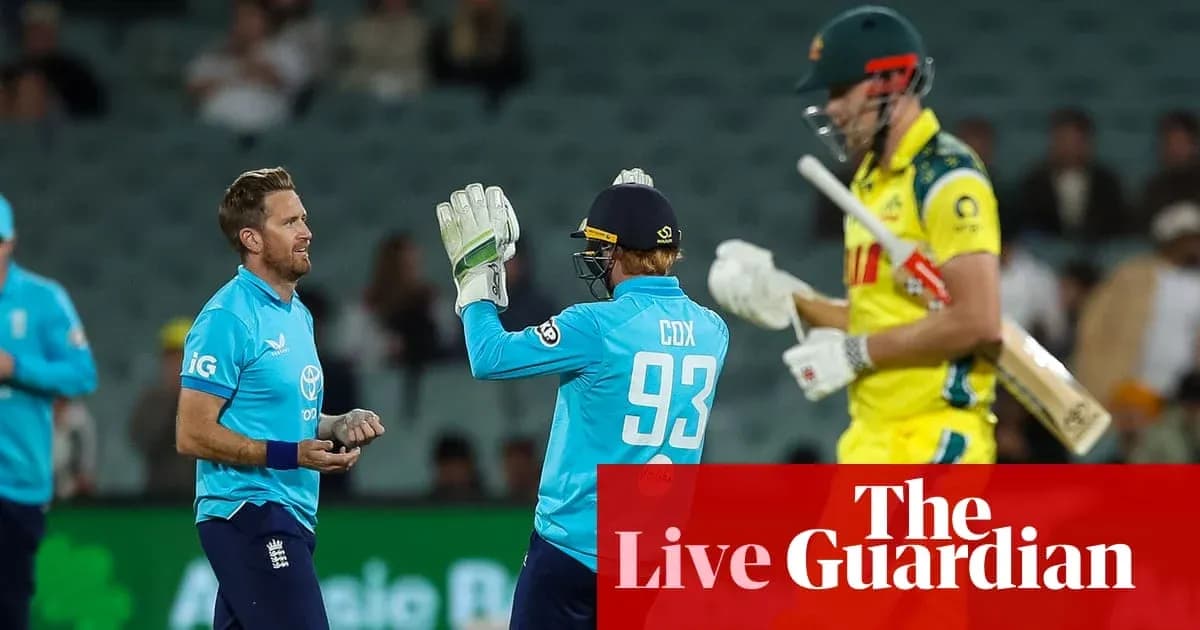
In Adelaide, the England one-day side that nobody can quite pin down finally chose a personality: brutal, bold and, for once, utterly ruthless.
Two days after being skittled for 131 in Perth, they piled up 355-6 – their highest ODI total in Australia – then ripped through the hosts for 220 to seal a 135-run win and drag this series to a decider in Hobart.
Same players, same shirts. Completely different team.
Banton seizes his moment
Tom Banton has been hovering on the fringes of England’s white-ball plans for long enough. In Adelaide he walked in like a man determined not to leave.
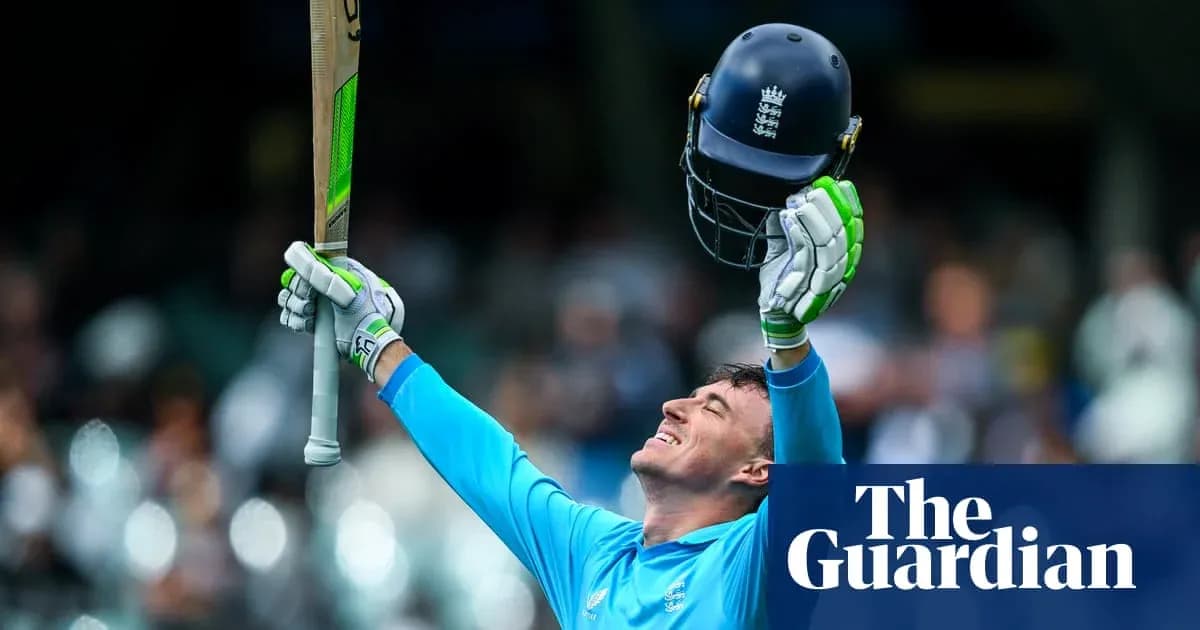
Given his chance at the top because of Jacob Bethell’s knee injury, the 28-year-old produced a commanding 121, his second ODI hundred in just nine innings as opener. Four fifties, two tons. That’s not a cameo run; that’s a claim on the spot.
He survived an early jolt – a blow on the helmet from left-armer Spencer Johnson on 10 – then went after Adelaide’s short square boundaries with a vicious, repeatable pull shot. Australia knew it was coming. They still couldn’t stop it.
After Ben Duckett slashed to point for nine, the scars of Perth were fresh. England needed calm as much as aggression. Banton found both, knitting a 137-run stand with Joe Root, who stroked a composed 62 and quietly reset the innings.
The hundred itself felt inevitable long before he reached it. Banton dictated tempo, picked his bowlers and forced Australia to retreat into damage limitation. When he finally holed out to deep square leg, again looking for the pull, he had already broken the game open.
By then, the platform was built. Others just had to jump off it.
Cox and Jacks light the afterburners
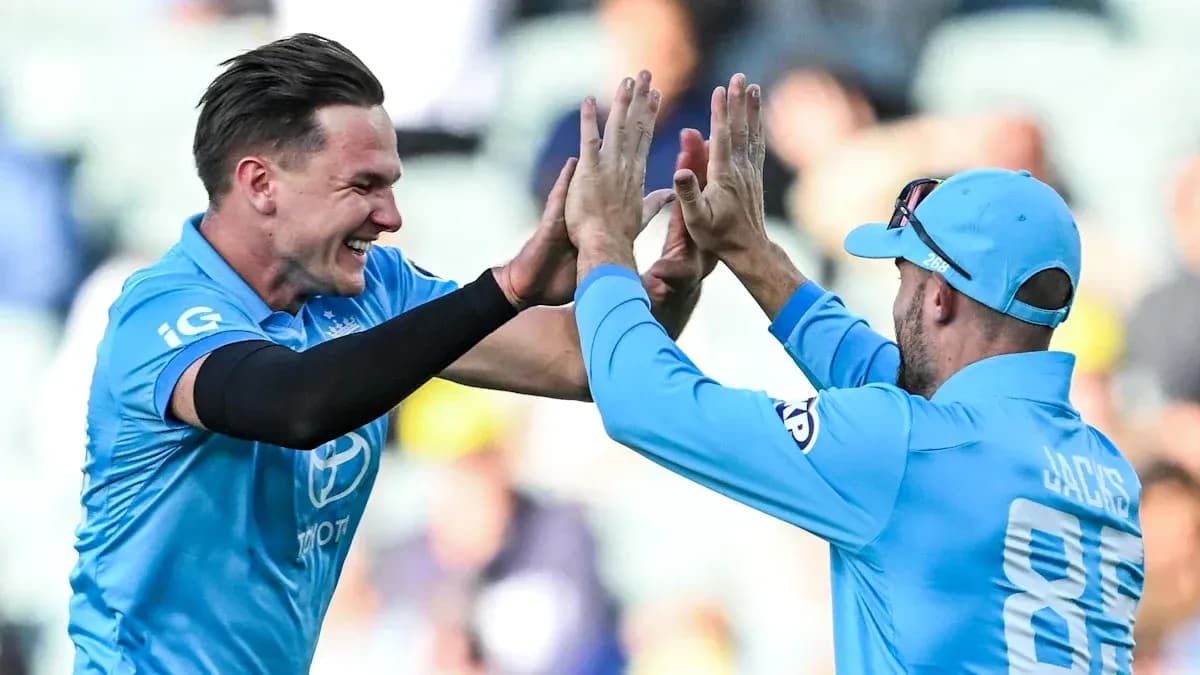
If Banton set the tone, Jordan Cox and Will Jacks turned a strong score into a demoralising one.
Cox arrived after captain Harry Brook, on five, chopped the ball onto his stumps attempting a ramp. England were 3-down with work still to do. Cox didn’t flinch.
He unleashed 67 from 49 balls, a busy, inventive innings that kept the scoreboard rattling. Drives, cuts, scoops, pulls – Cox raided every corner of the ground. One moment summed him up: a brazen reverse scoop for four off Xavier Bartlett, a shot that would have looked ridiculous had he mistimed it. He didn’t.
At the other end Jacks, 54 not out, played the perfect foil. Initially, he and Cox ticked along at a run a ball, nudging England to 245-4 after 40 overs. From there, they tore into the final 10, plundering 110 runs and leaving Australia gasping.
With Mahli Beardman – the match-winner from the first ODI – rested, Australia’s attack never quite found a grip. England, who have so often drifted in the middle overs recently, did the opposite: they squeezed, then sprinted.
For Cox, standing in for Jos Buttler and short of scores, this was timely. He has one more outing in this series to strengthen his case, and perhaps more in January against South Africa if Buttler is not ready. Perform like this again and the conversation changes quickly.
New-ball bite at last
If England’s batting was a statement, the opening burst with the ball was a roar.
This is a side that failed to defend 430 against Sri Lanka last month and then watched Pakistan’s last pair steal an absurd chase. New-ball penetration has been a nagging flaw. In Adelaide, Sonny Baker and Gus Atkinson went straight at it.
Baker, brought in for Jamie Overton specifically to fix that early-overs problem, found sharp swing and immediate rhythm. He removed Australia captain Mitchell Marsh for two, Joe Root flinging himself high at slip to cling on. It was the sort of early strike England have been crying out for.
Atkinson attacked from the other end with skiddy nip and relentless discipline. He nicked off Travis Head for seven – the second match in a row he has dismissed the left-hander – and then had both Cooper Connolly and Josh Inglis caught behind. By the time he was done, he held career-best figures of 4-28, a return that finally matched the quality of his recent, often unrewarded spells.
Australia were 29-4 inside seven overs. The contest, in truth, was already leaning heavily one way.
Imperfect, but irresistible
England did not get everything right. They shelled four catches, allowing Inglis, Matt Renshaw and Cameron Green to stretch the inevitable. Renshaw’s 63 and Green’s 64 gave the scoreline a little weight, but never seriously threatened the result.
Even the errors, though, came wrapped in positives. Green’s dismissal summed up England’s night: stumped in bizarre fashion when the ball ricocheted off Cox’s shin and onto the stumps, a slice of fortune that tends to follow sides playing on the front foot.
Sam Curran, under scrutiny after a poor run, closed the innings with a flourish, taking two wickets in two balls and bowling Jack Edwards with his trademark moon ball. Liam Dawson, preferred again to Adil Rashid, delivered 2-41 and tightened the screws through the middle overs.
Australia were all out for 220 in 44.3 overs. The margin – 135 runs – felt about right.
This result snapped a seven-match losing streak against Australia in Adelaide across formats and ended a run of six straight away defeats to them in 50-over cricket. More than that, it eased some of the tension created by those damaging losses to Sri Lanka, Pakistan and Australia over the past month.
Which England turns up next?
So where does that leave this baffling, exhilarating side?
Before the collapses in Rawalpindi, Lahore and Perth, England had quietly won three ODI series this year. Now, with the World Cup on the horizon, they look like a team capable of thrashing Australia one day and unravelling against anyone the next.
Banton’s emergence as a serious opening option, Cox’s reminder of his range, Atkinson and Baker’s new-ball bite – these are the kind of performances that suggest England can be a genuine force next year. They just need more of them. A lot more.
For now, the series stands at 1-1. Hobart waits on Wednesday.
Will the real England show up again?