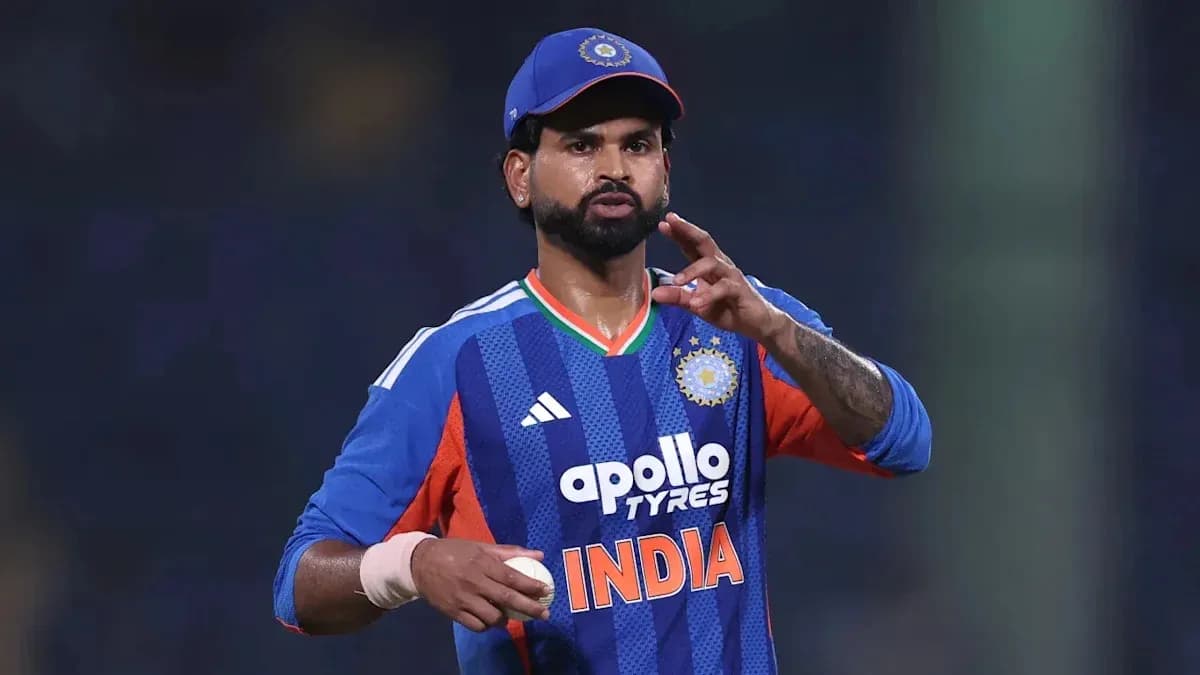
On a warm Delhi evening, under hazy lights and a full house at Arun Jaitley Stadium, India turned a dead rubber into a demolition job. A 3-0 whitewash over Afghanistan, sealed by 127 runs, felt less like a routine finish and more like a statement.
At the heart of it stood Abhishek Sharma, rewriting the tempo of a T20I innings.
A 30-Ball Hundred That Shook the Powerplay
Afghanistan won the toss and sent India in. It looked like the sensible call. It quickly looked like a mistake.
Abhishek walked out with Sanju Samson and tore into the new ball with a ferocity that stunned the visitors. By the end of the powerplay, the scoreboard read 100 without loss. Abhishek alone had raced to a 16-ball fifty, striking at a scarcely believable 345.45, peppering the boundary with 8 fours and 7 sixes.
Ibrahim Zadran turned to experience to halt the storm. Mohammad Nabi, the veteran off-spinner, was thrown the ball as a tactical antidote to the left-hander. The over turned into a car crash. Abhishek dismantled him for 29 runs, dragging the fielders into irrelevance as the ball kept disappearing into the stands.
He didn’t stop there. The assault spilled into the middle overs. Abhishek surged to a 30-ball hundred, finishing with 108, laced with 9 fours and 10 sixes. It was not just a big score; it was a brutal redefinition of what a powerplay platform can look like in international cricket.
Only Rashid Khan managed to apply a brake. He drew an edge from Abhishek on 108, Rahmanullah Gurbaz completing the catch in the 10th over to finally end the carnage.
Samson Steadies, Afghanistan Claw Back Late
With the tone set at 100/0 inside six overs and then 155/2 after 12, India seemed on track for something monstrous, perhaps 240 or more. Abhishek gone, the innings needed a different kind of hand.
Sanju Samson provided it.
Having walked into this series under scrutiny after a low score in the opener, Samson had already answered some questions with a blistering 57 in the second T20I. Here, he settled in again, steering the innings as wickets began to fall around him. He moved to 44* off 31 by the 12-over mark, rotating strike, picking gaps, and allowing the chaos of the powerplay to mature into a platform.
Afghanistan, though, refused to fold entirely. Azmatullah Omarzai broke through, first removing Samson for a well-crafted 50 and then cutting short Shivam Dube’s stay for 14. That double strike, across 15 deliveries, checked India’s charge and held them to just 36 runs in a four-over stretch, dragging the run rate back under 12 an over.
From 191/4 after 16 overs, India looked poised to launch again. Instead, the Afghan seamers finally nailed their skills at the death. Abdollah Ahmadzai, in particular, found his yorkers and wide lines under pressure. India managed only two boundaries in the last four overs, finishing on 221/7 when 240 had seemed within reach. Ahmadzai’s spell – just 38 runs conceded and the wicket of Nitish Kumar Reddy – stood out as a rare bright spot in a long, punishing evening for Afghanistan.
Axar, Bumrah and Bishnoi Rip the Top Order
A target of 222 against this Indian attack demanded something extraordinary. Afghanistan never came close.
Axar Patel struck the first heavy blows. He uprooted Rahmanullah Gurbaz for 15, then had Sediqullah Atal caught by Abhishek Sharma in the same over. Any early rhythm Afghanistan hoped for disappeared with those two wickets.
Jasprit Bumrah then turned pressure into panic. In the fifth over, he cleaned up Darwish Rasooli for a golden duck, the ball slicing through defenses with surgical precision. At the other end, Yash Thakur ensured the captain’s cameo didn’t turn into something more serious, removing Ibrahim Zadran for a brisk 25 off 16 as Ishan Kishan held on to the catch.
From 51/4 after six overs, the chase already looked doomed. It soon turned into a collapse.
Nitish Kumar Reddy’s Over of Ruin
There was a brief pause in the slide. Noor ul Rahman and Azmatullah Omarzai cobbled together 23 runs, nudging and counterpunching just enough to stall India’s surge. Ravi Bishnoi ended that partnership in the ninth over, having Noor caught by Nitish Kumar Reddy for 11.
Axar and Bishnoi then tightened the screws, operating in tandem and conceding just 31 runs across a six-over block. Boundaries dried up. So did hope.
Then came the over that ended the contest in brutal fashion.
Brought back in the 12th, Nitish Kumar Reddy produced a devastating spell of seam bowling that ripped through the lower order. First ball: Mohammad Nabi, gone for 8, his stumps disturbed. Two balls later: Omarzai, Afghanistan’s top-scorer with 17, followed him back. A few deliveries on, Mujeeb Ur Rahman’s stumps lay rattled as well.
Three wickets, one run. From 81/5 to 82/8 in the space of five balls. Any lingering mathematical possibility of a chase vanished in that single over.
The Finish and the Statement
From there, it was a formality. The Indian bowlers closed in, the fielders circled, and Afghanistan’s innings ended with a whimper at 94 all out in 14.1 overs. The 127-run margin underlined the gulf on the night: in power, in control, in composure.
Abhishek Sharma, unsurprisingly, took Player of the Match honours for his 108 off 30 balls, an innings that will sit high on the list of India’s most destructive T20I knocks. Around him, Samson’s fifty, Axar’s early strikes, Bumrah’s incision, Bishnoi’s squeeze, and Nitish Kumar Reddy’s game-breaking over all fed into a performance that looked less like experimentation and more like a squad finding depth and clarity.
India came into this final T20I with the series already secured and rotation on the agenda. They walk away not just with a 3-0 sweep, but with fresh evidence that their next wave of talent can dominate, not merely fill in.
For Afghanistan, the evening exposed familiar issues: overreliance on Rashid and Nabi, inconsistency with the new ball, and a batting order that too often crumbles under sustained pressure.
For India, it posed a sharper question for the months ahead: when performances like Abhishek’s and Samson’s keep stacking up, how do you fit all this firepower into one XI when the big tournaments arrive?