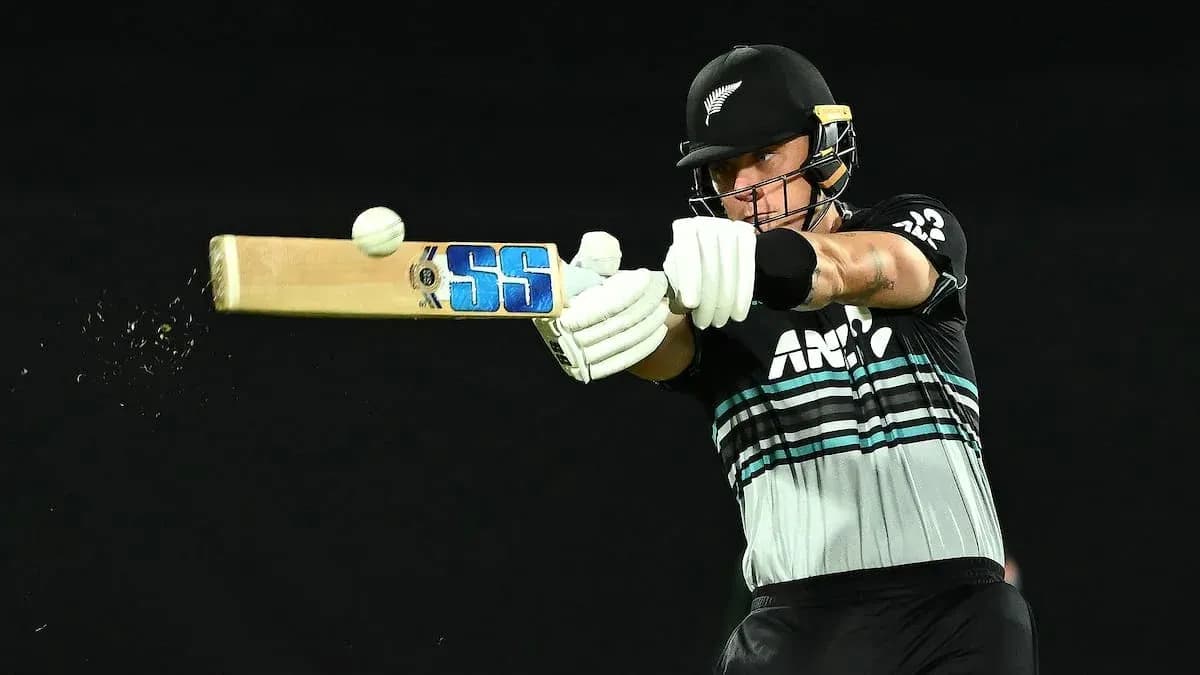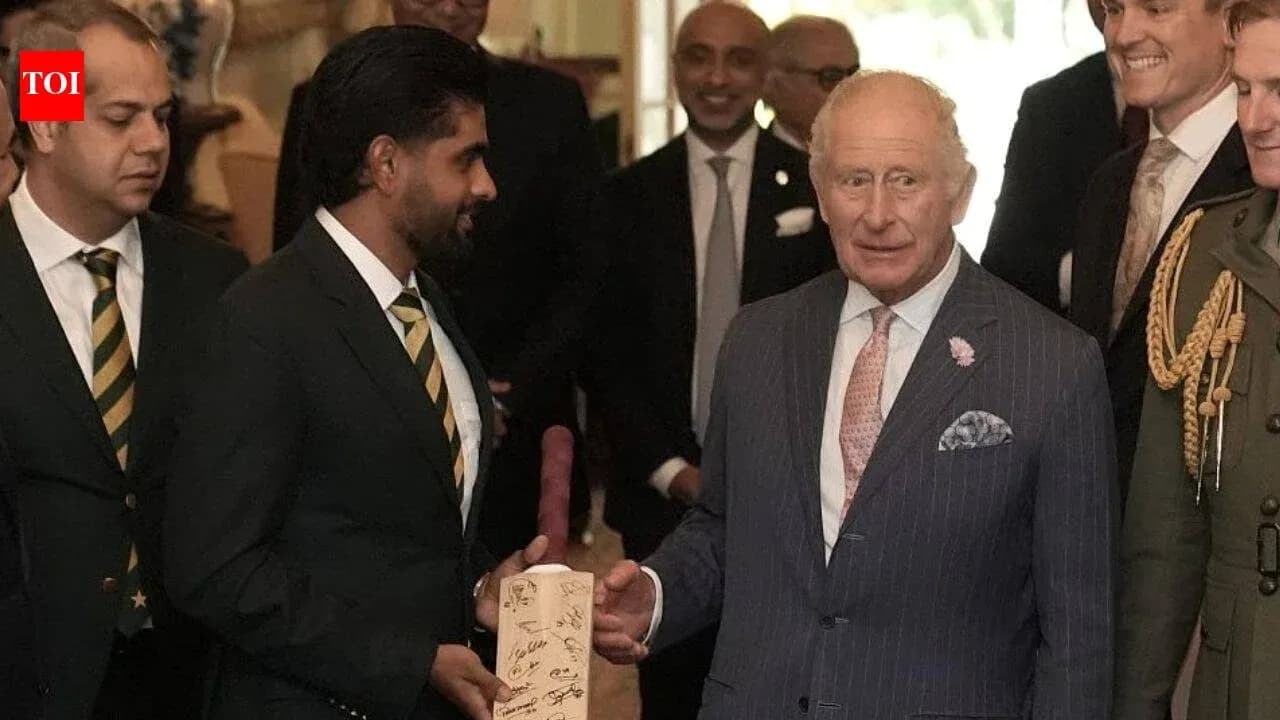
Babar Azam walked into Clarence House with a bat in his hand and a smile on his face. Outside those gates, the story of his tour could not be more different.
On Wednesday in London, Pakistan’s Test captain met King Charles III and presented him with a cricket bat signed by the entire touring squad. Babar, accompanied by his teammates and Pakistan Cricket Board (PCB) chairman Mohsin Naqvi, visited the royal residence on September 2, a ceremonial high point on a tour defined almost entirely by on-field lows.
The gesture was warm, polished, and symbolic: a proud cricketing nation honouring the British monarch in the sport that binds them. Yet the timing underlined the contrast. While Babar handed over a bat as a souvenir, his own batting – and Pakistan’s – has been nowhere near gift-worthy in this series.
A tour slipping away
On the field, England have already shut the door. A 2-0 lead in the three-Test series, secured with brutal clarity: an innings and 103 runs in the first Test, 194 runs in the second. Pakistan have not once reached 200 in an innings. Not once.
Those numbers tell the story of a batting unit in freefall. Collapses have become routine, resistance fleeting. The scorecards look like damage reports.
The response from the PCB has been just as dramatic. Seven players have been recalled, among them Mohammad Rizwan, Salman Ali Agha and injured opener Imam-ul-Haq. The message is unmistakable: nobody is safe, reputations included.
The shake-up has not stopped at the dressing room door. Head coach Sarfaraz Ahmed and bowling coach Umar Gul have been removed before the final Test, a ruthless mid-series reset that underlines the depth of the crisis. White-ball coach Mike Hesson and bowling coach Ashley Noffke have been asked to step in for the third Test, which begins in Birmingham on September 9.
Continuity has given way to urgency.
Captain under the microscope
In the middle of all this stands Babar.
His return as Test captain, once framed as a stabilising move, is now under sharp scrutiny. A finger injury kept him out of the first Test; Pakistan were thrashed anyway. He came back at Lord’s, the stage where great Pakistan batters have often announced themselves. Instead, he scratched to 8 and 6 as his side folded for 110 in the first innings and 194 in a chase of 389.
Lord’s did not revive him. It extended a lean spell that has dragged on far too long for a player of his stature. Babar has now gone 18 Test innings without a half-century. Since the start of 2023, across nine Tests, his average has slipped below 21. For a man once bracketed among the premier batters in world cricket, that is a brutal comedown.
The questions are no longer whispered. Can he carry the burden of captaincy and rediscover his batting? Or is the responsibility eroding the very thing that made him indispensable?
Birmingham and beyond
So Babar’s week has split in two. A poised leader presenting a signed bat to King Charles III in the heart of London. A struggling captain heading to Birmingham with a remodelled squad, a new coaching setup around him, and a series already gone.
The third Test will not rescue this tour in the record books. It can, though, say a lot about where Pakistan go next – and whether their captain can still be the man to lead them there.