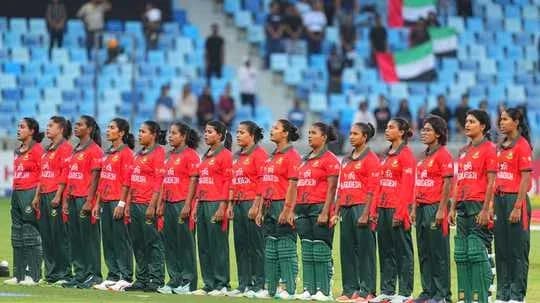
The scorecard from the 2026 Asia Cup semifinal tells a familiar story for Bangladesh’s women. India 45 for 1 in the Powerplay; Bangladesh 26 for 1. India 42 runs in the final four overs; Bangladesh 25. The gap wasn’t just on the board. It was in intent, in muscle, in depth.
For a team that stunned the region with their 2018 Asia Cup title, the slide has been slow but clear. Since that triumph they have managed one fifth-place finish and two semi-final exits in the last three editions. On the global stage, the numbers are even more unforgiving: Bangladesh have never gone past the first round of a T20 World Cup, with only two wins in their first 13 main-stage matches.
Those close to the set-up see a pattern, not a coincidence.
Power Without Punch
A coach heavily involved in the development of women’s cricket in Bangladesh, speaking on condition of anonymity, put it bluntly: this team is paying the price for a lack of power hitters at the top and at the death.
"When it comes to powerplay execution, Bangladesh have to increase their boundary hitting ability… If they have a good start and add 40-50 runs to the total it is better for them. This is a very important point that we need to address," he told Cricbuzz.
The semifinal against India underlined the problem. India’s top order went hard early, seized the initiative, and never really handed it back. Bangladesh nudged and worked the gaps but rarely cleared the rope. When the final four overs arrived, India shifted gear; Bangladesh simply didn’t have an extra one.
Six-hitting sits at the heart of the issue. Globally, the game has moved on. Since January 2025, India have launched 100 sixes in T20Is, the most by any side. South Africa follow with 77, West Indies 63, Namibia 60. Bangladesh, on paper, are not as far behind as perception might suggest: they have struck 55 sixes in that period, more than Pakistan (50), England (45), New Zealand (43), Australia (41) and Sri Lanka (40).
Yet those aggregate numbers hid a brutal reality at this Asia Cup. India cleared the boundary 25 times. Bangladesh managed just four. Only Sri Lanka, with five, came even close to India; no one else was in the same league.
The coach sees a structural problem, not just a bad week.
"Bangladesh lack hitters in the death overs as they don't have many players to take advantage during that time and, as a result, they are lagging far behind in this situation. Except Shorna Akter there doesn't seem to be many power hitters. It is the reality and backfires against the opposition (like India). Bangladesh rely a lot on Shorna and when she fails their plans are not executed. When she clicks they get to totals around 130-140 and it is a thing that should be looked at for the future.
"Bangladesh should add two-three players for power hitting as even though they have experienced middle-order in the form of Joty, Sobhana and Supta, but in the death overs the difference is created," he said.
One player carrying the bulk of the hitting burden is not a blueprint for sustained success. It is a risk. In knockout cricket, it is almost a guarantee of heartbreak.
Overworked Pace, Overdue Change
The lack of power with the bat is mirrored by a shortage of firepower with the ball. Again, one name keeps coming up: Marufa Akter.
"Bangladesh rely a lot on Marufa Akter and now it is important to add new pacers to the line-up," the coach said. On truer, better international wickets, that dependence becomes even more glaring.
The Asia Cup surfaces were an outlier, he felt, not a template for what awaits at World Cups. On better pitches, Bangladesh will need more than one seamer who can hit the deck and hold their nerve.
"They need two-three more pace bowlers and also a pace-bowling all-rounder considering this is an area of concern for them," he added.
That demand is not just about variety. It is about managing workloads, about having options when plans A and B fail, about matching the pace and aggression that top sides now bring as standard in T20 cricket.
Pipeline, Not Patchwork
For the coaching group, the solutions do not lie in quick fixes or shuffling the same names. The word that keeps surfacing is “pipeline”.
"Bangladesh need to include young players who are fit and agile and can match up with requirements of T20 cricket and for that the pipeline is important. So it is very urgent for them to look from age-level like U-19 cricket," the coach stressed.
Many of the current squad have been around for years. That experience has value, but it has also created a comfort zone. Without a steady flow of hungry, T20-ready youngsters pushing from below, standards risk stagnating.
"Most of the Bangladeshi women cricketers are playing in the team for many days but if they can improve their pipeline and allow the new players to express themselves internationally, they will take less time to adapt. They need players who are appropriate for T20 cricket," he said.
The message is clear: selection must start reflecting the modern demands of the format, not just seniority or past service.
Fitness, Fear and the Modern Game
Another coach, also speaking anonymously, highlighted an even more basic concern: fitness.
"Fitness is a major concern and one needs to understand the reality of women's cricket - considering when it comes to food (intake) and culture it is really important that it comes from the players' side," he said.
He pointed out a mindset issue: some players treat fitness as something to be addressed only in national camps. That, he argued, is no longer compatible with the intensity of international T20 cricket.
"The reality of international cricket, especially in T20 cricket, is those who are strong, fit and quick, they are adding 10-12 runs be it in batting, or fielding where if you can save five runs it really (makes a difference)," he said.
He was careful not to label the current group as unfit, but underlined that the bar they must clear is the international standard, not just domestic benchmarks.
"It is not a fact that the current crop are unfit players but many suggest they have to be fit in terms of international standard and so matching up to that is a major concern as the players have to be aware of this fully and concerned about their fitness."
Fitness, though, is only part of the story. The other part lives in the head.
"Bangladeshi women's cricketers need to break free from fear of failure. For that they need to create a learning environment so even if they fail they are backed," he said.
He called for experimentation, but with backing from the top. Players, he argued, must know that a failed shot or a bad over will not immediately cost them their place.
"Sometimes there can be experimentation but team management needs to give the cricketers the luxury and the freedom that they will be backed by the team management even if they fail, and it is important to develop that environment.
"The players need to come out of this mental aspect. They need to have the mindset that doesn't allow them to stay in their comfort zone and to get out of this comfort zone one has to overcome the fear of failure," he added.
A Crossroads, Not a Cul-de-Sac
The semifinal defeat to India did not just end a campaign. It exposed, in stark numbers and honest words, the gap between where Bangladesh once were in Asia and where the format has raced ahead.
Power hitting at both ends of the innings. A deeper, more varied pace attack. A fitter, faster, braver group of players emerging from a stronger age-level pipeline. These are not luxuries anymore. They are non-negotiables.
Bangladesh have shown before that they can upset the order in women’s cricket. The question now is whether they are willing to rebuild aggressively enough to do it again in an era defined by sixes, speed and fearlessness.