Temba Bavuma has the captain’s armband again, and with it comes a clear signal from South Africa: the serious stuff starts now.
The 34-year-old returns to lead the ODI side for the first time since December 2025, when he last featured in the format against India. Injury, rotation and shifting priorities have kept him out of the 50-over frame since then. That pause is over. Australia at home, with a World Cup on the horizon, is no place for half-measures.
He won’t be short of familiar lieutenants.
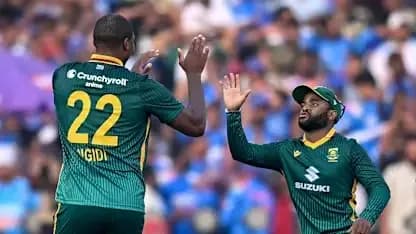
A cluster of senior names walk back into the squad after being rested for the recent ODI series against Namibia. Aiden Markram, Marco Jansen, Lungi Ngidi, David Miller, Corbin Bosch and Quinton de Kock are all restored, turning what looked like an experimental group into a full-strength unit almost overnight. The safety net is gone; this is the core South Africa expect to lean on when the ICC Men’s Cricket World Cup arrives in South Africa, Zimbabwe and Namibia next year.
There is another important return. Gerald Coetzee, who last played ODI cricket at the ICC Men’s Cricket World Cup 2023 in India, is back to spearhead the pace attack. His raw speed and hostility lit up that tournament. Now he gets the chance to do the same on home soil, with Ottneil Baartman and Ngidi adding further bite.
Around them, the balance looks deliberate. Keshav Maharaj and Bjorn Fortuin offer control and guile with the ball, while the batting has depth and variety: De Kock’s tempo at the top, Bavuma’s stability, Markram’s authority, Miller’s finishing power, and the emerging flair of Ryan Rickelton, Tony de Zorzi, Tristan Stubbs and Matthew Breetzke. Teenager Kwena Maphaka’s inclusion underlines that the selectors are thinking beyond just the next few months.
South Africa ODI squad vs Australia
Temba Bavuma (c), Ottneil Baartman, Corbin Bosch, Matthew Breetzke, Gerald Coetzee, Quinton de Kock, Tony de Zorzi, Bjorn Fortuin, Marco Jansen, Keshav Maharaj, Kwena Maphaka, Aiden Markram, David Miller, Lungi Ngidi, Ryan Rickelton, Tristan Stubbs
A Dress Rehearsal with Real Stakes
The three-match ODI series against Australia, starting September 24, is more than a tune-up. It is a stress test for combinations, roles and temperament under pressure.
South Africa’s schedule is clear and unforgiving:
- First ODI: September 24, Durban
- Second ODI: September 27, Johannesburg
- Third ODI: September 30, Potchefstroom
Different venues, different conditions, little room for drift. Durban’s coastal swing, the altitude and pace of Johannesburg, the more nuanced surfaces in Potchefstroom – each match offers a separate examination paper for Bavuma’s side.
For both teams, this is the last stretch of meaningful 50-over cricket before the World Cup caravan rolls into southern Africa. Every over will be watched through that lens. Who opens with Bavuma? How is Jansen used with bat and ball? Where do Stubbs and Rickelton fit in the order? Which spinner takes the pressure overs when the game tightens? These are not theoretical questions anymore; they will be answered in real time against one of the game’s most ruthless opponents.
From White-Ball Chess to Red-Ball Fire
Once the ODIs are done, the rivalry only hardens.
South Africa and Australia will lock into a three-match ICC World Test Championship series in October, their first meeting in the longest format since last year’s World Test Championship Final. The scars and lessons from that clash linger, and the stakes in the current cycle are already high.
The Tests are set as follows:
- First Test: October 9–13, Durban
- Second Test: October 18–22, Gqeberha
- Third Test: October 27–31, Johannesburg
Durban’s humidity, the coastal breeze in Gqeberha, and the cauldron of the Highveld to close – it is a classic South African itinerary, demanding resilience from visiting batters and discipline from home quicks. The World Test Championship table will not wait for anyone to find their rhythm slowly.
For now, though, the spotlight sits firmly on Bavuma and his ODI group. The captain is back. The big guns are back. Australia are coming. With a home World Cup looming, how much can South Africa learn – and how quickly – before the real judgement begins?