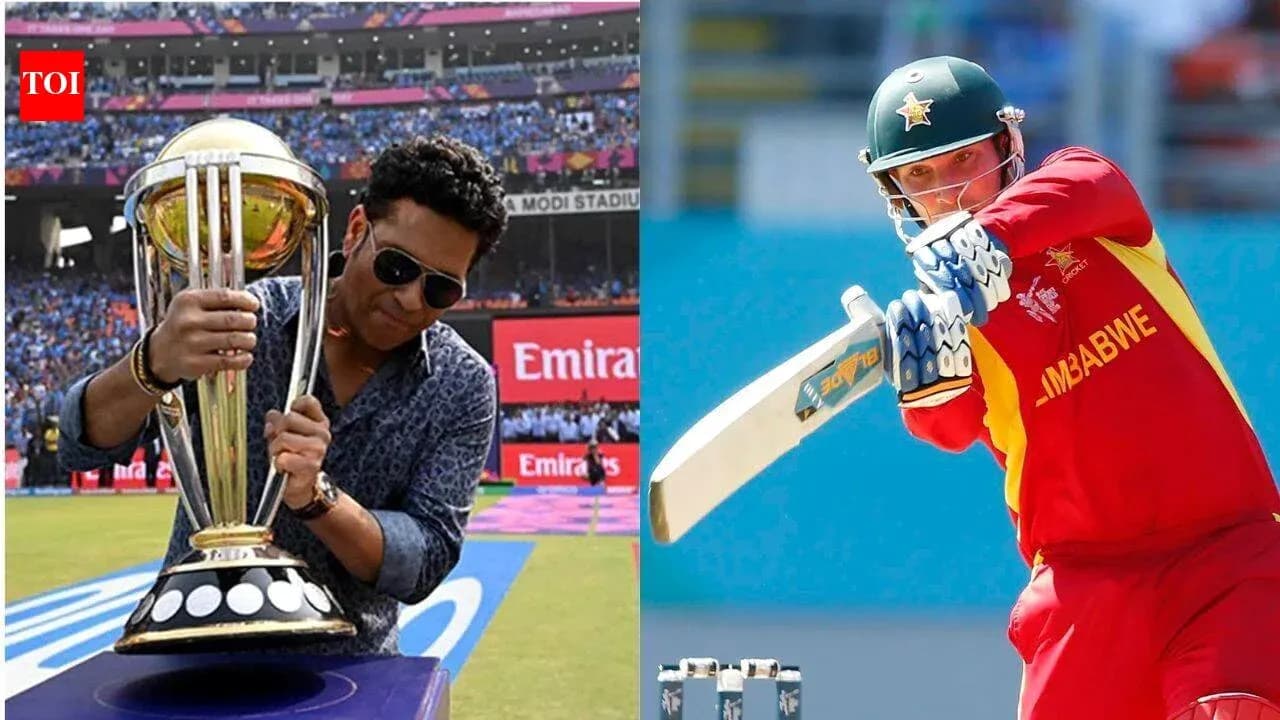
HARARE – A familiar figure walked out in Zimbabwe red on Tuesday and quietly rewrote a line in cricket history.
By taking the field in the first ODI against Australia in Harare, Brendan Taylor moved beyond Sachin Tendulkar to become the longest-serving player in men’s ODI cricket. Not the most runs. Not the most caps. Something different: the longest span from debut to latest appearance.
Taylor’s ODI career now stretches 22 years and four months. Tendulkar’s, the gold standard for endurance until now, ran for 22 years and three months before it ended in 2012.
Tendulkar still towers over the format’s record books – 18,426 runs and 463 appearances remain untouched. Yet on a cool Harare afternoon, a 40‑year‑old Zimbabwean, back from exile and back from retirement, edged past him on the calendar.
A career that refused to end
Taylor first played ODI cricket in 2004. He arrived as a gifted young batter in a turbulent era for Zimbabwe and, over two decades, became one of the pillars around which the national side rebuilt itself.
By the time he took guard again on Tuesday, he already owned a piece of Zimbabwean history: a national-record 11 ODI centuries in 207 matches. For a country that has often fought just to stay relevant on the international schedule, Taylor’s runs have carried extra weight.
His story, though, has never been a straight line.
Taylor retired from international cricket in 2021, his body of work apparently complete. Then came the fall. In 2022, the ICC handed him a three-and-a-half-year ban for breaching its Anti-Corruption and Anti-Doping codes. For many, that looked like the final entry in his playing ledger.
Yet Zimbabwe’s cricket landscape changed. With the nation set to co-host the 2027 ODI World Cup alongside South Africa and Namibia, the board turned back to experience. When Taylor completed his suspension, he reversed his retirement in 2025, returning to a dressing room now shaped by a new generation but still in need of his nous.
On Tuesday, that long, jagged journey produced a remarkable statistical landmark. From debut to latest appearance, no man has lived a longer ODI career.
Old faces, new chapter
The match itself carried its own sense of return. Australia were playing their first ODI in Zimbabwe in 12 years. Their captain, Mitchell Marsh, knows this ground and this fixture well: he is one of only three players across both teams who also featured in the last ODI between these sides in Zimbabwe, back in 2014 – a famous home win for Zimbabwe.
The other two survivors? Sikandar Raza and Brendan Taylor.
Raza, now Zimbabwe’s captain, leads a side that mirrors Taylor’s own arc – scarred, resilient, still reaching for the big stage. Marsh, entrusted with the Australians, won the toss and chose to bat, signalling intent in conditions that have historically rewarded early aggression.
The line-ups underlined the blend of eras on show.
Australia named Mitchell Marsh (captain), Travis Head, Cooper Connolly, Josh Inglis, Alex Carey, Matt Renshaw, Ollie Peake, Xavier Bartlett, Nathan Ellis, Adam Zampa and Spencer Johnson – a mix of established white-ball names and fresh faces trying to lock down spots ahead of their own future global tournaments.
Zimbabwe countered with Brian Bennett, Ben Curran, Innocent Kaia, Brendan Taylor, Craig Ervine, Sikandar Raza (captain), Wessly Madhevere, Brad Evans, Newman Nyamhuri, Wellington Masakadza and Blessing Muzarabani – a side built around seasoned campaigners and emerging talent, framed by the looming prospect of a home World Cup.
A record with a different weight
Longevity records can feel abstract. No trophy is lifted for outlasting everyone else. Yet in Taylor’s case, the number carries meaning.
It tells the story of a cricketer who debuted in another era of Zimbabwean cricket, walked away, was forced away, then fought his way back into the same format two decades on. It speaks to a player trusted enough, still, to be written into the XI as his country begins its march toward hosting the 2027 World Cup.
Tendulkar’s ODI legacy remains untouched in the currency that matters most to batters: runs and matches. Taylor’s new mark lives in a different column, one that measures time, survival and the ability to keep finding a way back to the middle.
On a day when Australia returned to Harare and a new cycle of ODIs began, Brendan Taylor’s name slid past Sachin Tendulkar’s on one line of the record books.
The question now is simple: how much more cricket does that 22-year span still have left in it?