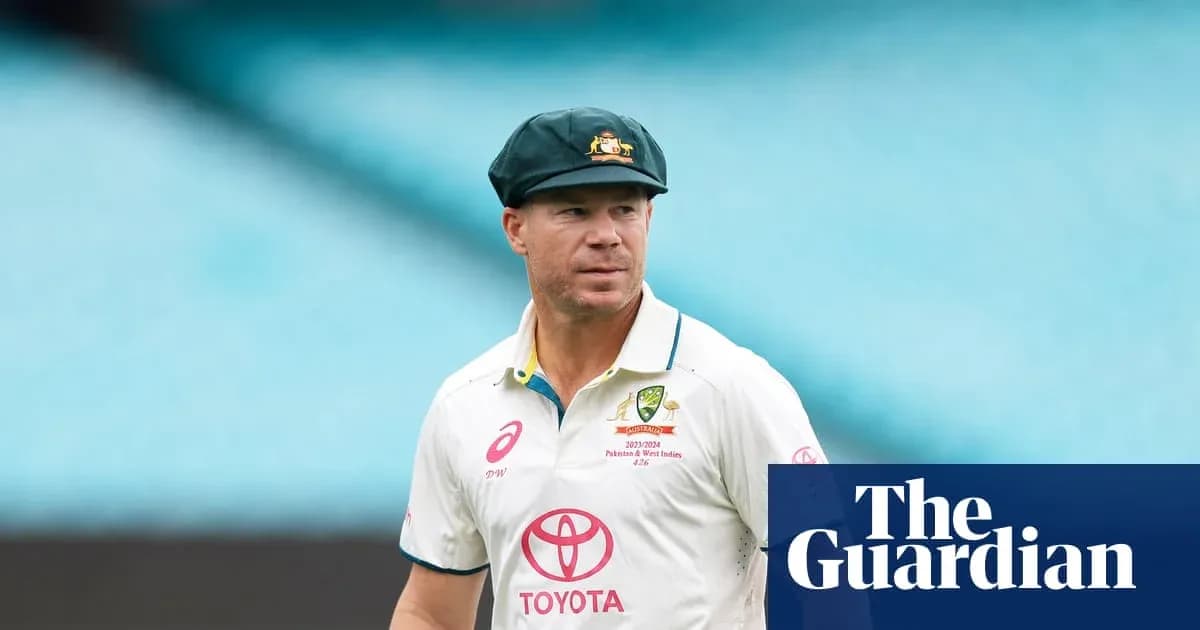
David Warner has torn open Australian cricket’s deepest wound again, accusing Cricket Australia of running a “shoddy” and selective investigation into the 2018 sandpaper scandal and insisting the process “stinks of a cover up”.
The former vice-captain, already at the centre of the storm this week, went public on Instagram with an explosive claim: three frontline bowlers from that infamous Cape Town Test were never interviewed by CA in the aftermath.
“As far as l am aware, CA did not interview Josh Hazlewood, Mitchell Starc or Nathan Lyon in their 2018 investigation,” Warner wrote.
Those three, alongside Pat Cummins, formed the bowling attack during the third Test against South Africa at Newlands, where cameras caught Cameron Bancroft using sandpaper on the ball and triggered one of the most damaging crises in Australian sporting history.
Warner’s post cut straight to the heart of the long-running suspicion that the full truth of Cape Town has never been aired.
“If that’s correct, then how can CA push the idea that the bowlers didn’t know?” he continued. “It looks like they had decided who they wanted to blame from the very beginning, ran a shoddy investigation to serve the purpose and now they want to maintain the false narrative that the bowlers had no idea. That stinks of a cover up.”
Old scandal, new fire
The latest eruption comes off the back of Usman Khawaja’s memoir, Sabr, which has dragged the sandpaper saga back into the spotlight and ignited a very public split between past and present teammates.
Khawaja’s suggestion that “everyone knew” about ball tampering plans has been fiercely rejected by Cummins, who fronted a marathon press conference in Sydney on Friday to defend his role and his reputation.
“When he says ‘we all knew’, if by that he means that we knew sandpaper was going out on the field he’s 100% wrong,” Cummins said. “I’ve said that consistently for the last eight years. I did not know that was happening.”
Cummins then went further, accusing Khawaja of making allegations that cut far deeper than a throwaway line about team awareness.
“He says that I and others were architects of a scheme to ball tamper with sandpaper. That’s complete and utter nonsense,” the Test captain said. “I was genuinely shocked this week when I found out that Usman admitted that he told Cam [Bancroft] to be careful when using sandpaper.”
Those comments detonated inside an already fragile dressing-room history. Within hours, Warner hit back on air, accusing Cummins of sacrificing his long-time friend to protect himself.
Speaking on Kayo Cricket during the build-up to the first ODI between Australia and England in Perth, Warner did not bother with diplomacy.
He said he would “stick by Uzzy and what he’s written in that book”.
“It’s the truth and I really, really support him,” Warner said. “I actually feel for him at the moment. I actually feel that the captain today actually threw Uzzy under the bus, and I’m very, very disappointed about that.”
CA stands by its process
Cricket Australia, under intense scrutiny once again, has stood by the integrity of its original inquiry and the punishments that followed.
Warner, Bancroft and then-captain Steve Smith were the only players sanctioned after CA found the trio had prior knowledge of the plan to use sandpaper on the ball in Cape Town. The penalties were unprecedented: lengthy bans, leadership suspensions, reputational damage that has never fully healed.
In a statement released as the latest round of accusations gathered pace, a CA spokesperson defended the governing body’s handling of the affair.
“As we have stated previously, all players were given the opportunity to speak at the time of the initial investigation and have had the ability to come forward with new evidence in the eight years since,” the spokesperson said.
“Subsequently, CA has respected every player and former player’s right to provide their own version of events.”
That line – that the door has always been open – sits in stark contrast to Warner’s description of a rushed, pre-determined process.
“All three of us [Warner, Bancroft and Smith] have paid a big price in this,” he said. “I hadn’t spoken about it in eight years. But at the end of the day, we’ve got to live with these consequences daily and we’ve been served a life punishment.
“It’s been very difficult, because the way that it was handled in the first place, it was hard for us to go back and actually give more evidence. I felt like it was a botched investigation. It was a quick one to get it over and done with.”
A rift that won’t close
What began in 2018 as a scandal about a strip of sandpaper has become something much larger: a running argument over truth, loyalty and who carries the stain of Newlands.
Khawaja’s book has reopened questions many in Australian cricket hoped would stay buried. Cummins has drawn a hard line in defence of his integrity. Warner, long cast as one of the chief villains of Cape Town, is now openly challenging the governing body’s version of history and backing Khawaja’s account over that of his former captain.
CA insists any player can still come forward. Warner insists the real story was never properly chased.
Six years on from that afternoon in Cape Town, the ball has long since gone out of shape. The battle over who owns the story clearly hasn’t.