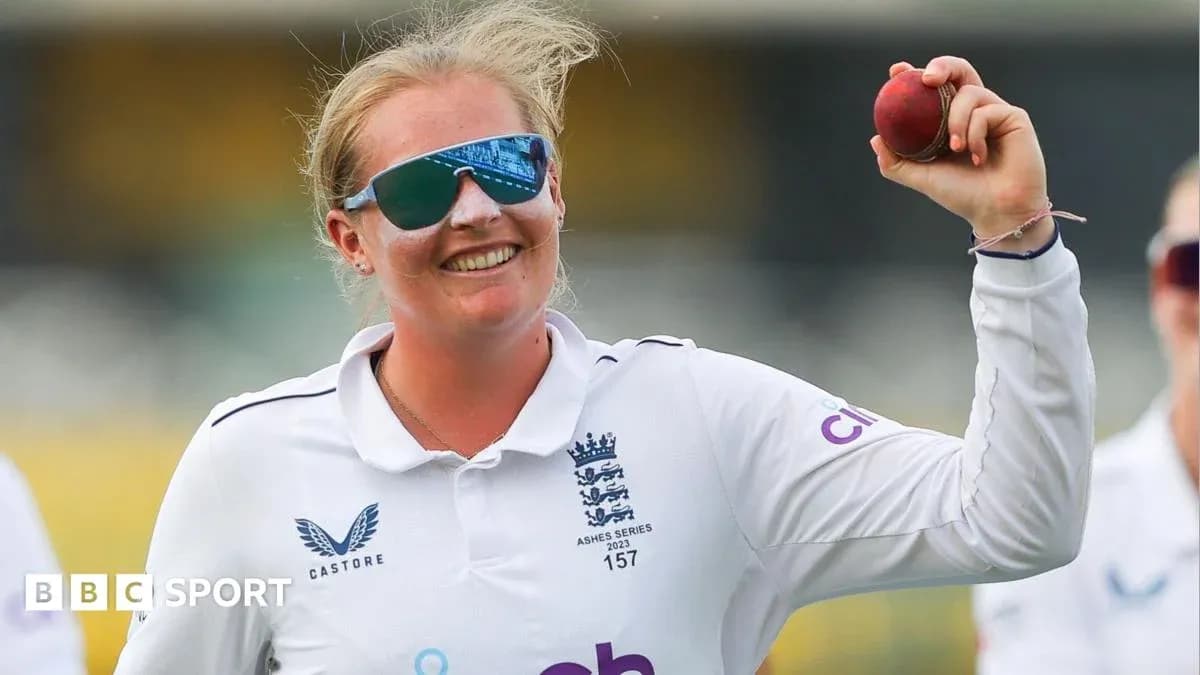
England have torn up their plans for a rare women’s Test in the Caribbean and built an Ashes boot camp in its place.
Nat Sciver-Brunt and her side will no longer play a Test in the West Indies in April. Instead, every piece of preparation is being dragged closer to home and bent towards one thing: beating Australia next summer.
Ashes first, everything else second
The numbers tell you why England are so ruthless. Since their last four-day clash with Australia in January 2025 – an innings defeat in Melbourne – they have played just one Test, a heavy loss to India at Lord’s. Two red-ball games in almost two years. Both defeats. Both bruising.
Next summer’s Ashes Test, worth four points in the multi-format series, lands at Headingley from 24-27 June. That match now sits at the centre of England’s entire calendar.
To get there properly hardened in the long format, England will stack their build-up with red-ball cricket: four multi-day games, a specialist camp in Asia, and a large training group pushed to compete against each other.
One of those fixtures will be a three-day match against Australia A, a rare and valuable chance to face the tourists in red-ball conditions before the main event. The rest will be three intra-squad “best v best” games in English conditions, designed to strip away any comfort and force players to win their spots.
On top of that, a dedicated red-ball camp is booked for Bangalore in January, a 10-day warm-weather block aimed at sharpening technique and fitness before the home summer kicks in. Across the camps and matches, England expect to use 26 or 27 players, stress-testing depth as much as their first-choice XI.
This is not tinkering. It is a full reset of priorities.
West Indies Test shelved
The consequence lands hardest in the Caribbean. England’s West Indies tour will now consist of three T20s and three one-day internationals only. The Test, once floated as a step forward for the women’s game in the region, has gone.
The timing is awkward. CWI chief executive Chris Dehring had already spoken publicly about the financial strain of hosting long-format cricket in the Caribbean and the need for support from richer boards.
"We would welcome any assistance of our much wealthier member boards," he told BBC Sport. "It is very expensive to host cricket in the Caribbean."
Yet the ECB insists this call is not about money. BBC Sport understands the decision is viewed internally as a pure performance move, aligned with giving England the best possible chance of reclaiming the Ashes, rather than a reaction to financial negotiations with Cricket West Indies.
For West Indies, the picture remains stark. They have not played a women’s Test since 2004 – their only red-ball appearance in 47 years. That wait now stretches on.
Building an Ashes-hardened squad
Inside the ECB, the shift is framed as overdue investment in a format England have too often treated as an afterthought.
"A 10-day warm-weather red-ball camp in India followed by four further matches in English conditions will provide Charlotte Edwards and her team with the appropriate game time to be ready for that challenge [of Australia]," said ECB chief executive Richard Gould.
The phrase “best versus best” is doing a lot of work here. Those intra-squad games are not window dressing; they are auditions. Established names will be hunted by younger challengers. Bowlers will get long spells rather than short white-ball bursts. Batters will be asked to build innings, not just clear ropes.
"Best versus best in English conditions provides a valuable opportunity for the team," Gould added. "It also allows us to assess our strength in depth, give opportunities to more players and get a number of competitive multi-day cricket matches across a longer period into the wider group."
That “wider group” is crucial. England know that to live with Australia over four days, they need more than a strong XI. They need seamers who can bowl four spells in a day, spinners who can control a game on day four, and batters who can bat time when the ball is jagging around at Headingley in June.
So the calendar bends. A Test disappears. Red-ball overs and competitive selection battles take its place.
The question now is simple: when England walk out at Headingley next June, will this gamble on preparation be the edge that finally cracks Australia, or just another bold plan judged by a single brutal scoreline?