On a grey, restless morning at Edgbaston, Pakistan walked into the kind of statistical nightmare that usually belongs in dusty archives, not live sport.
Their top five all fell for single figures in the first innings of a Test in England – something no side had ever managed before. Not here. Not anywhere in this country. It has happened only 11 times in Test history, always in a second innings when the pitch is tired and the minds are frayed. This time, it was the opening act.
And the pitch? By the time Saud Shakeel started threading cover drives through the off side, it became painfully clear: the surface was fine. Pakistan were not.
Tongue’s thunderbolt and a captain cleaned up
The tone of the day belonged to England’s seamers, and Josh Tongue delivered the moment that captured it best.
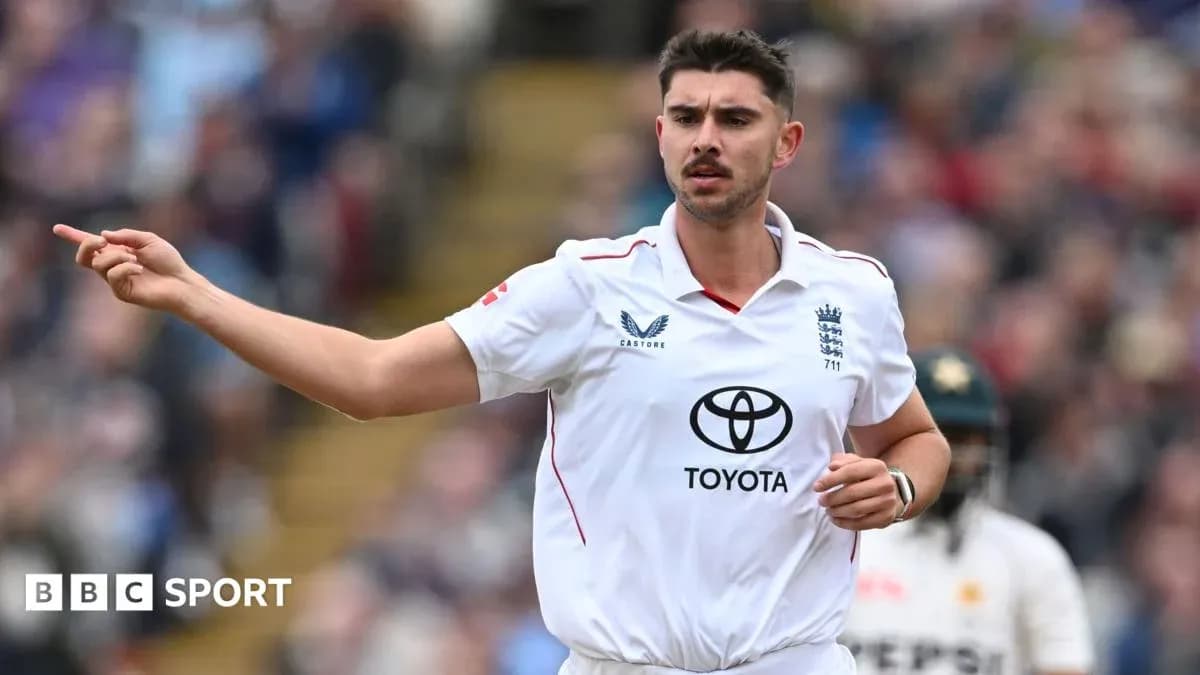
Full. Fast. Angling in. Babar Azam, Pakistan’s captain and premier batter, played back when he had no business doing so. The ball cannoned into the top of off stump, a classic dismissal that left Babar on 7 and Pakistan marooned at 48-5. Tongue ended his first over with a wicket, and with it came the sense that this was turning into a procession.
England’s attack hunted in a pack. Ollie Robinson kept the ball on a teasing length, shaping it away, while Jofra Archer had earlier applied the early squeeze. When Gus Atkinson replaced Archer, he did so with figures that didn’t reflect his effort this series – just one wicket at a cost of 125 – but his rhythm and control again hinted at a bowler due a change of fortune.
Pakistan, though, barely lasted long enough for that luck to turn.
Records tumble, partnerships vanish
The collapse did not come out of nowhere. It has been brewing all series.
Across these Tests in England, Pakistan’s second wicket has fallen in a heap, again and again: at scores of 6 and 13 at Leeds, 16 and 7 at Lord’s, and now 14 here. Just 56 runs in total for the first two wickets across the series. An average partnership of 5.6 for the first wicket and 11.2 by the time the second falls.
Those numbers are not just bad; they are historic. Pakistan are on course to undercut a record that has stood since 1888, when Australia averaged 16 for the fall of their second wicket in an English series. That was Victorian-era batting on uncovered pitches. This is modern Test cricket on a decent surface with thick bats and heavy protective gear.
The contrast with Saud Shakeel’s strokeplay only sharpened the indictment.
Saud’s defiance on a good pitch
At 35-4, with the innings already listing badly, Saud began to unfurl the kind of shots that would normally decorate a solid top-order platform, not decorate the ruins of it.
A glorious cover drive, eased through extra cover, announced his intent. Then another, more expansive, brought four more as an inside edge whistled past leg stump. He went again, finding a third boundary through the covers, this time middled, a reminder that timing and class still existed out in the middle.
He picked off a rare short ball from Robinson, rolling his wrists and pulling through square leg. The outfielders saved the boundary, but not the impression: this was a player reading the conditions well and playing with authority.
Which made everything around him look worse.
This was not a minefield. This was not a day when survival was impossible. Pakistan’s early order simply crumbled.
Chances spilled, pressure unrelenting
Even when England erred, Pakistan could not fully cash in.
At 43-4, Saud flashed hard at a hint of width from Atkinson and sent a thick edge flying to first slip. Ben Duckett, already guilty of a simpler drop earlier in the morning, leapt and got a hand to it but could not cling on. A tougher chance, yes, but another life for Saud.
It did little to ease the pressure. England’s seamers kept hammering away at a probing length, with Jamie Smith busy up to the stumps and the slips waiting. A leg-side miscue from Robinson brought four byes as the ball brushed Smith’s gloves, nudging Pakistan’s total up but doing nothing to change the feel of the contest.
Even the weather seemed to toy with them. The rain grew heavier at drinks, the covers came halfway on, then the shower passed and the umpires waved play on. No prolonged escape, no reset. Just back into the storm.
By 60-5, the scoreboard told one story. The manner of it told another. England’s bowlers were relentless, but Pakistan’s top order had helped them along, falling into a pattern that now stretches across venues and weeks.
The question now is not just how they salvage this innings, but how they break a trend that has dragged them towards a 19th-century record in a 21st-century series.