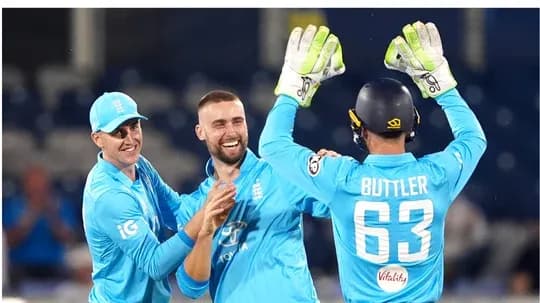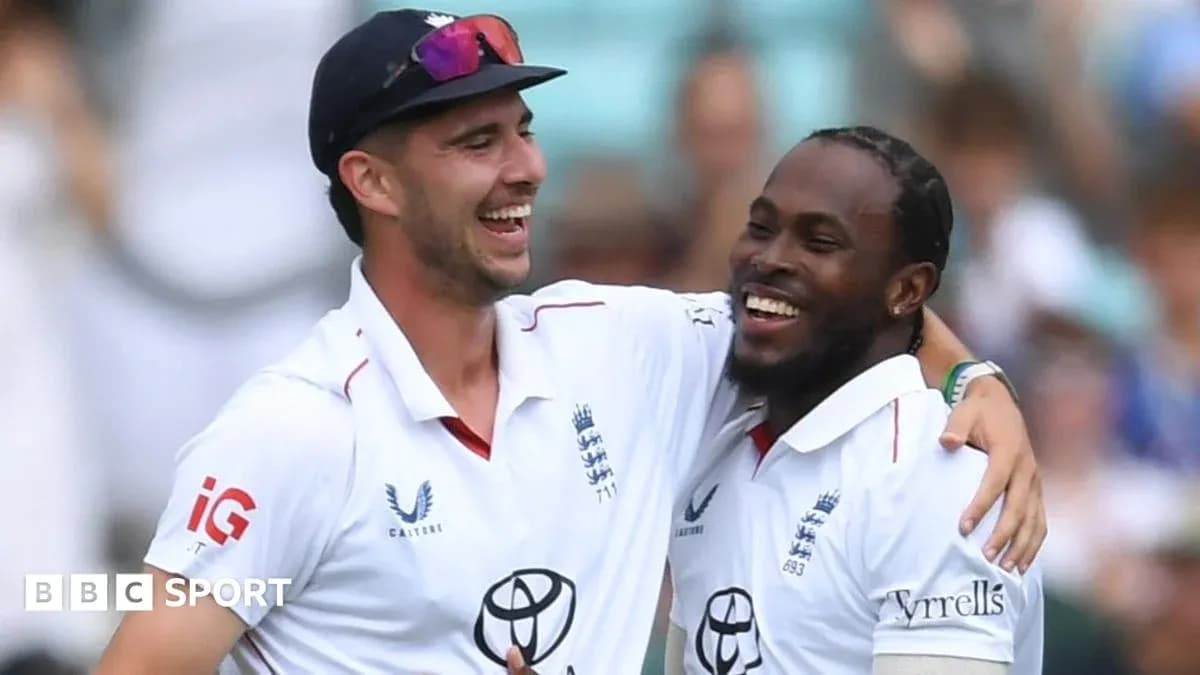
England’s new pace battery has barely shared a new ball together and already the echoes of 2005 are ringing around the dressing room.
Marcus Trescothick, who opened the batting when England last ripped the Ashes from Australia’s grip, now watches from the balcony as interim head coach. What he sees in Ollie Robinson, Jofra Archer, Gus Atkinson and Josh Tongue reminds him of Stephen Harmison, Matthew Hoggard, Simon Jones and Andrew Flintoff – the quartet that terrorised Australia 21 years ago.
“We do have some real skill,” Trescothick said, drawing the line himself between eras. “You look back to 2005 and the sort of comparisons of Harmy, Fred, Simon and Hoggy, you could easily make those sort of comparisons.”
This is not nostalgia for its own sake. It is rooted in results.
Since Ben Stokes walked away from Test cricket and Joe Root stepped back into the captaincy, England have lurched from identity crisis to clarity with surprising speed. A side that had won only two of its previous 10 Tests has suddenly stitched together back-to-back victories over Pakistan and secured a first series win since 2024.
The catalyst? Pace. Variety. And, crucially, four fast men who are fit at the same time.
A new quartet with old echoes
The balance of the attack feels familiar to anyone who watched that 2005 Ashes. Archer, Tongue and Atkinson bring the raw speed, the intimidation, the sense that any ball could be the one that ends an innings. Robinson offers something different: relentlessness.
While the Stokes–Brendon McCullum era often chased pure velocity, Robinson’s recall after more than two years out of the Test side has reshaped the unit. He often operates below 80mph, the wicketkeeper standing up to the stumps, but the ball rarely lands where the batter wants it. Accuracy, subtle movement, a nagging length that never lets a player breathe.
The numbers are absurd. Twenty‑three wickets this summer at an average of 8.3. That is not just useful support; that is the spine of an attack.
“We’ve got a good contrast in what we’re trying to do at the moment,” Trescothick said. “What we do have is three guys bowling at 92 miles an hour, which is really nice to have in your armoury and to have the potency in what you’re trying to do.
“And the more that they play together and the more experience that everyone gets together, then it fits into place to how you want it to be.”
For now, the plan is simple: four frontline seamers, no specialist spinner. Dan Lawrence offers part‑time off-breaks if the pitch demands it, but this is a pace-led project. It has given Root a sharper, more aggressive attack and solved, at least temporarily, the balance problem created by Stokes’ retirement as an all-rounder.
Vaughan’s challenge and the Ashes carrot
When Michael Vaughan, the captain in 2005, looked at this group in his Telegraph column, he applied the only standard that matters. Comparisons with Harmison, Hoggard, Jones and Flintoff, he argued, can only truly stand when this attack wins a major series of its own.
That is the bar. Beat the best, not just Pakistan at home.
Yet Vaughan also saw the potential. He wrote that this group is “certainly capable of doing something really special, and winning back the Ashes for England next summer.”
That is the prize dangling in front of them. A home Ashes, a new fast-bowling unit, a chance to step out of the long shadow of 2005 and create something of their own.
No charity caps as England chase 3–0
Before thoughts turn to Australia, there is unfinished business with Pakistan. England head to Edgbaston for the third Test on 9 September chasing a 3–0 clean sweep, and Trescothick has little interest in experimentation for its own sake.
“First and foremost I want to win the series 3-0, and I think if you’re going to do that you want to play the most consistent team possible,” the 50‑year‑old said.
There is depth behind the frontline four, even if it is untested. At Lord’s, England named seven pace bowlers. Brydon Carse was in that group before being removed from the squad following an incident outside a nightclub in Derby. He is not expected to be considered again until investigations by police and the Cricket Regulator are complete.
Without Carse, the reserve seamers are Sam Cook, Sonny Baker and Matthew Fisher. Between them, they have only four Test caps. They may have to wait for more.
Trescothick hinted strongly that England will resist the temptation to hand out opportunities in Birmingham simply to broaden experience.
“We’ve got to see how they all pull up from this game, and they’ve got four or five days now of break which they’ve not had for a good period of time because the schedule has been so busy,” he said. “Once we know that then we’ll be able to make that decision, but emphasis massively on winning the series 3-0.”
So the message is clear. No rotation for rotation’s sake. No soft landings.
England will name their squad for Edgbaston in the coming days. If the four quicks emerge from their workload intact, they will almost certainly go again in Birmingham, hunting one more win, one more statement, and one more step towards the kind of legacy that turns comparisons with 2005 from hopeful talk into hard fact.