England’s new era did not tiptoe into one-day cricket. It kicked the door down.
On a blustery afternoon in Leicester, an experimental England side produced the highest successful ODI chase in their history, hunting down 282 with 71 balls to spare and six wickets in hand, to go 1-0 up on Ireland in the three-match series.
The scorecard will say it was comfortable. The story was all about intent.
Bouchier and Dunkley rip up the script
With Heather Knight and Tammy Beaumont now retired and senior pillars Nat Sciver-Brunt, Danni Wyatt-Hodge and Amy Jones all rested, this could have been a nervy step into the unknown. Instead, Maia Bouchier and Sophia Dunkley treated it like a licence to attack.
They smashed 143 for the first wicket inside 20 overs, turning what looked a testing target into a glorified centre-wicket practice.
Dunkley set the tone. She went hard in the powerplay, 73 from 61 balls of clean, uncomplicated aggression, forcing Ireland’s seamers to drag their lengths back and then punishing anything remotely off line. When she miscued a return catch to leg-spinner Cara Murray, England were already 173-1 in the 24th over. The chase was effectively broken.
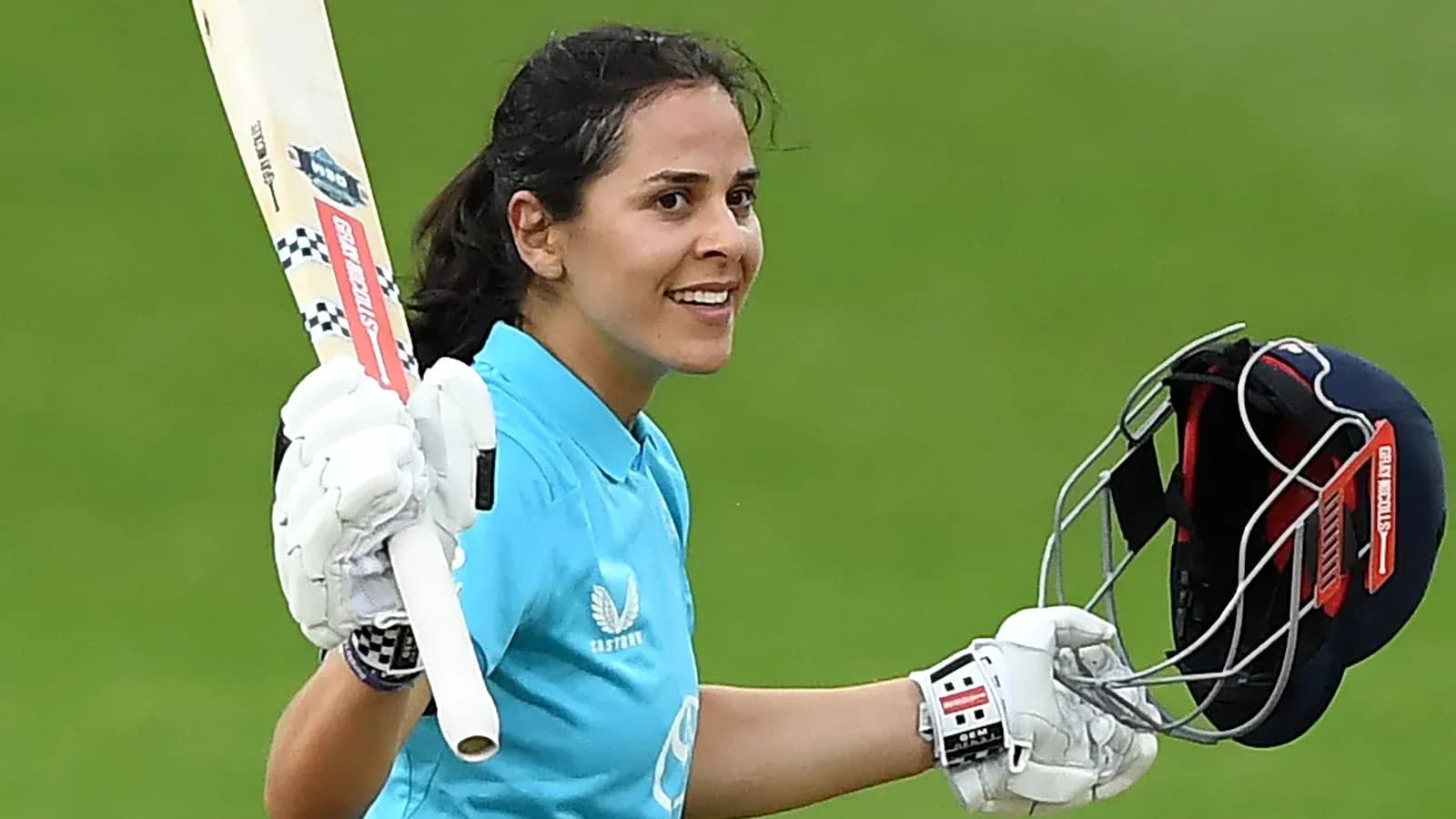
Bouchier just kept going. She had already lashed four consecutive fours off Jane Maguire early in the innings; she then settled into something more ruthless than pretty. Her 104 from 95 balls – her second ODI hundred – was a statement of permanence as much as flair, the sort of innings that says: this is my spot now.
She finally holed out off Arlene Kelly in the 32nd over with only 59 needed. By then, the damage was terminal.
Ireland’s total, England’s sloppiness
At halfway, Ireland had every right to think they were in the game.
Their 281-7 was built on a mature second-wicket stand of 136 between captain Gaby Lewis (69) and Amy Hunter (62). The pair ran hard, pierced gaps, and punished anything loose. From 13-1 they marched to 149-1, exposing an England attack that never quite found its range.
Without Sophie Ecclestone and Lauren Bell – both rested along with Sciver-Brunt, Jones and Wyatt-Hodge – England were ragged. They sent down 20 wides and 33 extras in total, a costly lack of discipline that repeatedly released pressure.
Issy Wong embodied that contradiction. She removed Alice Tector, nicking off the opener for 11, but sprayed four wides in a row outside off stump in her third over. Later, she produced the ball that mattered, sneaking one through Lewis’ gate to break the stand just as Ireland looked set to surge.
Stand-in captain Charlie Dean was the pick of the bowlers with 2-44, bowling Hunter and tightening the screws at the death. Mady Villiers chipped in with 1-46, claiming Orla Prendergast for 19 after a heave to deep midwicket where Bouchier flung herself forward for a superb diving catch.
Ireland rallied again. Rebecca Stokell, calm and unfazed, anchored the back end with an unbeaten 54, adding 84 from 71 balls with Leah Paul (29) for the fifth wicket. Yet when it was time to launch, England finally nailed their lengths. The last four overs, shared by Dean and Wong, cost just 24 runs with no boundaries off the bat.
There was still room for the bizarre: one Wong delivery thudded into Stokell’s leg stump and somehow failed to dislodge the bails, racing away for four byes. Even the stumps seemed reluctant to punish England.
Capsey’s gloves, and a quiet question for Jones
For all the talk about England’s bowling indiscipline, one experiment worked spectacularly well.
With Amy Jones rested, Alice Capsey took the gloves and looked like she had been doing it for years. In the fifth over she flew to her right for a sharp one-handed catch, then spent the rest of the innings moving crisply, clean with her takes and tidy standing back.
If she maintains that standard in Derby and Worcester, the conversation around Jones’ long-term role will not be polite background noise. It will be loud.
Capsey’s day did not end there. With the bat, she slipped seamlessly into the chase, first adding 50 from 47 balls with Bouchier, then watching Freya Kemp turn the screw at the other end.
Kemp’s finishing touch
When Bouchier departed with 59 needed, Ireland had a sliver of hope. Murray, who finished with 3-58, was in the game, having already removed Dunkley and then bowled Jodi Grewcock for nine with a lovely, teasing delivery that dipped and spun past the bat.
Kemp crushed that hope in an over.
In the 34th, she lined up Kelly and hammered four boundaries in a row, echoing Bouchier’s earlier assault on Maguire. It was the kind of burst that drains a fielding side, the kind that makes a chase feel inevitable.
Kemp’s 36 from 22 balls was all front-foot authority, dominating a 54-run stand from 38 balls with Capsey, who finished 41 not out from 40. Kemp eventually fell trying to finish it in style, caught at deep midwicket off Murray as she swung for the winning six.
Capsey simply nudged England home, the final blow coming via a misfield on the deep midwicket rope – a fitting symbol of Ireland’s untidy day in the field.
A blueprint, and a warning
Dean did not hide from the flaws. She admitted England could have been tighter with the ball, that the fielding needs sharpening. The 20 wides and the 33 extras tell their own story.
Yet the bigger message came with the bat.
Attacking the powerplay. Refusing to ease off once the field spreads. Backing a younger core to chase big totals without the old guard. This was not just a win; it looked like a template.
Ireland, for their part, showed enough with the bat to know they can hurt this England attack. Lewis, Hunter and Stokell all played with composure and clarity. But their bowlers offered too many boundary balls, their fielders too many misfields, and once Bouchier and Dunkley had seized the initiative, the contest never truly tightened.
The series moves to Derby with England 1-0 up, their new faces emboldened, their standards with the ball under scrutiny, and a clear question hanging over the next two games: if this is how the “experimental” side chases, what happens when the full-strength XI comes back together?