Lord’s has seen its share of drama. Not often has it arrived from both 22 yards and 6,000 miles away.
On the field, England staggered from 36-3 to 248-9 by stumps on a murky opening day of the second Test, rescued by composed half-centuries from Jamie Smith and Jordan Cox after Mohammad Abbas ripped through the top order. Off it, a diplomatic storm involving Imran Khan, a global icon of Pakistan cricket and former Prime Minister, threatened to overshadow the cricket – and, briefly, the continuation of the match itself.
Political flashpoint in the Long Room’s shadow
The controversy erupted over a lunchtime interview broadcast by Sky Sports with Imran Khan’s sons, including Kasim Khan, who spoke to former England captain Michael Atherton about their father’s treatment in custody.
“It is not very clear what they are doing, just blatantly trying to kill him in there,” Kasim said, alleging attempts to “silence him” while he is held in solitary confinement and in poor health.
Atherton framed the segment bluntly on air: “This is a humanitarian appeal, because there are increasing concerns about the health and wellbeing of Imran Khan.”
The interview followed a renewed letter from a group of former international captains, led by ex-Australia skipper Greg Chappell, urging Pakistan’s authorities to ensure proper medical care for the 71-year-old, who, according to his lawyers, has lost most of the vision in his right eye. Atherton reminded viewers that many of the signatories had faced Imran at his peak and still regard him as one of Pakistan’s greatest cricketers.
“And as his son said there,” Atherton added, “there’s an increasing sense of urgency around his health and we want to make sure he gets the proper and requisite medical care.”
That appeal did not go down well with the Pakistan Cricket Board. According to Cricinfo, the PCB contacted Sky before the lunch break to protest the planned segment and warned that their players would not return after the interval if it aired. Sky initially delayed the 18‑minute interview, then ran it. By the time the clip ended, Pakistan’s players were already preparing to resume at 2.40pm, the threat of a walk-off receding as quickly as it had flared.
The Test went on. The tension lingered.
Abbas returns to his favourite stage
Back on the turf, Mohammad Abbas rolled back the years on the ground that made his name in England. Six years ago, he took eight wickets at Lord’s and walked away with the player-of-the-match award. At 36, he still knows every contour of this slope, every nuance of the air under low cloud and floodlights.
“My first man-of-the match was at Lord’s, that’s why it’s my favourite ground — hopefully I will put my name on the honours board this time,” he said, eyeing another five-for.
He began that quest in ruthless fashion. With Pakistan captain Babar Azam choosing to field on a green-tinged surface under heavy skies after a rain delay, Abbas needed little invitation.
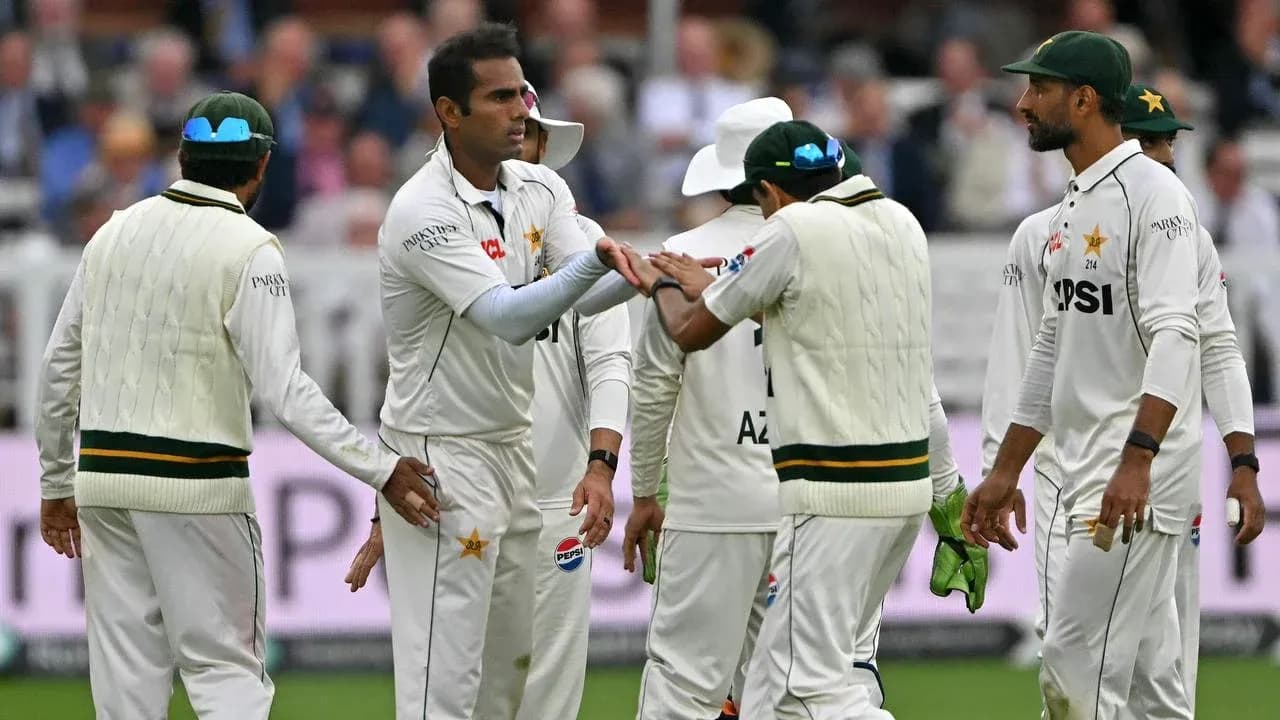
Emilio Gay was the first to go, feathering a leg-side glance that looked destined to drift harmlessly away until Mohammad Rizwan flung himself to his left and clung on one-handed. A touch of fortune for Abbas, a touch of brilliance from his wicketkeeper.
Ben Duckett followed for 17, trapped lbw by a trademark nip-backer. The seam upright, the movement late, the judgement emphatic.
Then came the prize. Medium pace with the keeper standing up has become a recurring problem for England’s batters, and Rizwan crept to the stumps again as Abbas went after Joe Root. Another ball jagged back, another thud into the pad, another big name gone for four.
“Joe is a big batter, so I was pleased to get him with Rizwan coming up,” Abbas said. “When the ‘keeper is up, I am asking (questions), so we are making a plan.”
At 36-3, with conditions snarling and Pakistan’s seamers purring, England’s decision-making under scrutiny after Brydon Carse was axed from the squad for another late-night drinking incident, the hosts teetered.
Harry Brook briefly countered, but Mohammad Ali produced the ball of the session, a superb delivery that jagged back through the gate to bowl him for 15. England slumped to 80-4 at lunch, Pakistan’s seamers in complete control and the scars of their innings-and-103-run thrashing at Headingley beginning to fade.
Smith and Cox drag England off the canvas
The pressure finally eased when Jamie Smith and Jordan Cox came together. England needed resistance. They got something more purposeful.
Smith, compact and busy, and Cox, at number three and fresh from a fifty in Leeds, chose positive defiance over survival. They left well, drove when the ball overpitched and refused to let the spinners settle.
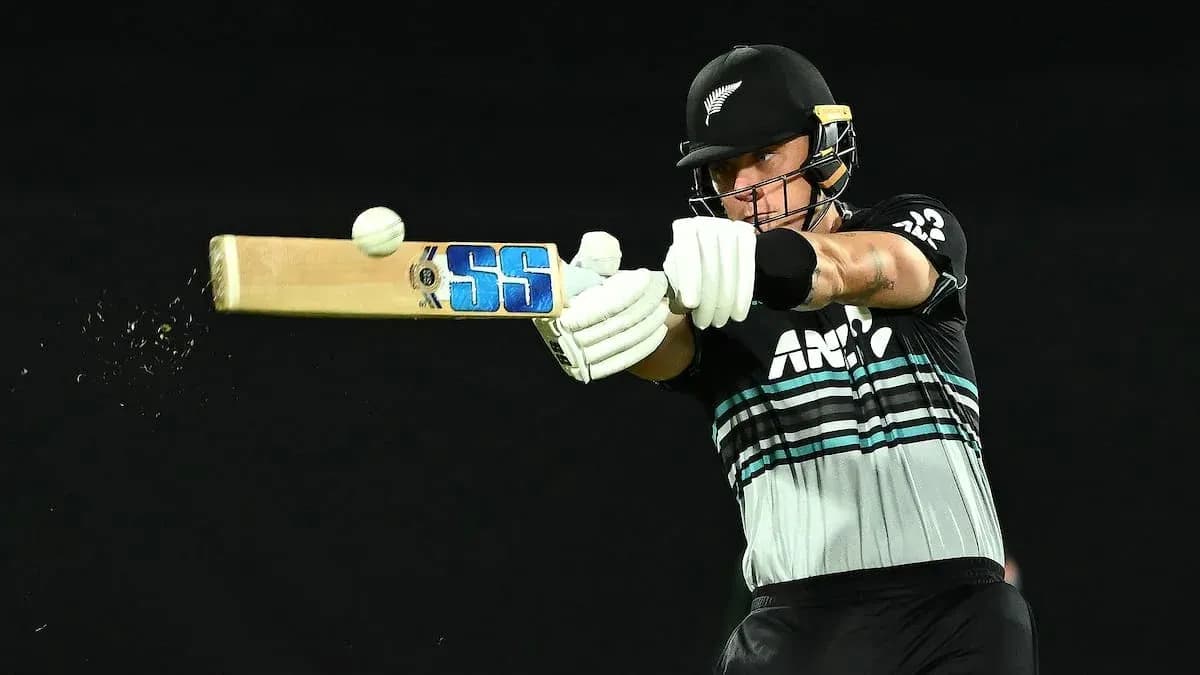
Cox reached his half-century first, ticking along at a tempo that kept the fielders restless. He whipped consecutive leg-side boundaries off left-arm spinner Ali Usman to move to fifty from 88 balls, with seven fours, a neat snapshot of his intent.
At the other end, Smith accelerated. His own fifty arrived from just 63 deliveries, full of crisp timing and calculated aggression. For the first time all day, Pakistan’s lengths wavered. The ball softened. The grey skies glowered but no longer dictated.
Their partnership reached 67 and shifted the mood. The same Pakistan side that had dropped their way to the bottom of the World Test Championship table at Leeds began to wobble again in the field. Dan Lawrence was reprieved on 10 when Shan Masood spilled a routine catch at midwicket, a lapse that echoed those first-Test horrors.
Lawrence did not fully cash in. A moment of muddle with Cox undid him. Turning Ali Usman leg side, he set off for a single that was never there, only to be sent back. Masood, this time, was sharp and accurate from midwicket, his throw giving Rizwan the simplest of tasks to complete the run out.
Just as England’s rebuild threatened to harden into dominance, Pakistan struck back. Cox, set and increasingly assured, edged Khurram Shahzad to second slip, where substitute fielder Salman Ali Agha – on the field after losing the captaincy to the returning Babar – flung himself to his right and plucked a superb catch. Cox departed for 55, his second successive Test fifty but one that ended just as a bigger score beckoned.
Smith battled on, but Ali returned to cut him off at 61, beating him for pace and movement to hit the stumps. Two balls later, Ollie Robinson fell to another Ali nip-backer, the tailender offering no answer as his off stump cartwheeled.
From 36-3 to 248-9 at the close, England had clawed their way back into the contest, but not without scars. Abbas closed with 4-56 from 15 overs, Ali with 3-67 from 17, a combined effort that kept Pakistan firmly in the game.
Bad light, dark mood, and a Test on edge
As the day wore on, the floodlights blazed but the gloom thickened. The umpires eventually decided it was unsafe to continue, calling a halt with England nine down and Pakistan still hunting that final wicket.
“I think it is a decent enough day for us,” Smith told Sky Sports. “The ball was doing enough, nipping around — overhead conditions obviously assisted.”
He was right. This was not a day for batting averages or aesthetic drives. It was a day to survive, to scrap, to stitch a total together in hostile conditions against a skilful, experienced attack.
Pakistan, humiliated at Headingley, looked far more like a side with ambition and structure. Babar’s return for stand-in captain Salman Ali Agha gave them their figurehead back. Abbas, Ali and Shahzad found movement, discipline and menace. Rizwan’s work up to the stumps and Masood’s redemption in the field added edge.
Yet the match now carries a charge that goes well beyond runs and wickets. The PCB’s formal complaint to Sky, the threat – however fleeting – not to return after lunch, and the raw, personal nature of the Imran Khan interview have dragged politics and human rights squarely into the Lord’s narrative.
When play resumes, Pakistan will walk out chasing that last England wicket and then their own first statement with the bat in this series. The scoreboard says the contest is delicately poised. The atmosphere suggests something far more volatile.