Marcus Trescothick has thrown open the debate over England’s Test top order, insisting the man facing the first ball in South Africa does not have to be a traditional opener.
“You generally want your best top seven, however that looks,” he said. The message was clear: reputation and job titles matter less than runs.
A crowded top order and one big call
England’s immediate headache is how to fit Jacob Bethell back into the side once he returns from a knee injury for December’s tour. His absence has already reshaped the batting order; his comeback will force another rethink.
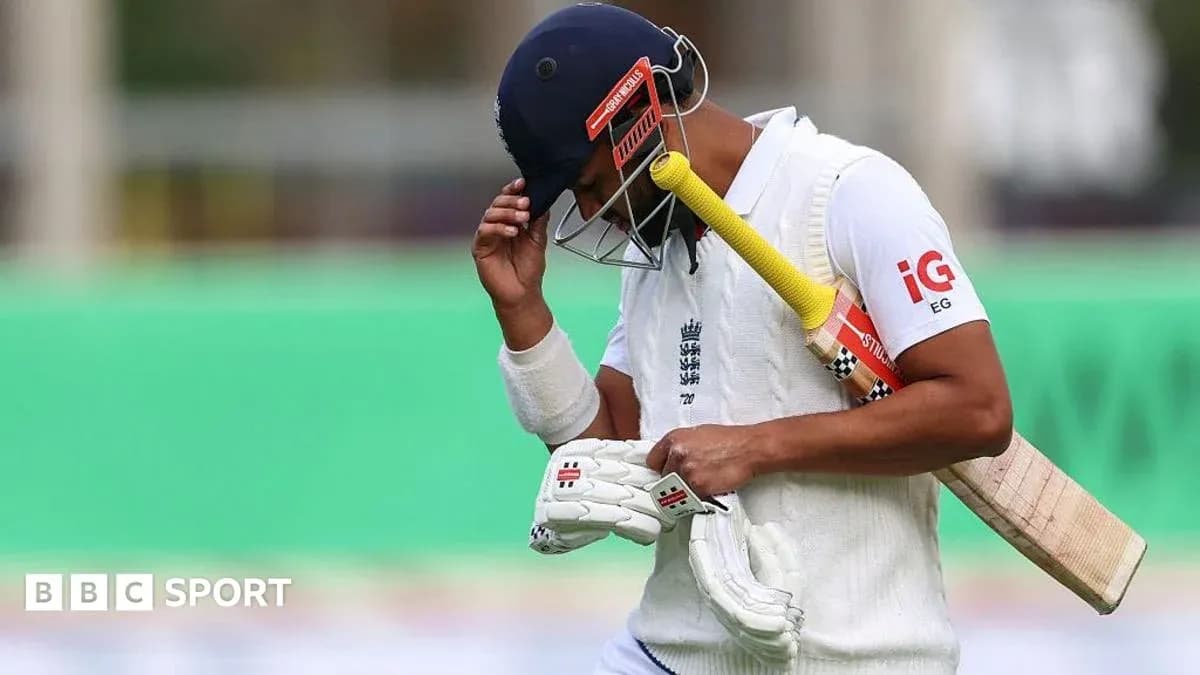
Emilio Gay has spent his first summer as a Test cricketer walking out with Ben Duckett. Three half-centuries hint at promise, but an average below 25 underlines the fragility. Duckett, one of the senior figures in this dressing room, produced England’s only hundred of the summer against New Zealand at Trent Bridge. Since the start of the Ashes, though, he averages under 24 and failed to reach 20 in the entire three-match series against Pakistan.
The door has creaked open. Others have walked through.
Jordan Cox, parachuted in as Bethell’s replacement at No 3, has looked immediately at home. Finally handed his debut this summer, he has averaged more than 42 and brings the added intrigue of having opened in first-class cricket earlier in his career. Bethell himself has been talked up as a future Test opener and has already moved up to the top of the order in England’s one-day side.
So who moves when Bethell is fit? Who blinks first?
Dan Lawrence, the other new face in the top six against Pakistan, may be harder to dislodge. His off-spin gives the attack balance, a role Bethell could partially mirror with his left-arm spin but not necessarily replace. The selection puzzle is no longer just about who bats where; it is about how many roles each man can cover.
Trescothick’s changing game
Few understand the demands of opening for England better than Trescothick. One of the country’s most successful Test openers and a pillar of the 2005 Ashes win, he knows exactly what it feels like to absorb the first blow of a new-ball spell. Yet even he accepts that the job description has shifted since he played his last Test in 2006.
“I reckon times have changed a little bit,” the 50-year-old said. “I think you look at your best batting line-up, however that fits up. If that's with a specialist opener, great. If not, I think you can plan around it in this day and age. Players adapt pretty quickly because they're chopping and changing formats.”
That is the modern calculation. England do not have to force a square peg into the opener’s slot just because the role exists on a team sheet. They can stack the top seven with their most dangerous batters and trust them to adjust.
Fleming arrives, questions remain
Trescothick has been steering the Test side as interim coach through the 3-0 win over Pakistan. Now he steps aside. Stephen Fleming, appointed in July, finally arrives to take charge and will shape the next phase.
The former New Zealand captain is due in the UK in the coming days to begin planning for South Africa. He is expected to sit down with the England hierarchy, watch parts of the white-ball series against Sri Lanka and perhaps drop in on a few counties. The ODI and T20 teams remain under another Kiwi, his close friend Brendon McCullum, but the days of one coach running every format are over.
When McCullum had both jobs, the backroom staff travelled as one unit, Trescothick included. That structure is about to be ripped up. Fleming has already sounded out Mike Hussey about joining his team; the former Australia batter has confirmed he was approached, but reports in Australia say he has turned the offer down.
Where that leaves Trescothick is still unclear. He admits he has a preference for his future role but is keeping it to himself.
“It's probably best I don't mention it at the moment because it may not be the case of what happens,” he said. “I love doing both formats. It's brilliant and I've been privileged to be in the position of assistant coach.”
The uncertainty over staff mirrors the uncertainty over selection. New coach, new ideas, and very few guaranteed seats on the plane.
Pietersen back in the room
One thing is certain: Kevin Pietersen is back in England colours.
The former star batter, one of the most audacious shot-makers the country has produced, has been appointed as a consultant for the white-ball side. It marks his return to the national set-up 12 years after he was effectively sacked in the wake of the 5-0 Ashes defeat in 2013-14.
His first day back is Sunday, as he joins preparations for the opening T20 against Sri Lanka in Southampton on Tuesday. The reunion has already begun behind the scenes.
“We've spoken already, to plan a little bit,” Trescothick said. “I gave him a couple of things that I wanted him to look at, to get his advice on. He is buzzing. Putting back on the shirt or the tracksuit, he is buzzing for that opportunity.”
England hope his presence will jolt the dressing room in the best way.
“Having his presence around and the knowledge he has about batting – he sees batting in a different light to many different people. If we can tap into that, it's only going to benefit the team.”
Between a new Test coach, a returning maverick in Pietersen and a top order braced for upheaval, England walk into the South African summer with options, egos and reputations all on the line. The only question now is who grabs that first ball – and who gets left watching from the pavilion.