Perth used to feel like the start of something. Twelve months ago England arrived here loud, bullish and undercooked, talking up revolution and revenge, only to be carved apart by Travis Head and sent packing inside two days at Optus Stadium. The Ashes dream was smashed, their “glass jaw” exposed in brutal fashion.
This time, the volume is turned right down.
England are back in Western Australia, but only for the white-ball leg: three ODIs from Friday, then five T20s. The stakes are smaller, the cast less star-studded, and the swagger that accompanied “Bazball” has faded into the background. Brendon McCullum still sits at the helm in limited-overs cricket, yet nobody is trying to badge this tour as a sequel to the Test-side revolution. No slogans, no crusade. Just a team trying to remember how to win 50-over matches.
Even Perth’s famously combative press pack has struggled to work itself into a lather. Last year Ben Stokes was a “Cocky Complainer”, Joe Root an “Average Joe”, the back pages happily throwing punches. This week, Jofra Archer earned a mention on the back page with a line about the “Poms’ daunting Perth task”, but the paper barely bothered to explain why. Because, bluntly, England are not the story here.
Australian cricket is consumed by something else entirely.
Usman Khawaja’s autobiography, Sabr, has detonated across the sport, particularly the 22 pages that drag the 2018 sandpaper scandal back into the light. Old wounds have reopened. Old questions, too. And in that storm, Harry Brook’s England barely register as supporting actors.
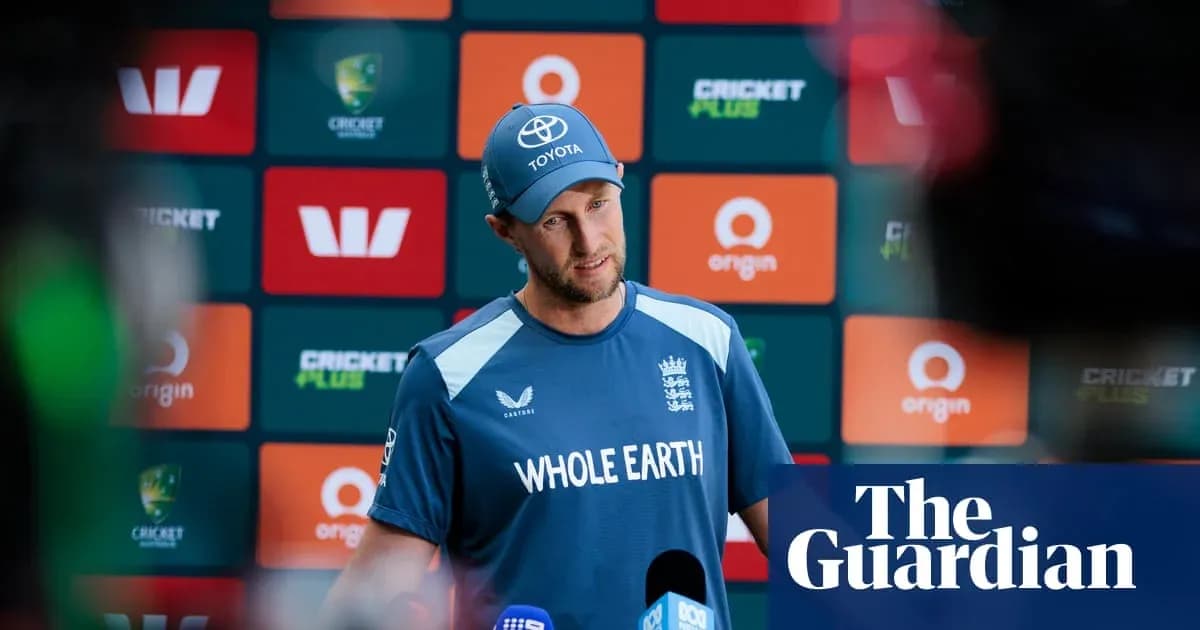
It was telling that on Wednesday, when the circus rolled into town, England pushed out Root for media duty. On paper, it made sense. He is a marquee name, on the brink of his 200th ODI, and still the most recognisable English cricketer in these parts. But Root is also a master of the dead bat in front of a microphone.
Asked directly about the 2017-18 Ashes tour he captained – a tour Khawaja now claims featured Australian ball-tampering before Cape Town – Root simply declined to join in. “I don’t want to speculate,” he said, and steered the conversation back to this series.
The only moment he edged towards the fire came when confronted with a familiar Australian refrain, repeated by Khawaja and others: that “everyone was doing it” before Australia were caught. Root didn’t bite. “I can only speak from my own experiences,” he replied, with a shrug. “That’s not how I feel.”
England can afford to stay above the fray. Why wade into a scandal that continues to drag down their oldest rivals when they can just watch from the balcony? Their brief here is far more straightforward: toughen up a largely inexperienced 50-over side before next year’s World Cup and repair confidence after a limp tri-series in Pakistan.
There is another notable change from last year’s Ashes misadventure. England have actually played a proper tour match at the Waca this time, rather than stumbling straight into the fire. Their backroom team is fully stocked, too. Gone is the deliberately stripped-back support staff of that doomed Test trip. In its place is a more substantial operation, with Kevin Pietersen involved among a cluster of specialist coaches, including two dog-stick experts drafted in from Kolkata Knight Riders to sharpen fielding.
All the while, sandpaper hangs over the series like a dust cloud that refuses to settle.
Cricket Australia has already shut the door on reopening its original investigation, an inquiry that looked hurried at the time and has since been widely condemned as flawed. Officially, the case is closed. Unofficially, it is anything but.
Khawaja’s book has ensured that. He has taken heavy fire for it – some of it vicious, plenty of it unfair. The idea that the memoir is nothing more than a cash grab ignores the fact that he has filled in gaps, raised uncomfortable contradictions and forced the game to confront what it chose not to ask in 2018. For many, the appetite for the full truth has not gone away. That includes, it seems, David Warner, still shadowed by the length and legacy of his ban.
Attention now turns to those who were in the dressing room and remain at the heart of Australian cricket. People want to hear from Pat Cummins as Test captain, even though he, Mitchell Starc and Josh Hazlewood are being rested for this white-ball series. The schedule, crammed to bursting, explains their absence. It does not mute the questions.
Starc has already spoken, doubling down on the joint statement the Australian quicks released in 2021, a carefully worded position that feels increasingly like a legal document rather than a full account. Whether Cummins chooses the same line, given Khawaja’s claim that sandpaper was used earlier in that tour than previously admitted, is an open and awkward question.
Khawaja himself has shown how treacherous this terrain remains. His appearance on ABC’s 7.30 programme on Tuesday turned into an interrogation, the tone closer to a political grilling than a sporting chat. Pressed to name names he declined, just as he had done in print, and the interview slipped into evasiveness and tension.
So England train, tinker and talk about World Cups while Australia argues with its past. One side trying to shape a future in the white-ball game; the other still wrestling with a scandal it cannot quite leave behind.
At some point in Perth, the cricket will have to be loud enough to drown out the echoes.