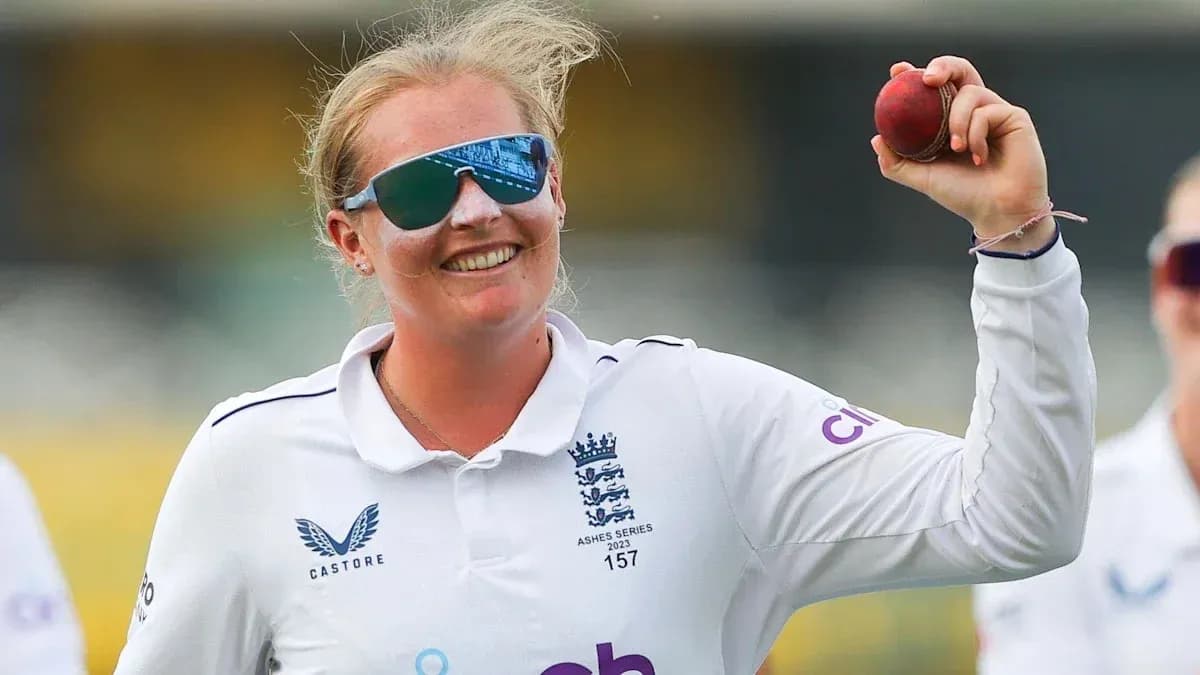
England’s women have torn up their spring Test plans in the Caribbean and doubled down on an Ashes obsession much closer to home.
The scheduled red-ball match against West Indies in April is off. In its place: a purpose-built programme of red-ball cricket designed almost entirely around one thing – finally landing a punch on Australia in the longest format.
Ashes, not Antigua
Nat Sciver-Brunt and her team have barely played any Test cricket in recent years. Since their four-day defeat by Australia in Melbourne in January 2025, they have had just one outing: a heavy loss to India at Lord’s.
Now comes the reset.
Next summer’s Ashes Test, worth four points in the multi-format series, will be staged at Headingley from 24-27 June. The ECB want England to arrive in Leeds battle-hardened, not undercooked.
To get there, they have built a rare stretch of red-ball preparation: four long-format matches in the UK, plus a specialist camp in Asia.
One of those fixtures will be a three-day match against Australia A, a tantalising curtain-raiser that should mirror the intensity of the main event. The other three are intra-squad “best v best” games – England’s top players thrown against each other, with places and reputations on the line.
On top of that, the squad will head to Bangalore in January for a dedicated red-ball training camp, a 10-day block in warm conditions aimed at sharpening technique and temperament before the English summer.
Across the camps and matches, England expect to use 26 or 27 players, broadening the pool while keeping the Ashes core at the centre of everything.
West Indies left without a Test
The decision strips the West Indies leg of the tour back to white-ball only: three T20s and three one-day internationals.
It is another bleak line in the story of women’s Test cricket in the Caribbean. West Indies have not played a women’s Test since 2004 – the only red-ball match they have played in 47 years.
The cancellation comes after public hints that the England and Wales Cricket Board might have been asked to help fund the game.
Cricket West Indies chief executive Chris Dehring had told BBC Sport: “We would welcome any assistance of our much wealthier member boards. It is very expensive to host cricket in the Caribbean.”
The ECB, though, insist this is not a money call. BBC Sport understands the governing body views the change as a performance decision, made with the Ashes in mind rather than the balance sheet.
ECB go all-in on preparation
For Richard Gould, the ECB’s chief executive, the new schedule is about time in the middle and hard decisions on selection.
“A 10-day warm-weather red-ball camp in India followed by four further matches in English conditions will provide Charlotte Edwards and her team with the appropriate game time to be ready for that challenge [of Australia],” he said.
“Best versus best in English conditions provides a valuable opportunity for the team.
“It also allows us to assess our strength in depth, give opportunities to more players and get a number of competitive multi-day cricket matches across a longer period into the wider group.”
It is a clear statement: no more drifting into marquee Tests on the back of white-ball form and hope. England have been outgunned by Australia in the red-ball arena for too long. The innings defeat in Melbourne underlined the gap; the Lord’s loss to India showed how quickly rust sets in when Test cricket is an occasional guest, not a regular habit.
This time, the build-up will be relentless, tailored and unforgiving. Internal battles, an Australia A dress rehearsal, and a camp in Bangalore to iron out technical flaws before Headingley turns up the volume.
If England are ever going to crack Australia in the format that still carries the most weight, it will be off the back of a programme like this. Now they have it. What they do with it will define their Ashes summer.