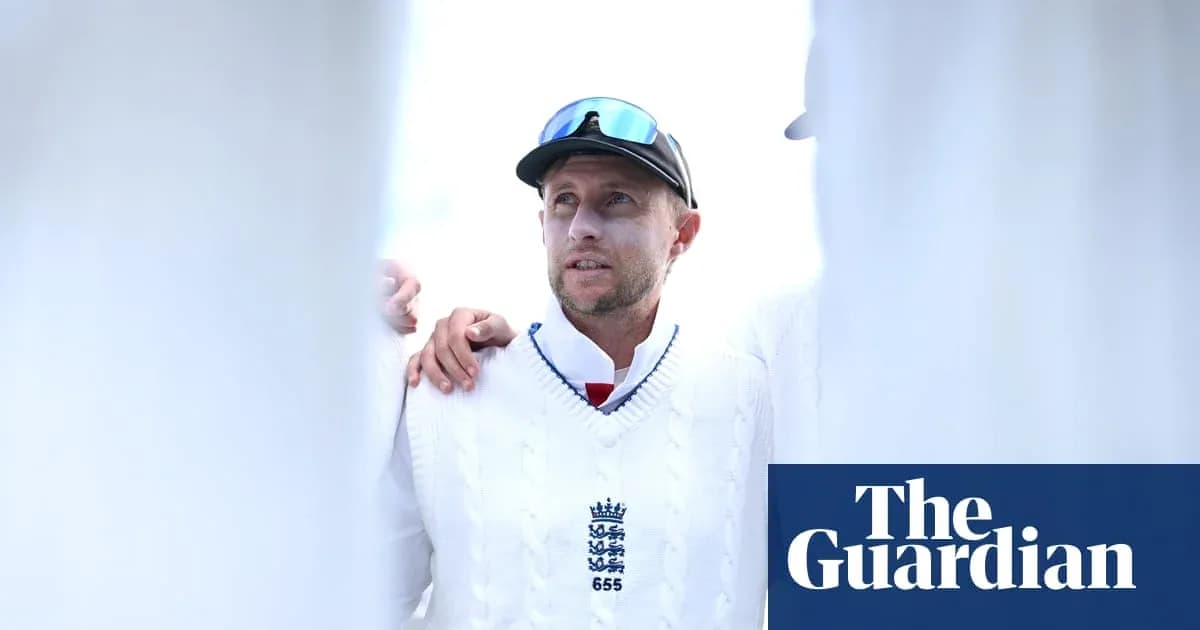
Joe Root stood in the September light and called it what it was: “chaos”, “unusual”, “unsettling”. He was talking about England’s Test summer, but the first thing that sprang to mind was not a misfield, a selection, or a tactical gamble. It was Ben Stokes walking away from international cricket in the middle of a live series, in the middle of a live match.
Cricket has seen mid-game retirements before. Heather Knight did the same at Lord’s during the women’s Test a fortnight later. Root, loyal to a fault where Stokes is concerned, was never going to publicly question whether that dramatic exit, just before New Zealand closed out victory at Trent Bridge, really chimed with his own rallying cry for “selfless cricketers” four years earlier.
But that week felt like the floor giving way. England lost their first home series of three or more Tests in 14 years, New Zealand’s players were laughing in their faces as they sealed it, and the Stokes sideshow bookended a pair of drink-related incidents. This was not just a team losing; it was a team unravelling.
Since then, the temperature has dropped. England have slowly unhooked themselves from the emotional orbit of Stokes and accepted a blunt truth: as long as Brendon McCullum remained in charge, the Bazball label would cling to them like a stain. Only his removal as Test head coach could strip it away. Even then, the image of Brydon Carse in handcuffs in Derby, with Stokes a lurking presence in the background, underlined that calm is a relative term.
They also got a taste of the strange modern phenomenon of the victors being upstaged by the vanquished. England beat Pakistan, but much of the noise swirled around the tourists. Razaullah, 21 years old and batting like a man who had never heard of fear, stole Edgbaston with a breathtaking 81 that matched south Birmingham’s fondness for surprise pyrotechnics. Yet Pakistan, as a collective, were a reminder that dysfunction comes in degrees.
Scraps with Saracens players? A curfew dispute over who heard what, when? England’s issues looked tame beside Pakistan’s implosion: seven players sent home, the head coach and bowling coach following them, phones confiscated, and a harsh light thrown on a government-run board that would rather nobody asked awkward questions about the treatment of the country’s greatest captain. Saj Sadiq of PakPassion.net, no stranger to Pakistan drama, did not sugarcoat it: “As an entire series, this has been the most embarrassing and difficult to watch. On and off the field Pakistan have been an absolute shambles.”
So no, this was not a wasted summer for England. Far from it. Stephen Fleming has not even set foot in the dressing room yet – he lands in the UK this week, with Root impatient to finally meet his new head coach after a long-distance courtship – but over breakfast in Canterbury, catching up on highlights between spoonfuls of cereal, he will have learned plenty about the side he is inheriting.
The most obvious positive sits in the fast-bowling stocks. Ollie Robinson has come back snarling, his accuracy and bounce once again a weapon of real menace. Jofra Archer, crucially, still has an appetite for Test cricket that extends beyond the Stokes era. Josh Tongue looks tougher, more robust, and increasingly dangerous. Gus Atkinson’s returns dipped after the Rex Rooms episode and a shift in role, yet the speed gun told its own story: this was the fastest he has bowled across a season, England’s quiet man suddenly cranking it up.
There are asterisks all over the numbers. The ball dominated the bat to a degree not seen in England since the 1880s: a wicket every 41 deliveries, scoring rates dragged back by relentless movement and fragile batting. Pakistan’s top order, in particular, offered the resistance of wet paper. On the one occasion conditions eased – a decent Edgbaston surface and a ball that went soft after getting damp the previous evening – England’s attack lost its bite and toiled for breakthroughs.
Root endured familiar nightmares against the tail. Razaullah’s assault at Edgbaston reopened old wounds, and there were similar scars when Root stood in for Stokes at the Oval in June. Marcus Trescothick, who stepped up as interim head coach against Pakistan and is still unsure of his longer-term role, believes Fleming is exactly the kind of mind Root needs alongside him: a sharp tactician, a calm presence, and the most decorated coach in the furnace of the Indian Premier League.
Beneath the frontline quartet of quicks, the depth chart is less clear as eyes turn towards South Africa in December. One view, shared by plenty who have watched the counties closely, is that Olly Stone’s late-summer surge for Nottinghamshire should push him ahead of the younger hopefuls queuing for a shot. The bigger, nagging problem is the absence of a genuine frontline spinner. Fleming, who played alongside Daniel Vettori and understood the value of a multifunctional all-rounder, may crave a similar profile. Liam Patterson-White, with his blend of skills, fits that mould more than most.
Fleming’s own batting journey could also prove instructive for a top order that piled up 23 half-centuries this summer but saw only Ben Duckett convert one into three figures. The New Zealander reached double figures in fifties ten times before finally raising his bat for a Test hundred. That kind of lived experience might help ease the strain on players such as Dan Lawrence, who wears every near-miss like a weight on his shoulders.
Every coach talks about a settled XI. Fleming might quietly welcome the opposite: genuine tension for places. That pressure will sharpen once Jacob Bethell is fit again. Emilio Gay, expected to tour but already hearing whispers about his ceiling, looks the most vulnerable in the current side. If he makes way, England will need to manufacture an opener to stand alongside Duckett, who, aside from his 113 at Trent Bridge, has looked caught between Bazball instinct and a more measured brief.
Jordan Cox may be the man pushed up. Given that the No 3 rarely had to wait beyond the ninth over against Pakistan, it is hardly a radical promotion. Cox did not land the defining score he wanted, settling for three half-centuries, but he left a mark through sheer presence. Almost cocksure at the crease, he carried a swagger that Root admitted he initially struggled to read: “I didn’t really know what to make of him when I first met him.”
Cox has said openly that he has been trying to outdo Root. On paper, that borders on absurd – the captain sits on more than 14,000 Test runs – but as an ambition, it speaks to the new reality. This is a side that can no longer lean on Stokes for miracle moments or live off the fading glow of Bazball. They will look instead to Root not as a talismanic saviour, but as the quieter, relentless example of what it takes to survive and prosper in Test cricket.
If that becomes their guiding light, this chaotic, unsettling summer may yet be remembered as the moment England finally grew up.