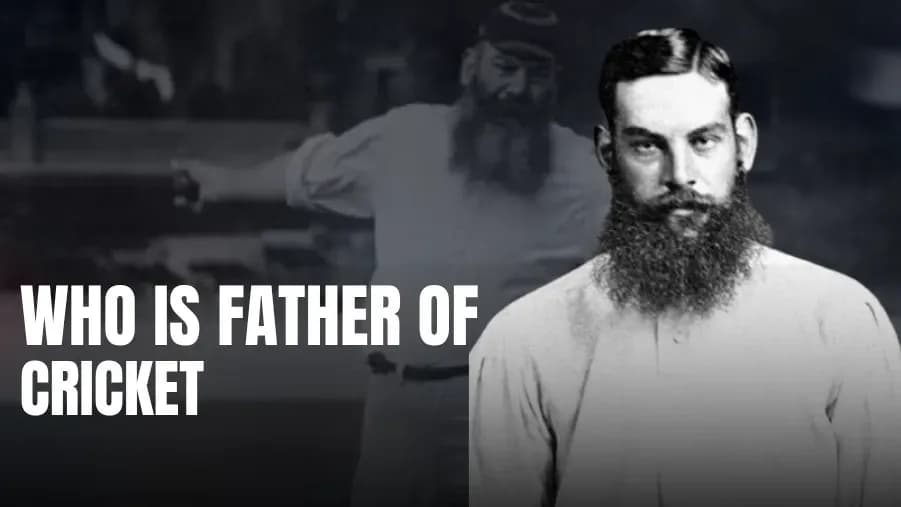
When people mention cricket, one name often stands out: William Gilbert Grace. Known as the father of cricket, Grace revolutionized the sport with his batting style and all-around skills. His career spanned 22 Test matches and an incredible 870 first-class games, in which he scored over 54,000 runs and took nearly 2,800 wickets. More than just statistics, Grace’s larger-than-life presence transformed cricket from a casual pastime into a sport followed worldwide. At 50, he captained England, setting a record that remains unbroken. Meanwhile, in India, Sir Ranjitsinhji Vibhaji Jadeja, famed for his leg glance and honored through the Ranji Trophy, holds the title of father of cricket there.
Who Was William Gilbert Grace?
Born on July 18, 1848, in Downend, Bristol, Grace was not only a cricketer but also a physician. Throughout his career, he displayed remarkable talent both as a batsman and a bowler. His first-class batting average hovered around 39.45, and he took more than 2,800 wickets at an average of 18.14. Grace’s playing style, shot selection, and strategy were ahead of his time, influencing how the game evolved.
Key Stats of W.G. Grace
- Full Name: William Gilbert Grace
- Born: 18 July 1848, Downend, Gloucestershire, England
- Died: 23 October 1915, Mottingham, Kent, England
- Test Debut: 6 September 1880 vs Australia
- Test Matches: 22
- First-Class Matches: 870
- Runs Scored: Test - 1,098; First-Class - 54,211
- Wickets Taken: Test - 9; First-Class - 2,809
- Profession: Cricketer and Physician
The Early Years and Rise to Fame
Coming from a medical family, Grace’s cricketing talents were nurtured early on by his father and older brothers. By age 15, he played for Gloucestershire County and soon appeared in the prestigious Gentlemen vs Players match, the top fixture before Test cricket began in 1877. His combination of skill and charisma made him a celebrity who drew large crowds to the sport.
How Grace Changed Cricket
Grace wasn’t just about numbers; he brought technique, structure, and excitement to cricket. Mastering footwork and shot placement, he set standards for future players. His career coincided with big changes in the game, such as the introduction of overarm bowling and new rules like run-outs and follow-ons. He often pushed the boundaries, prompting the Marylebone Cricket Club (MCC) to refine cricket laws. Through his popularity, cricket grew from a gentleman's pastime to an international sport with organized competitions.
Why Grace Is Called the Real Father of Cricket
Grace earned this title not merely because of his stats but due to how he transformed cricket’s image and reach. With his iconic beard and confident style, he became the first true superstar in cricket. Fans flocked to watch him play, and he inspired many to take up the sport. His influence shaped how cricket was played, viewed, and regulated, leaving a spark that still burns today.
Legacy and Influence
While debates about cricket’s father can be subjective, Grace’s impact is undeniable. His batting techniques set a high standard, and his dedication inspired generations. Stadiums filled to see him play, and his name became synonymous with excellence. Even after his passing, Grace’s legacy remains a beacon for cricketers worldwide.
Father of Cricket in India: Sir Ranjitsinhji Vibhaji Jadeja
In India, the title of father of cricket belongs to Sir Ranjitsinhji Vibhaji Jadeja, known as Ranji. Connected to the royal family of Nawanagar, he started university cricket in England, made a county debut, and then represented England internationally. Renowned for his perfect leg glance, he once broke W.G. Grace’s record for the highest aggregate score in a season. Awarded Wisden Cricketer of the Year in 1896, his legacy is honored through the Ranji Trophy, India’s premier first-class tournament established by Maharaja Bhupinder Singh and the BCCI.
Frequently Asked Questions
- Who is the father of cricket? William Gilbert Grace is recognized as the father of cricket for his extraordinary contributions.
- Who is called the king of cricket? Virat Kohli is often referred to as the king of cricket.
- Who is the king of God in cricket? Sachin Tendulkar holds the title of king of God in cricket.
- Who is the prince of cricket? Shubman Gill is known as the prince of cricket.
- Who is the father of cricket in India? Sir Ranjitsinhji Vibhaji Jadeja is regarded as the father of cricket in India.
- Who is known as Mr. 360? AB de Villiers earned the nickname Mr. 360 for his versatile batting.