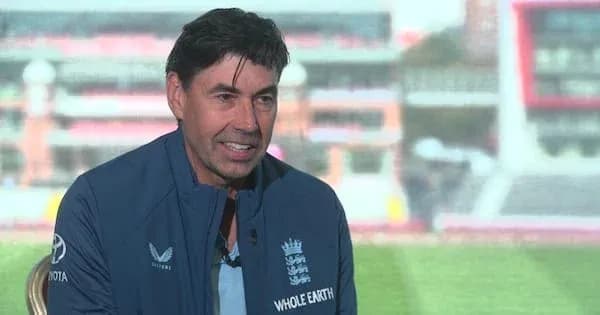
Stephen Fleming has spent a lifetime plotting how to beat Australia. Now he gets to do it in the Ashes – from the England dressing room.
For one of New Zealand’s greatest cricket minds, that was the hook he simply could not walk past.
“New Zealanders love beating Australia so that doesn’t change,” he told 1News, admitting he has to “suppress” his excitement about stepping into one of the sport’s most scrutinised jobs. The Ashes, the glare, the history – it all pulled him in.
From Black Caps legend to England’s biggest job
Fleming is no stranger to responsibility. He captained New Zealand for a decade between 1997 and 2007, leading the Black Caps to a record 28 Test wins and carving out a reputation as one of the sharpest tactical minds of his era. He retired from international cricket in 2008, but never really left the game.
County cricket in England, long before the IPL riches, helped shape him. He calls those years some of his best days. They left him with a deep respect for English cricket – and an understanding of its expectations.
So when the England Men’s Test head coach role opened up, the 53‑year‑old hesitated, but only briefly.
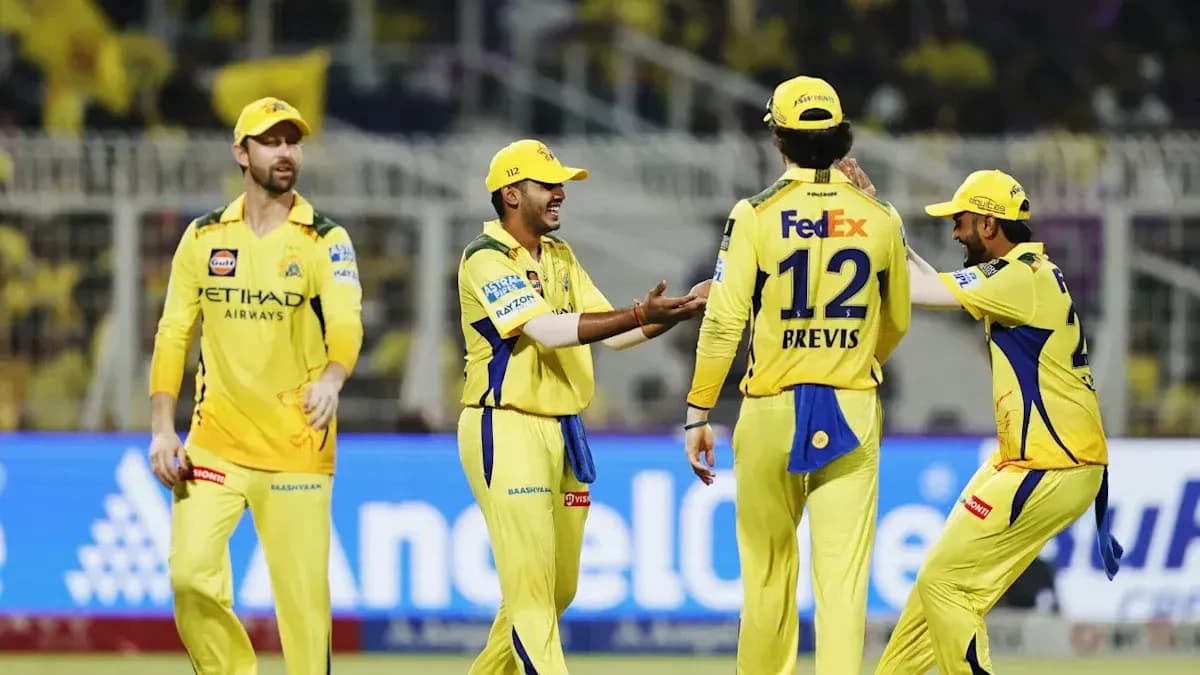
“You go through it and think, ‘Can I make an impact?’” he said. Eighteen years with Chennai Super Kings and the IPL’s T20 grind had become his professional home. Walking away was not a small decision.
“The job became vacant and it was probably three, four days which wasn’t a lot of time to process leaving one job after 18 years and look at another one,” he explained. But as he and his family sat down, weighed the significance, listened to his instincts, something “started to burn in the stomach” and kept growing.
The pull of Test cricket, and of England, won.
“As a cricketer, it’s probably the most prestigious position in world cricket,” he said. For a man whose “DNA was playing in the whites”, this felt less like a leap into the unknown and more like a return to type. “Franchise cricket’s been a big part of my life but the deep passion is really test cricket.”
Picking up the pieces after Bazball
Fleming inherits a team under heavy fire. A 4–1 Ashes defeat to Australia earlier this year, followed by a 2–1 series loss to New Zealand in June, has dragged England’s red‑ball side back into the dock.
Brendon McCullum paid the price in July, removed as Test coach but retained in charge of the T20 and ODI teams. Ben Stokes, the former captain and Bazball talisman, retired during the third Test against New Zealand. He was also stood down, along with a teammate, for the second Test while under investigation for breaking a midnight curfew. A series of late‑night, alcohol‑fuelled incidents has stained the team’s reputation.
Fleming does not dodge that.
He calls those off‑field episodes “disappointing” and talks openly about the need for an education process to lift standards. He points to Joe Root – the 35‑year‑old former captain, who led England from 2017 to 2022 – as the example others should follow.
“Very similar to Kane Williamson where they epitomise everything great about how you conduct yourself by still being a great player,” Fleming said. “There’s work to be done.”
One thing he will not do: reimpose midnight curfews.
McCullum, Bazball and a delicate handover
The twist in this story is that Fleming’s predecessor is not just another coach. McCullum debuted for New Zealand under Fleming’s captaincy. The two are close, and they are business partners. Now they share England’s cricketing landscape.
“It’s a challenge at times but he’s great,” Fleming said. Their conversations – blunt, honest, and ongoing – shaped his decision to take the job and will shape how England manage resources across Test, ODI and T20 cricket.
“He’s loved to bring his flavour to the England team and learning as well, so it’s not just one way traffic… he couldn’t have spoken more highly and endorsed it,” Fleming said. McCullum, he added, was “a bit heartsore” about losing the role but also “very encouraging” about the opportunity it gave his old captain.
Fleming is in no rush to tear up the Bazball legacy. Quite the opposite.
He called what McCullum and Stokes did “quite remarkable”, highlighting how their ultra‑positive approach “culturally changed the cricket landscape”. It began, fittingly, against New Zealand in England, when the new‑look side stormed past the Black Caps and forced the rest of the world to sit up.
“It was really a stand up and take notice moment and the courage that both of those leaders had to do that was immense,” Fleming said. He believes the game has since evolved; rivals have adjusted, and the plan has been “challenged” as others caught up.
His task now is not to abandon that daring mindset, but to refine it – to add layers of strategy and adaptability when the tide turns against England.
A strategist returns to his natural habitat
Fleming has been pigeonholed by some as a T20 specialist after nearly two decades in the IPL. He rejects that easily.
“My DNA was playing in the whites,” he said, stressing that he grew up on red‑ball cricket and only later learned the white‑ball game. He sees the Test arena as the place where his planning, patience and methodical style fit best.
Test cricket, he says, has “substance and strategy”. It is also one of the last major sports still captained “from the inside out”, with decisions driven by the players in the middle. That is where he wants to go to work – by equipping Root and the other leaders to read situations, adjust plans and out‑think opponents over five days.
He talks about raising the team’s “cricket smarts” so they can adapt when the game tightens and the easy runs dry up. For him, that’s the fun part.
“That’s strategy, that’s creating an identity piece, a belonging piece, some standards,” he said. The goal is simple: whoever wears the shirt, whatever the format, represents England properly.
Those ideas were forged when he captained the Black Caps, a side that often had to punch above its weight. Now he wants to transfer that edge to a powerhouse nation expected to dominate, not just compete.
Kiwi edge, English ambition
Fleming knows some will question whether a “laid‑back Kiwi” is the right fit for England at a time of scrutiny and soul‑searching. He shrugs that off as a matter for the ECB, noting that the UK is long used to foreign coaches, especially in football.
What he does insist on is that New Zealand coaches bring a particular mentality.
“We don’t have the resource that other bigger countries have,” he said. “So what we do is we look outside the square and we squeeze everything we can out of the stone to make sure that we can compete on the world stage, that’s our DNA, that number 8 wire DNA that we pride ourselves on.”
That scarcity breeds creativity – and forces coaches to value relationships, because “you can’t burn them in New Zealand if you haven’t got much resource”. Culture is not a slogan in that environment; it is survival. “Living it” becomes non‑negotiable.
He carries that into England with a clear vision: he wants them to be the best Test side in the world. Not just competitive. The best.
“It is a challenge, it’s the pinnacle, there’s a lot of attention on this role in England and media has been talked about and that’s it’s all part and parcel of being in the privileged position of it,” he said. But he is convinced there is “room to move around” on the cultural side, and that players are hungry for a stronger sense of belonging.
Balancing acts and what comes next
Fleming is still building his coaching team and has not revealed names. He will share the England landscape with McCullum, who continues to run the white‑ball sides. The hope is that their relationship, forged in the Black Caps dressing room and hardened in business, will help balance players, schedules and priorities across three formats.
“It’s nice to be able to have that friendly face with that professional slant to be able to achieve hopefully some great things,” he said. The banter has already started. “I’m a little bit older than him so I’ll still be able to get the key guys although he’s now saying he got more experience so I’m second fiddle so we’ve got a little bit of a battle.”
For now, Fleming is juggling commitments. He missed England’s recent Test series against Pakistan due to obligations back home and still has commentary duties for T20 matches when India tour New Zealand. Once that is done, he insists he will be able “to give it everything”.
His first Test assignment is in December, when England head to South Africa for a series that stretches into early January. It will be a stern, unforgiving introduction.
Some have questioned whether a man who has spent 18 years in the IPL can instantly recalibrate to the rhythm of five‑day cricket. Fleming treats it as a return home. He also sees a broader responsibility: to help keep Test cricket alive and compelling at a time when the shorter formats dominate eyeballs and wallets.
“We have a responsibility to entertain and play the game well,” he said.
The reunion with his old team, the Black Caps, can wait. “Thankfully there’s two more years to get some performances under the belt and then we’ll come across that, but it will be a good battle,” he smiled.
By then, the question will not be whether Stephen Fleming made the right call in leaving the IPL. It will be whether his blend of Kiwi ingenuity, hard‑earned authority and red‑ball obsession has been enough to drag England back to the top of the Test world – and to an Ashes fight that matches the fire he’s been trying to “suppress” ever since the phone rang.