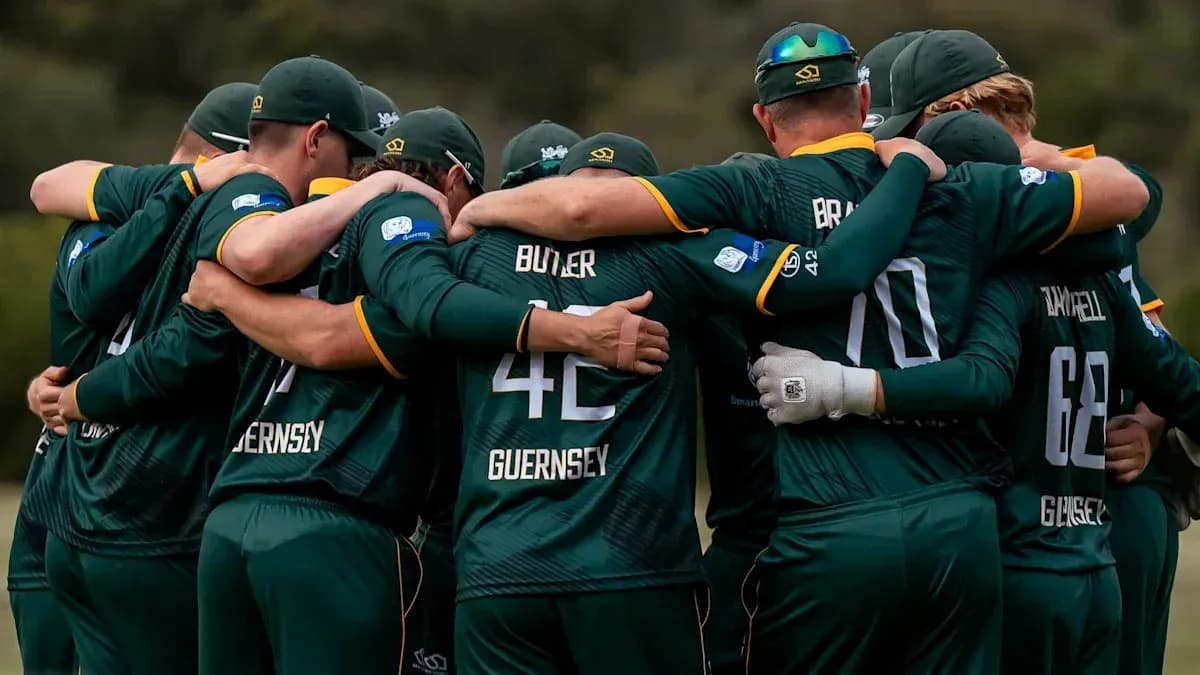
For a few weeks in May, Guernsey Cricket thought the dream was over.
They had gone to Cyprus, swept through their group at the Europe Sub-Regional Qualifier A, and then watched it all fall apart in a single defeat to Jersey in the final. One bad day, and four wins counted for nothing. Under the rules at the time, only the tournament winners advanced. Guernsey’s bid to reach a Men’s T20 World Cup for the first time in their history looked dead.
It isn’t.
A review of the qualification pathway by the International Cricket Council has dragged Guernsey back into the race for the 2028 tournament, to be co-hosted by Australia and New Zealand. The island has now been awarded a place in the next phase of qualifying, reviving a campaign that had already been emotionally packed away.
For Rob Thomson, Guernsey Cricket’s manager, the news landed with the force of a late call-up.
He described it as “surreal” and admitted he is “still digesting the announcement” when speaking to BBC Radio Guernsey. The sense of whiplash is easy to understand. His side had done almost everything right in Cyprus, winning all four group games, only to be punished by what he called a “brutal format” with a single qualification spot.
This time, the system blinked.
Guernsey have only been this deep into the qualification maze once before, in 2024. That run ended at the hands of the Netherlands, a defeat that shut the door on a possible place at the 2026 T20 World Cup in India and Sri Lanka. It was a reminder of how unforgiving Europe’s lower tiers can be, where ambition often runs ahead of opportunity.
Thomson knows that landscape well. He pointed to the sheer “numbers and depth of the European cricket at a sub-regional level” as the reason why teams like Guernsey can so easily be squeezed out. Yet he was quick to stress that the so-called minnows are no longer there just to make up the numbers.
“I think we proved that there is depth and quality also here in some of the non-traditional sides,” he said. For him, Guernsey’s resurgence is not a quirk of the system, but a reflection of work done over several years.
That is why he believes the island “absolutely deserves” its place in the next round.
The evidence backs him up. Guernsey “romped through” their sub-group in Cyprus, imposing themselves in conditions and pressure many associate only with larger nations. Now, instead of reflecting on what might have been, Thomson is already looking at who comes next.
He has watched Denmark. He has watched Spain. He has watched Portugal. These are the sorts of opponents Guernsey expect to face as qualifying intensifies, and he is adamant that “on our day we can be better than those sides.”
That is the tone now: not gratitude for a reprieve, but intent.
Thomson talks about the “cricket we’ve played over the last few years,” about standout individual performances, about a squad that believes it belongs at this level. The message is clear. This is not a fairy-tale invitation to the big time. It is a second chance they fully intend to exploit.
Guernsey’s qualifying campaign will resume next year, with the road stretching all the way towards 2028 and a World Cup staged in Australia and New Zealand. The islanders have already felt what it is like to be knocked out by fine margins and rigid formats.
Now they have something far more dangerous: a fresh opening, and a point to prove.