The toss went Afghanistan’s way. The game immediately swung India’s.
Ibrahim Zadran got what he had wanted for two matches: the chance to bowl first on a surface he felt would back his attack. Shreyas Iyer, though, had read him like an open book.
“We would have definitely batted first as well,” Iyer said before a ball was bowled, stressing on intent, adaptability, and a clear warning against complacency. One change only: Yash Thakur in for Arshdeep Singh. Same mindset, different stage of the series.
Afghanistan, bruised by two defeats and a misfiring top order, arrived with their own reset. Gulbadin Naib and Noor Ahmad out, Abdullah Ahmadzai and Noor ul Rahman in. Zadran spoke of lessons, of turning 150–160 into 200-plus, of going after a “biggest team” with full intent.
Then the cricket began, and India’s openers made all those pre-match words feel very small, very quickly.
Abhishek detonates the Powerplay
Azmatullah Omarzai took the new ball for Afghanistan’s second over. He started short and wide. Sanju Samson calmly chopped him to deep point for a single. That was the last bit of calm Afghanistan saw for a while.
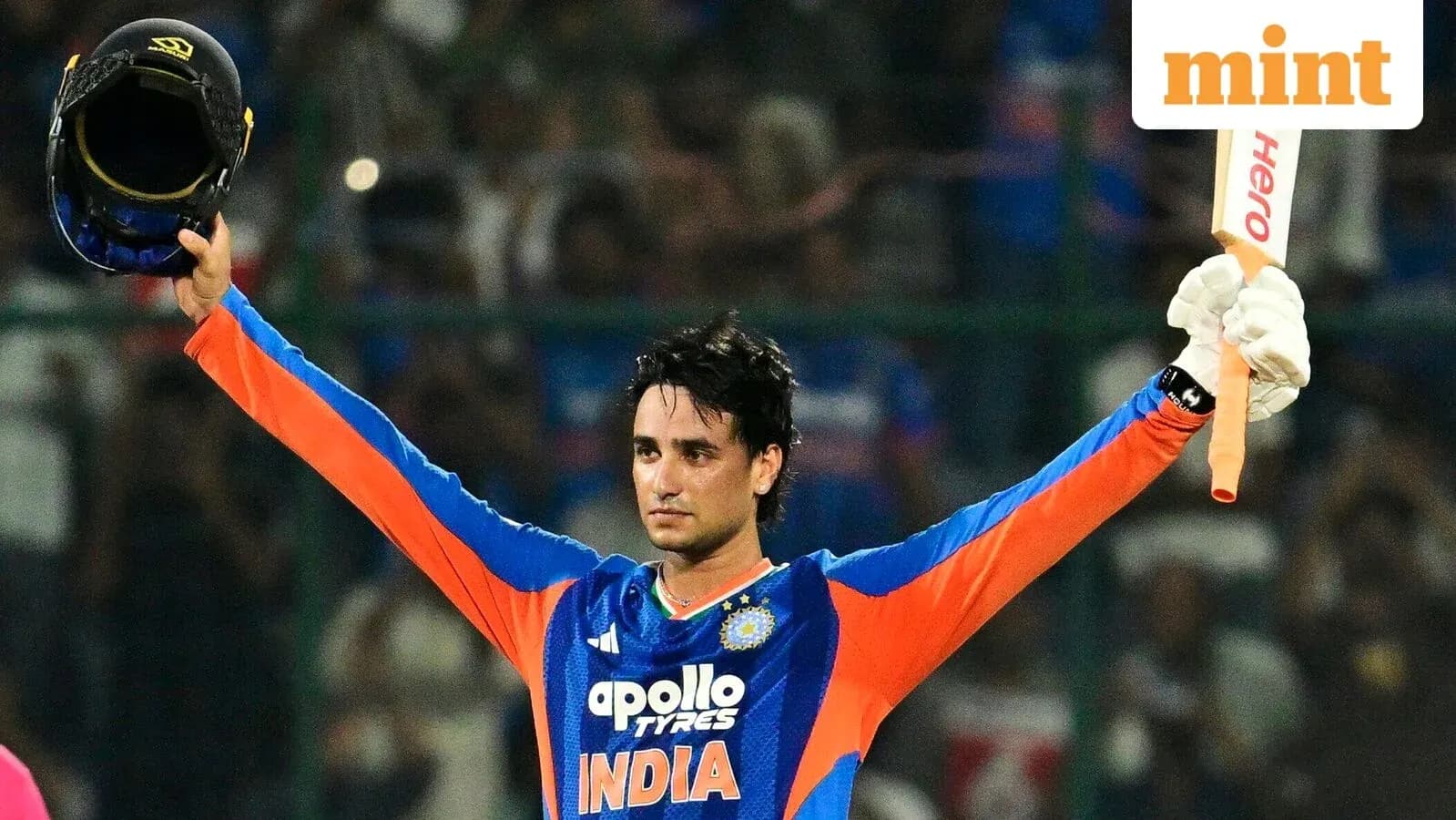
Abhishek Sharma, left-handed and loose-limbed, swivelled on a leg-stump ball and launched it over deep square leg for six. A swing and a miss followed, the only reprieve in the over. Next ball, he muscled four to long-on. One dot. Then the big statement: a clean strike over deep extra cover for another six.
By the end of that over, India were 22 without loss. Abhishek had 20 off 8. The tone was set, the fielders already chasing shadows.
The pressure only grew. Fazalhaq Farooqi returned, and Samson took a shorter ball to deep backward square leg for a single. Abhishek took over again. A fuller delivery disappeared straight back over the bowler’s head for six; he held the pose, as if to underline the authority of the shot.
The next short ball went fine, helped over fine leg for another six. A “harmless” short one was anything but, pulled past deep square leg for four. Then four more, this time to fine leg, as Afghanistan’s lines and lengths frayed under the assault. Two more to deep extra cover closed the over.
Three overs gone. India 45/0. Abhishek 42 off 13. Afghanistan’s plans in tatters.
Samson joins the party, Nabi suffers
If the early overs had rattled Afghanistan, Mohammad Nabi’s introduction made it worse. The veteran off-spinner, brought on to apply a brake, walked straight into a storm.
He tossed one up. Samson, instead of pressing forward, rocked back and sent it soaring straight back over his head for six. A shot that screamed timing and arrogance in equal measure.
Nabi went full again, same area. Samson, same response. Another straight six. The message was brutal: India were not here to nurse a lead in a dead rubber; they were here to stretch it.
Abhishek refused to be a spectator. He took the same route, another towering blow down the ground to bring up a fifty in style. The over had turned into a highlight reel.
Four more followed from Abhishek, threaded past the leg-side field. Then, fittingly, he closed the over with yet another six.
By the time Nabi escaped, the scoreboard told the story: 29 runs from the over. India 85/0 after 5. Afghanistan’s bowlers, who had spoken about intent and execution, were staring at the very target their captain had set as a benchmark — 200 — being hunted down from the other side.
Afghanistan’s challenge deepens
All this came against the backdrop of Afghanistan’s own batting woes. Their middle order had crumbled in both previous games. Rahmanullah Gurbaz, the aggressive opener who often sets their tone, had registered ducks in both matches.
They had “not given themselves enough chance to compete,” as the analysis around the camp went. If they batted first again, they knew the number: 200 had to be the aim. Anything less, against this Indian side, felt like a concession.
Zadran had framed it clearly before the game: raise that 150–160 to 200-plus, bring intent, keep things simple, give 100%. That was the only way to push one of the most complete T20 sides in the world.
But as Samson and Abhishek tore into the attack, those ambitions looked increasingly steep. The bowlers who were supposed to exploit a “supportive” wicket were instead watching balls sail over their heads and skid to the rope. The fielders were running in circles. The captain’s plans were being rewritten ball by ball.
India, already with the series in hand, had talked about avoiding complacency and “not going completely berserk.” What unfolded in those first five overs was something more ruthless: controlled aggression, powered by clarity and a fearless opening pair.
For Afghanistan, the task now is stark. They came into this game seeking a response, a performance to lift their spirits before they fly out to Japan. If they are to leave with anything more than lessons, their batting will have to find a gear it has not touched all series.