India’s latest Asia Cup triumph ended not with fireworks and a glittering trophy lift, but with an empty podium and a political statement played out in front of the cricket world.
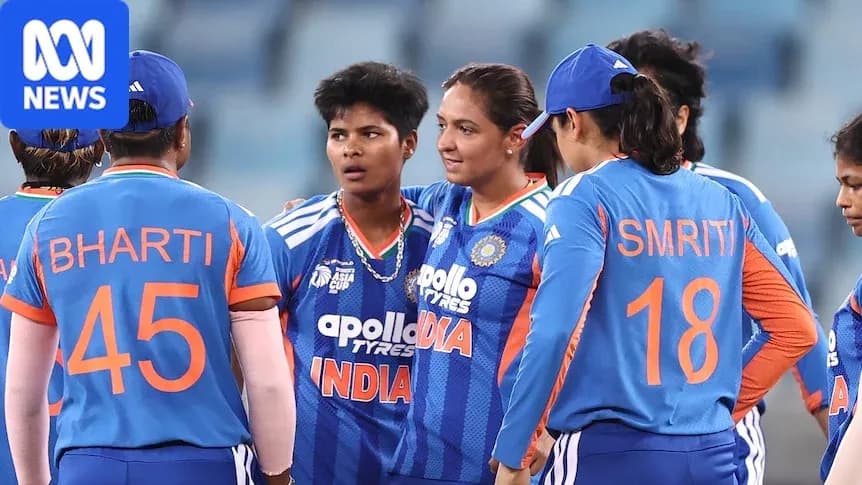
In Dubai, India’s women dominated Sri Lanka by 72 runs to claim a record eighth Asia Cup title. On the field, it was emphatic: 5-183 after winning the toss, followed by Sri Lanka bundled out for 111 in 20 overs. A routine coronation should have followed.
A Trophy With No Takers
As the final wicket fell, officials prepared for the usual rituals. The stage went up, the medals and trophy were laid out, and ACC chairman Mohsin Naqvi — who is also Pakistan Cricket Board chairman and Pakistan’s interior minister — took his place on the dais alongside Asian Cricket Council officials.
Then nothing happened.
The presentation ceremony stalled for nearly an hour. While Naqvi and the officials waited on stage, the Indian players stayed away. Instead, they held their own small ceremony, away from the official spotlight. BCCI secretary Devajit Saikia stepped in to present the best fielder medal to Nandani Sharma, a quiet but telling act of defiance.
Social media footage showed Naqvi and his fellow dignitaries standing on the podium, medals and trophy ready, as the Indian team walked off the field. There was no queue of champions, no handshakes, no trophy lift. The champions simply chose not to appear.
The ceremony limped on without them. Medals went to the Sri Lankan players and the match officials. Naqvi handed the runners-up cheque to Sri Lanka captain Chamari Athapaththu, and then it was over. No photos of India with the trophy. No confetti. Just an abruptly closed curtain on what should have been the tournament’s showpiece moment.
“Trophy or No Trophy”
India coach Amol Muzumdar did not dress it up.
“This is BCCI's stand [to not take trophy from Naqvi]. We can't say anything on this,” he said, underlining that the decision came from the Indian board rather than the dressing room alone.
He made it clear the team saw no need for a physical symbol to validate their dominance.
“India are officially the champions. Trophy or no trophy doesn't matter to us.
“For us, this tournament is over, we are the champions. That's good enough. It was on the big board that India are the champions of Asia Cup 2026.”
The scoreboard, not the silverware, was all the confirmation they needed.
A Pattern, Not an Isolated Flashpoint
This was not a one-off flash of emotion. It was the latest act in a deliberate, ongoing stance.
Cross-border tensions between India and Pakistan pushed the two nations to the brink of war last year, and cricket has mirrored that hostility. Handshakes — once a routine, almost thoughtless gesture — have become a political act.
Indian cricketers have repeatedly refused to shake hands with Pakistan players at recent tournaments. They have also declined to receive trophies and medals from Pakistani officials on multiple occasions, turning what used to be ceremonial formalities into contested ground.
The men’s Asia Cup told the same story. India beat Pakistan three times, including in the final, but Suryakumar Yadav’s side refused to accept the trophy from Naqvi and did not shake hands with Pakistan players after any of those games. Victory was accepted. The presentation, pointedly, was not.
The women followed that line throughout this tournament. They did not shake hands with Pakistan’s players after their group-stage meeting, and Muzumdar was open about the reasoning.
“That stand has been taken by BCCI and we stand by it,” he said then — a message that echoed again in Dubai as the empty stage stood waiting.
Champions Without the Podium
On a night that should have been remembered for ruthless batting, disciplined bowling and an eighth continental crown, the defining image came after the final ball: a trophy with no Indian hands on it, and officials left stranded on a stage that had lost its stars.
India still leave as Asia’s champions. The record books will show an eighth title, a 72-run win, and another commanding performance in regional competition.
They will not show the missing handshake, the unclaimed medals, or the trophy that stayed where it was placed. But those are the details that will linger as this rivalry continues to move far beyond the boundary rope.