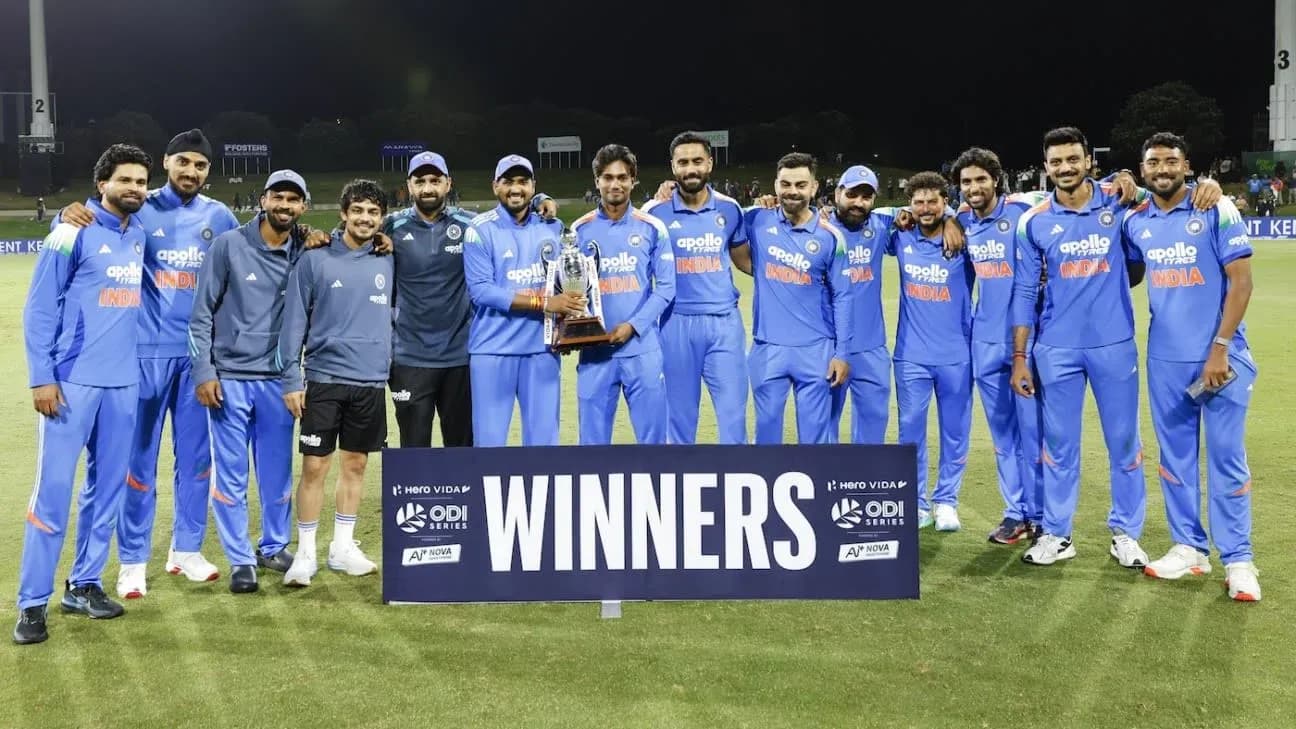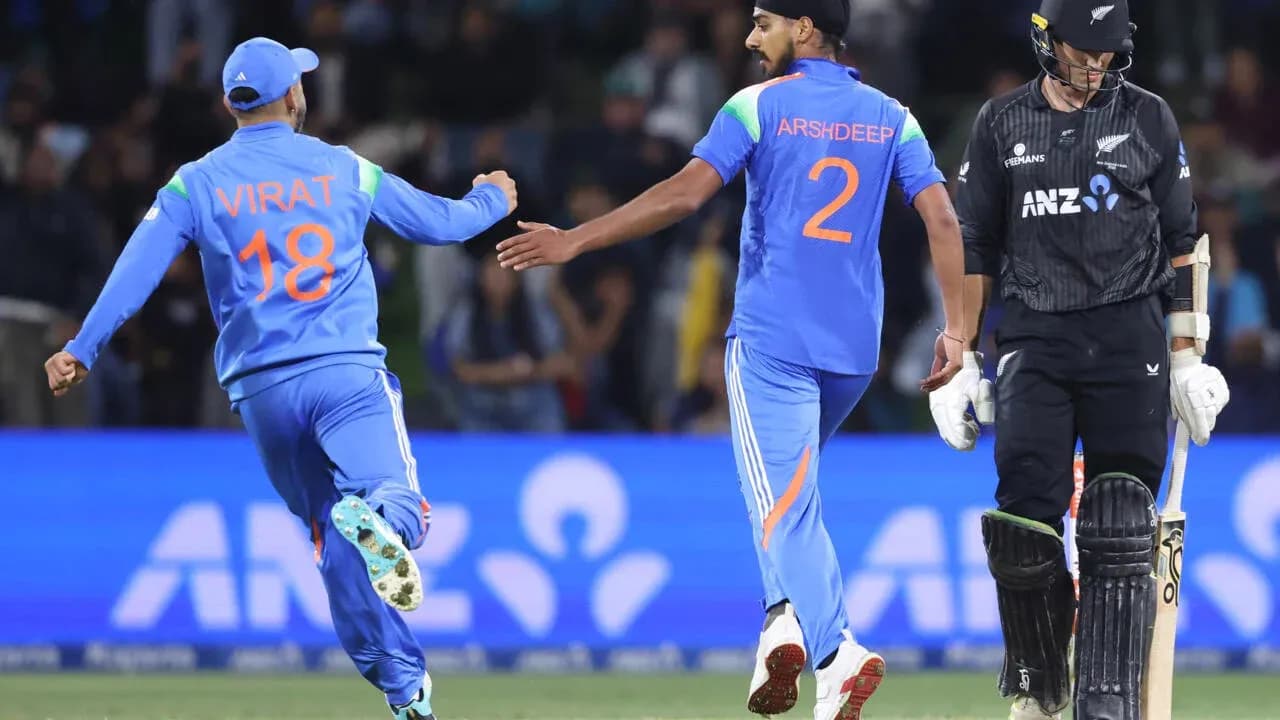
Gautam Gambhir didn’t bother sugar-coating it. "You're always concerned when you get bundled out for 90-odd. Why won't I be concerned?" the India head coach said, laying bare exactly where his mind is as his side heads into a series decider at Bay Oval.
This isn’t just about a 2-1 lead in New Zealand. It’s about what that 90-odd means with a World Cup looming in similar conditions.
A decider with bigger shadows
India arrive in Mount Maunganui ahead on the scoreboard, but not in control. Their two wins have been patchy, stitched together more by moments than by command. The batting, in particular, has wobbled too often to be dismissed as a blip.
New Zealand, by contrast, walk into Sunday with the clarity that comes from a thumping win. They dismantled India in the fourth ODI, their quicks ripping through a high-profile top order and their batting anchored by a timely return to form from Will Young. The series may read 2-1 to India, but the psychological needle has shifted.
And yet, both sides will look and feel different in Mount Maunganui.
Attacks reshaped, questions unchanged
The hosts lose their destroyer-in-chief. Matt Henry, whose six-wicket haul lit up the previous ODI, has been released to prepare for the Test series, as has Kyle Jamieson. That’s a sizeable hole in New Zealand’s attack on the very surface where India’s batters most need a confidence-restoring outing.
Jacob Duffy and Blair Tickner are the likely plugs. Honest, hard-working seamers, capable of hitting the pitch and the seam, but they do not bring Henry’s aura or Jamieson’s awkward bounce. New Zealand will hope the collective can mask the absence of star power.
For India, the reshuffle comes from the other format. Gurnoor Brar has joined the Test squad in Wellington, opening the door for Mohammed Siraj to return to the XI. There is also a decision to make around Kuldeep Yadav, who looked off-colour in the last game. A seam option in Yash Thakur could come in if India lean fully into conditions.
Probable XIs
New Zealand: Tim Seifert (wk), Will Young, Nick Kelly, Dean Foxcroft, Finn Allen, Michael Bracewell, Mitchell Santner (c), Kristian Clarke, Blair Tickner, Jacob Duffy, Matthew Fisher.
India: Rohit Sharma, Ruturaj Gaikwad, Virat Kohli, Shreyas Iyer (c), Ishan Kishan (wk), Axar Patel, Naman Dhir, Auqib Nabi, Kuldeep Yadav/Yash Thakur, Mohammed Siraj, Arshdeep Singh.
Henry’s absence is a clear relief for India. The scars of that last outing are fresh, and this is as good an opening as any for their top order to reset the narrative.
Bay Oval, the toss, and the tricky first 10
The setting: Bay Oval, Mount Maunganui. First ball at 3:00 PM local time, 7:30 AM IST.
The forecast: clear skies, no weather excuses.
The pitch in the fourth ODI told two stories. There was assistance for the pacers across the day, but Shreyas Iyer, captaining India for the last two games, pointed to "a huge difference in the first innings and the second innings in terms of [the] wicket". New-ball survival, not early dominance, might decide this contest.
Gambhir laid out the batting equation with typical bluntness. "In the first 10 overs, you won't get 70-80. If you get 35-40 for no loss in 10, that is good enough. Because in India, the easiest time to bat is in the first 10-15 overs. Here, it’s probably the most difficult time."
That’s the challenge for Rohit Sharma, Ruturaj Gaikwad and Virat Kohli at the top. India’s batters are used to cashing in early at home. Here, they must learn to leave, to wear, to wait.
The toss has gone India’s way throughout the series. If it does again, the decision becomes a test of nerve as much as tactics. Do they trust their batters to absorb the new ball and set a score? Or lean on their seamers early and chase under lights on a surface that might ease out?
Form, pressure and an unwanted record
There is another subplot that refuses to go away. Virat Kohli now has 20 ducks in ODIs, the joint-most for India alongside Sachin Tendulkar. It’s a statistic that jars when placed against the mountain of runs he has scored, yet it underlines the volatility that has crept into India’s batting in these conditions.
India also carry the weight of history from the other side. The last time New Zealand lost a bilateral ODI series at home was against India in 2019. That memory will sit quietly in the background on Sunday, a reminder that this touring group has walked into New Zealand and dictated terms before.
New Zealand, though, have their own motivation. They have dragged this series back from 2-0 down and now stand one win away from levelling it and defending that proud home record. With Young finding rhythm again and a flexible middle order built around Dean Foxcroft, Michael Bracewell and Mitchell Santner, they have enough batting to stretch India if the ball nips around.
A decider that feels like a trial
Strip away the series scoreline and this game looks a lot like a World Cup simulation. Conditions close to what both teams expect at the tournament. A batting group under scrutiny. Attacks in transition. Selection calls that could echo into the next few months.
For India, this is not about “moving on” from 90 all out. Gambhir has already closed that escape route. This is about confronting it on a similar pitch, against a similar attack, in a match that actually matters.
New Zealand, missing Henry and Jamieson, must prove their depth can still unsettle a heavyweight batting line-up and keep that home aura intact.
One side will walk away with a series win. The other with fresh questions. In a World Cup year, which can you afford?