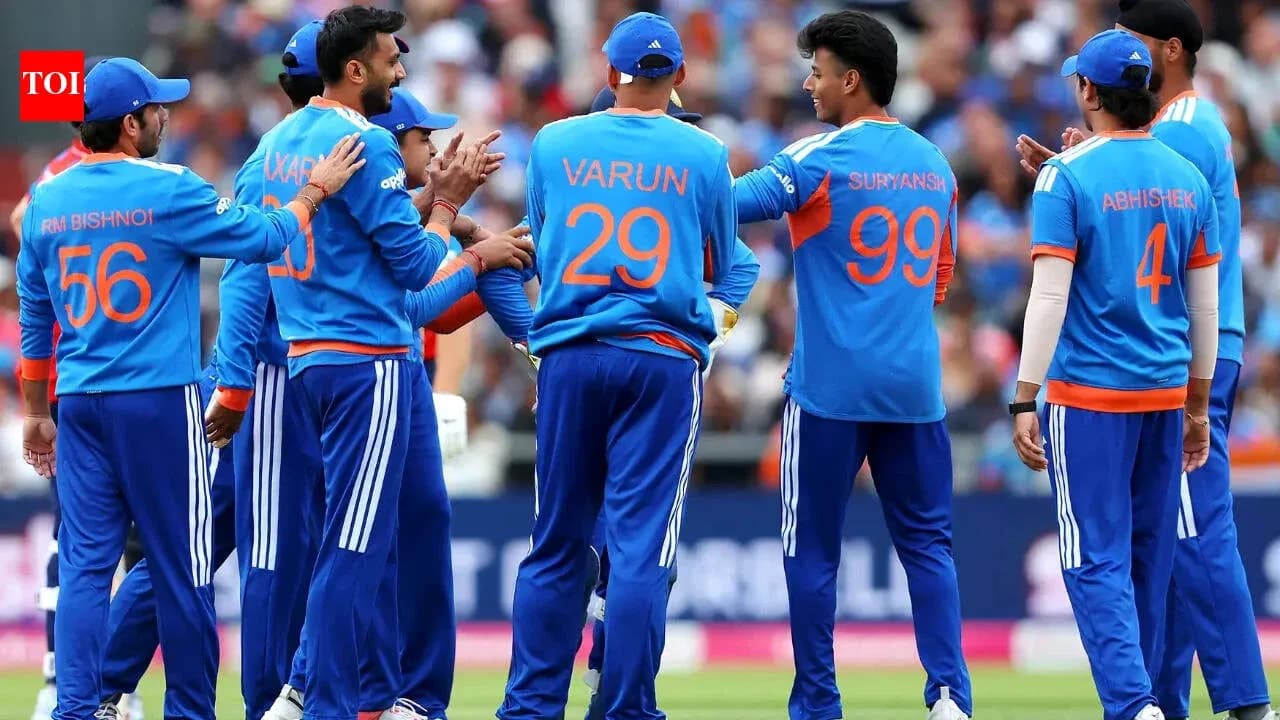
In Aichi-Nagoya this September, India’s cricketers may find themselves living a very different Games life from the rest of the country’s contingent.
If the BCCI decides its men’s and women’s teams will not stay in the official Asian Games hotels, the board will have to run its own mini-operations hub in Japan – booking rooms, arranging meals, managing transport and guaranteeing players still arrive at the ground on time. No shortcuts, no shared burden. All on the Board.
The IOA, for its part, has drawn a firm line: cricket will be treated like every other sport. No special hotel hunt, no bespoke arrangements from its side.
“We have to ensure equal treatment and the welfare of the entire Indian contingent across 36 sports,” IOA CEO Raghuram Iyer told TOI, making it clear the Olympic body will not bend the village rules for one discipline. The message to the BCCI is blunt but fair: if the official hotels don’t work, fix it yourself.
BCCI weighs comfort against control
On paper, the organisers have done their bit. The Indian men’s team has been allotted the three-star APA Hotel Nagoya Ekimae. The women’s team, led by Harmanpreet Kaur, has been placed at the four-star Meitetsu Grand Hotel. Both meet the required standards for the Games. Both are, however, a step down from the five-star comfort India’s cricketers are used to on bilateral tours and ICC events.
Then there is the twin-sharing rule, a standard Games norm but a clear friction point for players who typically enjoy single-occupancy rooms on international duty. Space, privacy, routine – all suddenly up for renegotiation.
The BCCI has not rushed into a decision. Hemang Amin, the board’s CEO, has already spoken to the IOA, and an advance team will travel to Japan early next week. Their task is simple, but loaded: walk through the hotels, inspect the cricket venue, test the logistics, and then report back on whether India’s biggest sporting brand should accept life as just another delegation at a multi-sport event.
“The BCCI is taking care of its athletes, and sending an advance team is the right way to assess the facilities before making a decision,” Iyer said. The IOA, he added, is “completely fine” with that approach.
The pressure on local accommodation is real. Aichi-Nagoya is bracing for around 17,000 athletes and coaches, up from the originally planned 15,000. Hotels are stretched. Mobile accommodation and even the Costa Serena cruise ship are being drafted in to plug gaps. In that context, finding “suitable alternatives” for two high-profile cricket squads becomes a far more complicated exercise than simply booking a block of rooms.
If the BCCI walks away from the official hotels, it must then build its own bubble – rooms, tailored food options, local transport, and daily travel to and from the venue – while still aligning with the rigid timings and protocols of a multi-sport Games.
Different clocks, same headache
The calendar only tightens the squeeze.
Harmanpreet Kaur’s side will feel the first strain. They return from the Asia Cup in Dubai on September 13 and are due to fly to Nagoya the very next day. There is no gentle lead-in. India’s women start their Asian Games campaign directly in the quarterfinals on September 18 and will be done, one way or another, by September 22.
Shreyas Iyer’s men follow later, leaving for Japan on September 21. They too walk straight into the deep end, opening at the quarterfinal stage from September 28 before heading home on October 4.
Different arrival windows, different match schedules, same logistical puzzle. Any separate accommodation plan has to work for both squads without compromising recovery, preparation or punctuality. Miss a bus at a bilateral series and you delay a toss. Miss a bus at a Games and you run into a schedule built around dozens of sports and thousands of athletes.
What will not change, even if the BCCI opts out of the official hotels, is the Games framework around the players. The board would still have to route its decision through the IOA, and the organisers would still control accreditation, security and access.
No accreditation, no entry. Outsiders will not be allowed into team hotels, wherever they are. The bubble may be customised, but it will not be private in the way a normal cricket tour hotel often is.
Anti-doping procedures also follow the players. WADA and the International Testing Agency will need precise details of where the cricketers are staying so random tests can be conducted at those locations. For the BCCI, that means another layer of coordination, another set of moving parts to manage.
Japan now, Los Angeles already on the horizon
While Japan wrestles with beds, buses and room categories for cricket’s Asian Games outing, another host city is already sketching out a very different picture for the sport.
Los Angeles, which will stage cricket’s Olympic return at LA28, is moving early. Iyer was part of a joint IOA–Sports Authority of India delegation that spent nearly a week in the city, meeting organisers and inspecting facilities across sports, including cricket.
“The objective is to ensure athletes can focus only on their performance and do not face logistical issues,” he said. Planning is being done “well in advance” for welfare, comfort and acclimatisation – a level of long-range thinking he described as a first.
Cricket’s LA28 venue, the new Knight Riders Cricket Ground at the Fairplex complex in Pomona, sits right next to the Sheraton Fairplex Suites & Conference Center. Teams are expected to stay there, effectively living beside the ground. Major League Cricket fixtures are set to road-test the venue and its playing surface long before the Olympics begin.
The contrast with Nagoya is stark. In Japan, India’s cricketers are still waiting to find out whether they will live like the rest of the contingent or in a parallel ecosystem run entirely by their own board. In Los Angeles, the blueprint is already being inked with the sport’s needs at the centre of the plan.
Before any of that, though, comes a different kind of landmark. On September 22, India’s men will meet Japan in a T20I for the Suzuki Cup, marking 75 years of diplomatic relations between the two countries. It will be a historic fixture, and timely match practice, on Japanese soil just days before the Asian Games begin.
By then, the BCCI will have decided: embrace the Games way of living, or build its own world around two teams chasing gold. Either choice will say plenty about how Indian cricket sees itself in the crowded, demanding ecosystem of multi-sport events.