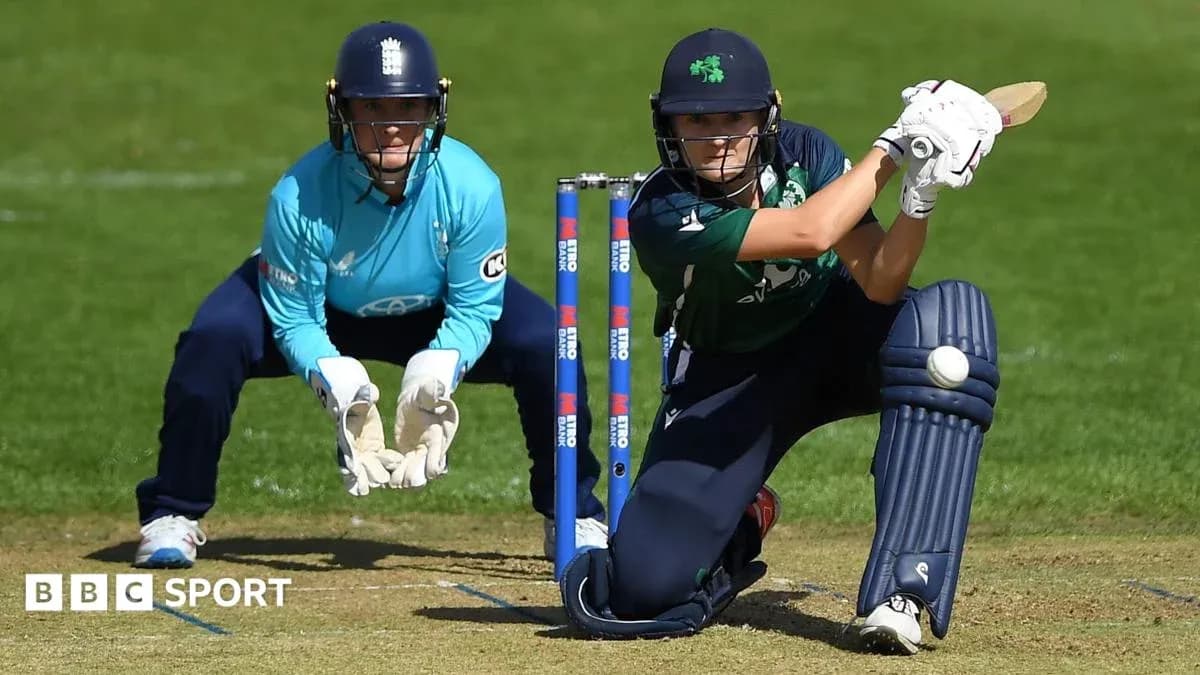
For a long stretch, Ireland’s innings felt like a slow suffocation for England. Runs came, chances didn’t, and Gaby Lewis anchored things with the calm of a player who looked set to bat all afternoon.
Then Issy Wong changed the mood with one ball.
England, ragged early on, had just made the tweak Katherine Sciver-Brunt had been calling for on commentary – a change of ends for Wong. The difference was immediate. The wayward looseners that had littered her first spell disappeared. Her rhythm sharpened, her length tightened, and suddenly Orla Prendergast, such a dangerous presence, was pinned on nought and forced to respect the bowling.
The pressure finally told on Lewis.
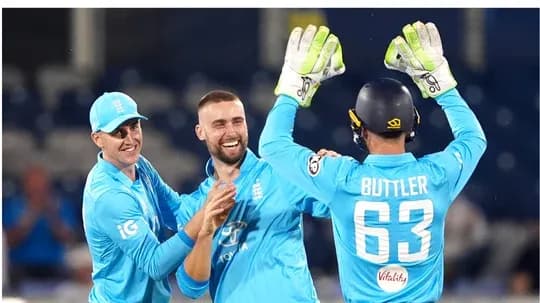
At 149-2, set on 69 and looking immovable, she played down the wrong line to a ball with a bit of fizz and nip off the pitch. Wong slipped it between bat and pad, the stumps were shattered, and the bowler took off in a leap of raw, unfiltered celebration. It was the breakthrough England had been straining for, and it dragged the contest back towards them.
Villiers’ grip on the game
If Wong’s strike lit the spark, Mady Villiers supplied the squeeze.
From the moment she came on, Villiers looked the most threatening spinner on show. The numbers backed it up: she was turning the ball more than any of England’s slow bowlers – 2.8 degrees of spin compared with Tilly Corteen-Coleman’s 2.2 and Charlie Dean’s 2.0 – and she kept attacking the stumps, challenging them roughly once every four deliveries.
This wasn’t float-and-hope spin. It was hostile, busy, relentless.
She got her reward with the wicket of Orla Prendergast, and in suitably scruffy fashion. Villiers dragged one down, the sort of ball batters usually help themselves to. Prendergast did exactly that, hitting it cleanly, almost too cleanly. The strike gave Maia Bouchier a genuine chance at deep mid-wicket, and the England fielder made the ground to her right before tumbling forward to cling on.
A horrible drag-down on the scorecard. A huge moment in the match.
Prendergast fell for 19, Ireland slipped to 172-3, and England suddenly had their hands around the innings. As ex-England bowler Sciver-Brunt pointed out, the very purity of Prendergast’s contact was her undoing; she turned a bad ball into a catching opportunity.
Villiers’ impact wasn’t limited to the wicket column. She was in the game constantly, sprawling full length to her right to prevent a boundary off the final ball of her over, body language screaming that she was up for the tussle. Every over felt like a contest, not a holding pattern.
Capsey’s keeping experiment passes another test
Behind the stumps, another storyline was quietly taking shape.
Alice Capsey, in just her second professional match as a wicketkeeper at any level, stood up to Issy Wong’s pace and made it look like she’d been doing it for years. One particular take, a rising ball climbing towards her shoulders, underlined the point. She gathered it cleanly, soft hands, no fuss.
Those around the England camp had suggested at the start of the summer that Capsey could genuinely take on the keeping role. On this evidence, that experiment is gaining serious traction. This wasn’t a soft introduction either: standing up to a quick bowler, in a tight phase of a match, with Ireland pushing hard.
Her composure behind the stumps added a layer of control England badly needed after Ireland had powered their way to 156-2, helped by some looseness from Corteen-Coleman. One over from the seamer summed up her day: a ball dragged too wide despite a packed off-side field, four runs, and the added sting of a no-ball. England were giving away too many free hits, literal and metaphorical.
Ireland’s platform, England’s response
By 165-2, Ireland had built an imposing platform. Lewis was scoring freely, Prendergast lurking with intent, and England’s bowlers looked short of answers. Kirstie Gordon, watching on for BBC Radio, called it a “crucial time” for England, and she was right. One more stand, one more partnership, and the chase could have become a formality.
Instead, the game tilted.
Wong’s change of ends brought control and then the wicket of Lewis. Villiers, already England’s sharpest spin option on the day, then removed Prendergast. Bouchier’s catch at deep mid-wicket, low and tumbling, put a full stop on Ireland’s early dominance.
Rebecca Stokell arrived and needed a couple of balls to settle, missing her first attempted drive before getting off the mark second ball. It was a reminder that, with new batters at the crease and England’s confidence up, the tone of an innings can change quickly.
By the time Ireland reached 174-3, the scoreboard still looked healthy, but the story behind it had shifted. England had wrestled back control with skill, nerve and a touch of grit – the kind that comes from a fast bowler hitting her straps, a spinner refusing to back down, and a part-time keeper proving she might be anything but.
If this is what England’s attack looks like when it clicks mid-innings, the real question is what happens when they start like this.