On the edge of a typhoon, with clouds rolling in over Sano, the man helping welcome the T20I world champions to Japan was dragging covers off a pitch.
Alan Curr, COO of the Japan Cricket Association, has barely had time to breathe this week, let alone count how many jobs he’s done. Groundstaff at dawn. Event manager by mid-morning. Security checker, tent fixer, problem solver all day long. All for one game of cricket that, in pure sporting terms, Japan are unlikely to win.
And yet, for Japanese cricket, the result is almost the least important part of this story.
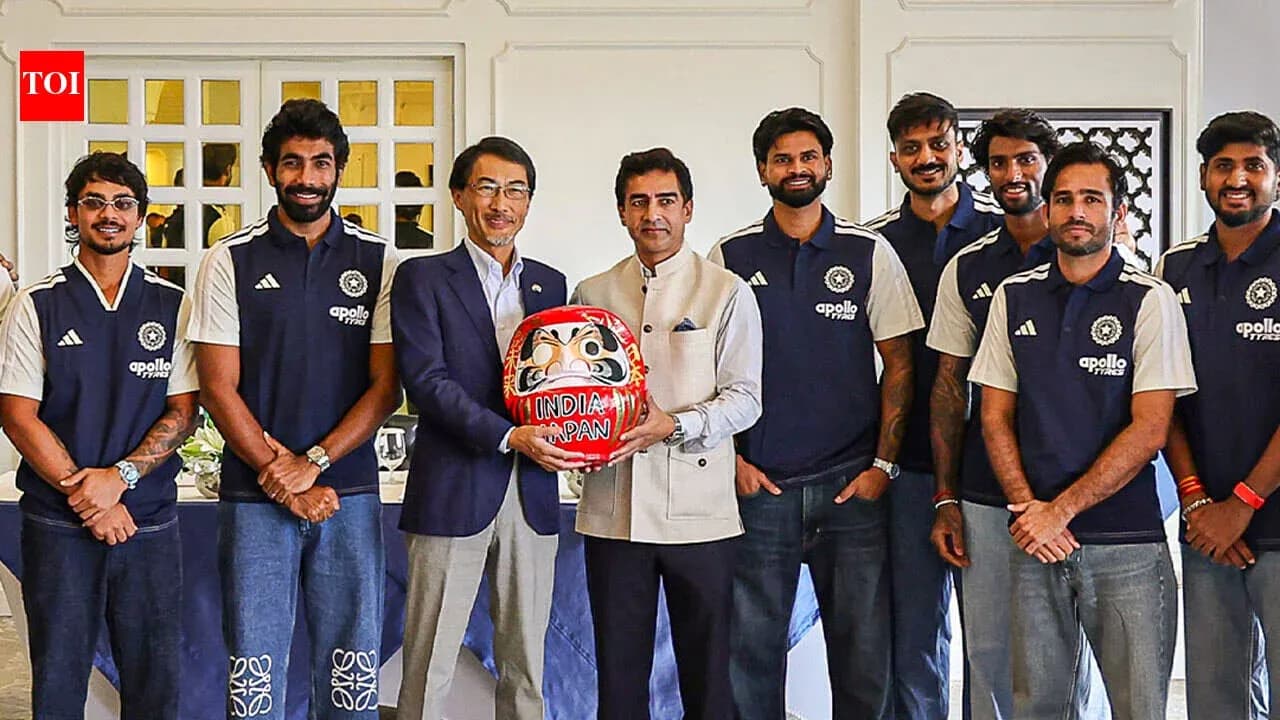
On Tuesday, weather permitting, India will walk out against Japan in what will be the host nation’s first-ever men’s senior international against a Full Member. For a country where cricket has lived in the shadows for nearly 150 years, this is not just a fixture. It is a statement.
A World Champion Arrival
Curr knows exactly what India’s presence means.
“It certainly helps to say that the reigning world champions, the No. 1 ranked team in the world, are coming to Japan,” he says. You can hear the lift in his voice even on the record. This isn’t just another touring side squeezing in a warm-up. This is India, the sport’s most powerful team, parachuting into a nation where baseball diamonds and football pitches dominate the landscape.
Cricket first arrived in Japan in the 1870s. It never disappeared, but it never truly broke through either. Baseball, Football, Sumo, Basketball, Golf, Tennis, Boxing — they all sit higher on the country’s sporting ladder. India’s visit is the loudest knock cricket has made on that door in decades.
The JCA is not pretending otherwise. This is about attention, visibility, legitimacy. About making people look twice at a sport they may only have seen in passing, if at all.
“A lot of success has almost already happened,” Curr says. India have agreed to come. Local media have turned up to ask what this strange, stop-start game is all about. Japanese broadcasters and reporters are learning the language of yorkers and googlies.
Before a ball has been bowled, Japanese cricket has already moved.
More Than Just a T20I
Japan are not strangers to international cricket. The men’s and women’s teams have quietly plugged away for years. The country has appeared at Under-19 World Cups, faced India and Pakistan at youth level, and sent a women’s side to the Asian Games.
But this is different.
This is a senior men’s team, at home, against India. A Full Member. The world champions. This is the kind of fixture you can put on a billboard and expect people to stop and ask questions.
The timing could hardly be better. Days after India’s visit, cricket returns to the Asian Games in Aichi-Nagoya. For a Japanese audience, the Games are familiar, trusted, part of the sporting calendar. Cricket can ride that wave.
“The Asian Games gives cricket legitimacy that it didn’t have before,” Curr says. If Japan can tell its story through a platform the country already understands, the sport suddenly feels less foreign, less distant.
You can’t be what you can’t see. For many in Japan, this will be the first time they see cricket at all.
Quiet Growth, Japanese Style
The story behind this week is not one of sudden invention. It’s the product of a decade of small, almost unnoticed steps.
When Curr arrived in 2014, Japan had around 3,000 registered players. Today, that number is about 8,800. The Japan Cup, the country’s T20 competition, has swelled from a handful of sides to more than 80 teams. The domestic 40-over league now stretches across four divisions.
None of this has happened with fanfare. It has followed a very Japanese principle.
“Kaizen is the word,” Curr says. Continual improvement. Small upgrades. One more school program here, another club side there. A few more grounds. Better pitches. More coaches. Then, every so often, an opportunity appears that lets you accelerate all of that work.
This week is one of those moments.
Winning Hearts, Not Just Overs
Japan’s players know what they’re walking into. They are not deluded about the gulf in experience and skill.
“This India team is pretty good,” Curr says, deadpan. It’s the understatement of the week. For players who have never faced this level of pace, spin, scrutiny or pressure, it will be a brutal examination.
So the JCA has chosen a different scoreboard.
The measure of success is not just how many runs Japan score or how long they last with ball in hand. It’s how the team carries itself. How the crowd feels walking out of the ground. How many people decide they want to see cricket again.
Curr points to a recent example. At the Asian Games, Japan’s women’s team stayed back after their fixture against India. They thanked supporters. They mingled with fans. They turned a routine match into a shared moment.
That is the identity he wants the men’s side to project: hard, honest cricket wrapped in approachability.
“We want cricket to be played hard but also be accessible and friendly,” he says. “We want cricket to be fun.”
If thousands of first-time spectators leave Sano remembering not just India’s stars but the way Japan embraced the occasion, the JCA will feel it has done its job.
How Clay Turned Into a Cricket Dream
The remarkable part is that this historic fixture was never on some glossy strategic roadmap.
It started with dirt.
Eighteen months ago, the JCA set out to relay the turf square at Sano. They turned to Sri Lanka Cricket, whose groundsman flew in to help identify the right clay. That same clay ended up forming the base of the Asian Games venue in Nagoya.
Once the pitches were laid and tested, a question surfaced: if Japan now had international-quality wickets, why not invite the very best to use them?
In March, with the square ready, the JCA prepared a proposal and sent it to every Full Member ahead of the ICC conference in Edinburgh. It was a bold move for a small board, but it landed where it mattered.
Conversations with the BCCI began there. To Curr’s surprise, they moved quickly.
“The BCCI were really keen to have an opportunity to train,” he says. For India, the logic was clear. The men’s squad for the Asian Games would otherwise spend nearly a week in limbo, waiting for their knockout match without proper training facilities. Sano offered both a high-quality base and, eventually, a match.
For Japan, it offered something far bigger: a once-in-a-generation chance to put itself on cricket’s map.
A Small Ground, A Big Moment
Sano is no heaving cauldron. The ground has 500 permanent seats. On most days, it hosts domestic matches in front of friends, family and the odd curious passerby.
Over the last few days, it has been transformed. Hospitality tents. Security checks. Temporary infrastructure to make the venue feel worthy of the visitors. Curr has been at the centre of it all, trying to ensure that when India step out, the stage feels big enough for the occasion.
There is one opponent no one can control. A typhoon lurks in the forecast, threatening to sweep across the region. The covers have already had their first run-out. Fingers are firmly crossed that the rain stays away long enough for history to be written.
If the weather holds, India vs Japan will unfold in front of a crowd heavy with first-timers, many of them seeing a cricket ball bowled live for the first time. Some will come for India’s star power. The JCA’s hope is that they stay, and come back, for the sport itself.
The broadcast will beam pictures out on FanCode on September 22 at 9:30 am IST. For most viewers, it will be another early-morning T20I. For Japanese cricket, it will be something else entirely.
A small ground. A new wicket. A world champion opponent. And a country quietly asking itself: is this the day cricket finally finds its place here?