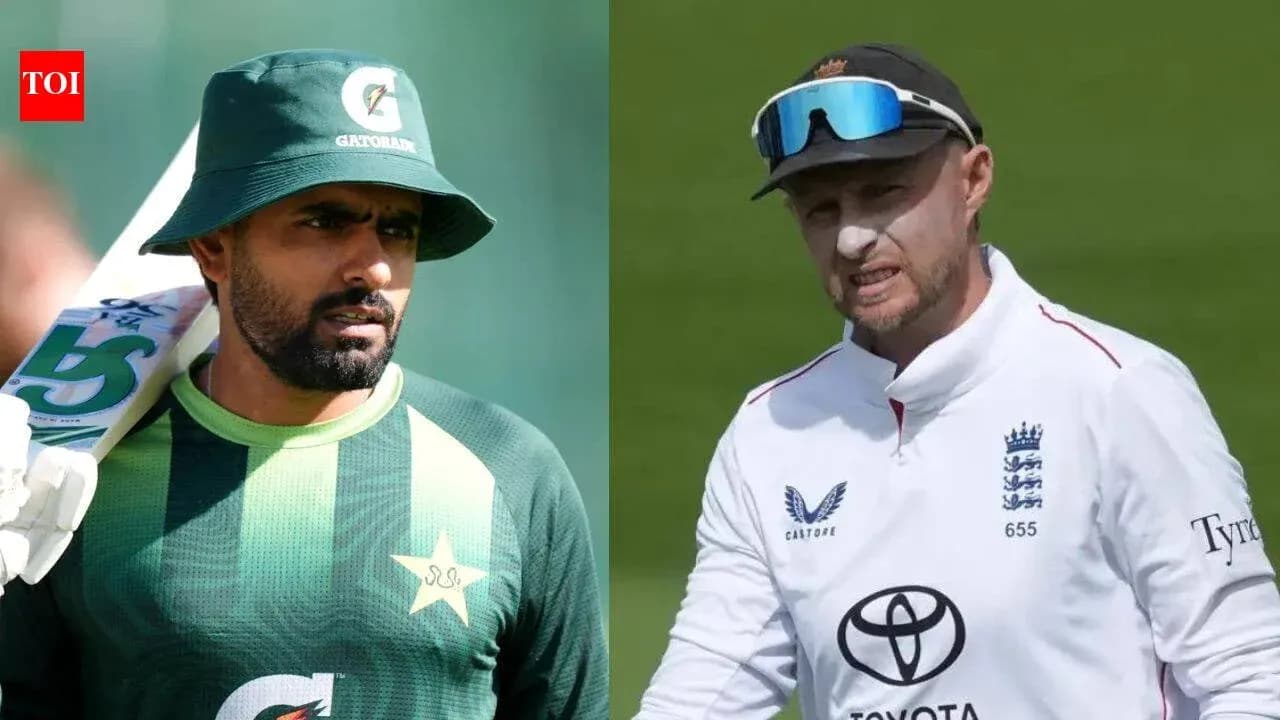
Joe Root walked into his pre-match press conference with a series already wrapped up and a dressing room humming with confidence. What he did not accept, even for a moment, was the idea that Pakistan had simply rolled over.
On the eve of the third Test at Edgbaston, the England captain bristled at the suggestion his side had been up against a team offering “no fight” in a series that stands 2-0 and already decided.
“Absolutely we have found Pakistan a challenge,” Root said, his tone firm. Calling them lifeless, he insisted, was “a bit disrespectful to both Pakistan as a team and to us as a team.”
England’s dominance has been brutal on the scoreboard. An innings-and-103-run demolition at Headingley followed a 194-run victory at Lord’s. Across four innings, Pakistan have not once reached 200, repeatedly chewed up and spat out by a pace attack of Ollie Robinson, Jofra Archer, Josh Tongue and Gus Atkinson.
Those numbers fuelled the narrative: a weak touring side, out of its depth, devoid of resistance.
Root wasn’t buying it.
“We’ve not allowed them to get into games because of how well we’ve played,” he argued. England, he said, have been quicker to read conditions, sharper in seizing moments, and ruthless once ahead. The gulf, in his eyes, is as much about England’s clarity as Pakistan’s chaos.
Pakistan's Changes
And chaos is exactly what Pakistan bring to Edgbaston.
After the Lord’s defeat, the Pakistan Cricket Board ripped up the script. Seven players were sent home. Test coach Sarfaraz Ahmed was removed. White-ball coach Mike Hesson was drafted in to oversee the final Test. Seven new players arrived, five of them uncapped at this level, parachuted into a squad already under siege.
The team has been branded one of Pakistan’s weakest Test sides in decades. The label has stuck in some quarters. Root rejected that, too.
“I think it’s very easy to say one team is excellent and one team is poor. Normally it’s somewhere in the middle,” he said.
His point was clear: if England have been “outstanding”, as many observers have claimed, then Pakistan cannot simply be dismissed as hapless passengers.
“If one team has been outstanding then the other team can’t have been poor and vice-versa,” Root continued. “I think it’s important to live in that middle area somewhere and understand that that’s not how it is.”
For Root, the first two Tests are not a reason to relax. They are a warning about what happens when his side get things right. Let standards drop, and a wounded opponent with fresh faces and nothing to lose can quickly look very different.
“Regardless of what’s happened over the last two games, this week it’s a completely different proposition for us,” he said.
That proposition is an unpredictable Pakistan, reshaped overnight, coached by a man more associated with white-ball innovation than Test conservatism, and packed with players desperate to prove they belong. There is no bank of footage on some of them, no long history to lean on. For a bowling unit that has thrived on plans and precision, it is a new kind of examination.
Root knows that complacency is the real danger now. Series won, crowd expectant, opposition in turmoil: it is exactly the sort of stage where focus can drift.
He has no intention of letting that happen.
“There’s a very talented group of players in that dressing room and you’ve got to be ready for it,” he warned of Pakistan. “So we’ll make sure that we are.”
England arrive in Birmingham chasing a clean sweep. Pakistan arrive trying to salvage pride and identity after a brutal fortnight. One side wants to confirm its dominance. The other wants to prove it still has a heartbeat.
Edgbaston will decide which story sticks.