NEW DELHI: India’s women’s team stood on the podium in Dubai on Sunday as eight-time Asia Cup champions, but the moment that should have been about glittering silverware and smiles turned sharply political.
The players did not step forward to receive the trophy from Asian Cricket Council chief Mohsin Naqvi — who also serves as Pakistan’s interior minister and chairman of the Pakistan Cricket Board. The cup stayed where it was. The statement was made without a word.
It was a scene that felt familiar. In 2025, Suryakumar Yadav’s India had taken the same stand at the men’s Asia Cup, refusing to accept the trophy from Naqvi. A year on, the script repeated itself, this time with the women’s side.
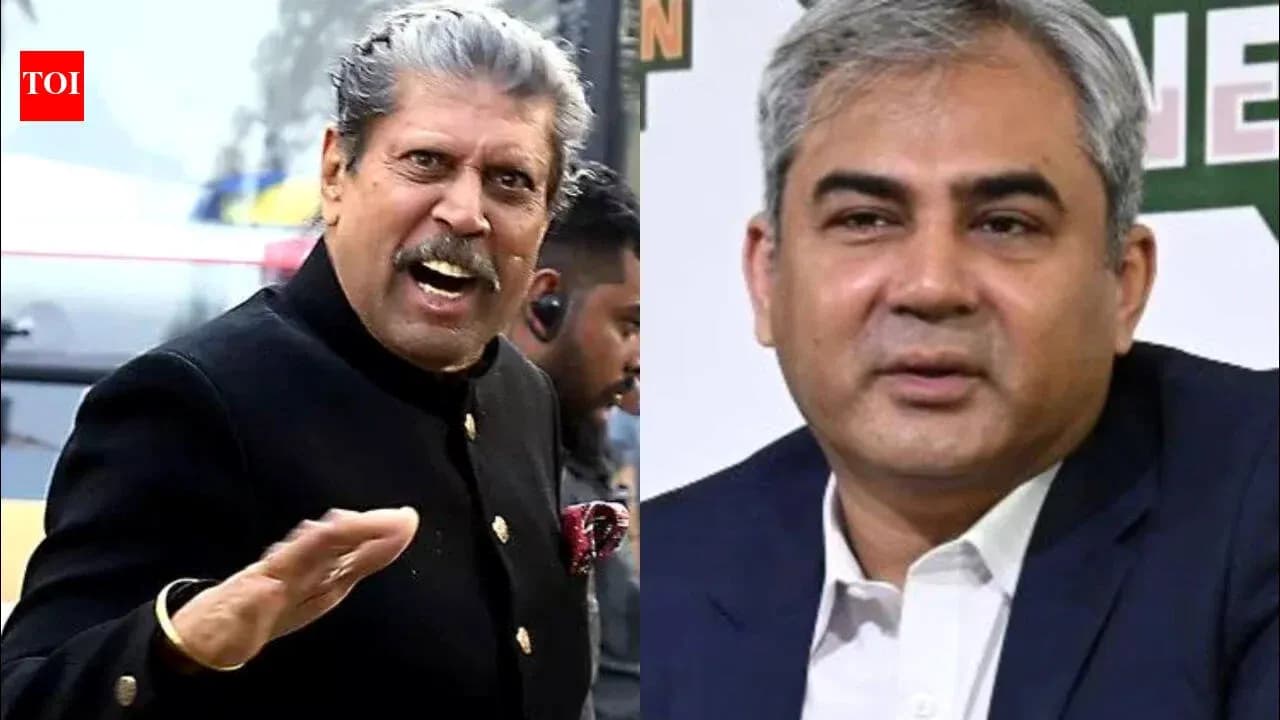
Into this charged backdrop walked Kapil Dev, asked for his view on India’s latest refusal. The World Cup-winning former captain chose not to wade into a long political or administrative debate. He chose a punchline.
“Tell all of them to play golf,” he told news agency ANI.
No elaboration. No lecture. Just a dry, cutting quip from a man who has seen enough cricket politics to know when to step aside and when to skewer the mood with a single line.
BCCI draws its own boundary
While Kapil kept it light, the Board of Control for Cricket in India treated the matter as anything but casual.
BCCI secretary Devajit Saikia revealed that the stand-off in Dubai was not a spur-of-the-moment protest by the players but the result of a clear, pre-planned position communicated to the organisers.
“Winning the trophy is one thing, but winning the tournament is what truly matters,” Saikia told ANI, underlining that the controversy over the silverware did not originate in the Indian camp.
He said the board had already told the Asian Cricket Council that it would not accept a presentation ceremony conducted in the manner proposed, invoking the previous year’s experience around the Asian Games as part of the context — an episode, he stressed, “known to the entire nation.”
The message to the organisers was blunt: change the format of the ceremony, or India would not take part in it at all.
“We had stated beforehand that we did not approve the manner in which they had planned the prize distribution ceremony,” Saikia said. “We informed their chairman that if they proceeded with that specific system, we would not participate. Since they did not agree, we chose not to accept the trophy in that manner; we will collect it later.”
The pressure finally told on the ceremony, not on India. The team stayed away from the official presentation involving Naqvi, even as they had crushed Sri Lanka by 72 runs in the final to claim their record eighth Women’s Asia Cup crown.
One decision, one front
With the images of the absent champions ricocheting around social media, the next question was inevitable: was this a player-led revolt or a boardroom directive?
Saikia left no room for doubt.
“This was entirely the BCCI’s decision,” he said. The players, he stressed, had not broken ranks or freelanced a protest. “We had discussed everything internally, and the BCCI’s stance remains consistent with what it was previously.”
The board’s line, as he framed it, was about unity and policy, not personalities.
“Whether it concerns the players, the team, or the BCCI officials, we are all united; there is no divergence between the players’ decisions and the BCCI’s decisions. We act as one. Whatever decision is taken, we proceed in accordance with the BCCI’s established policies.”
So the scoreboard tells one story: India, champions again, miles ahead of the field in Asian women’s cricket. The presentation stage tells another: a powerful team willing to walk away from the spotlight rather than bend on a principle already laid down a year ago.
Between those two images sits Kapil Dev’s dry suggestion that everyone “play golf” instead. The bat and ball have done their job. The politics around the trophy are only just getting started.