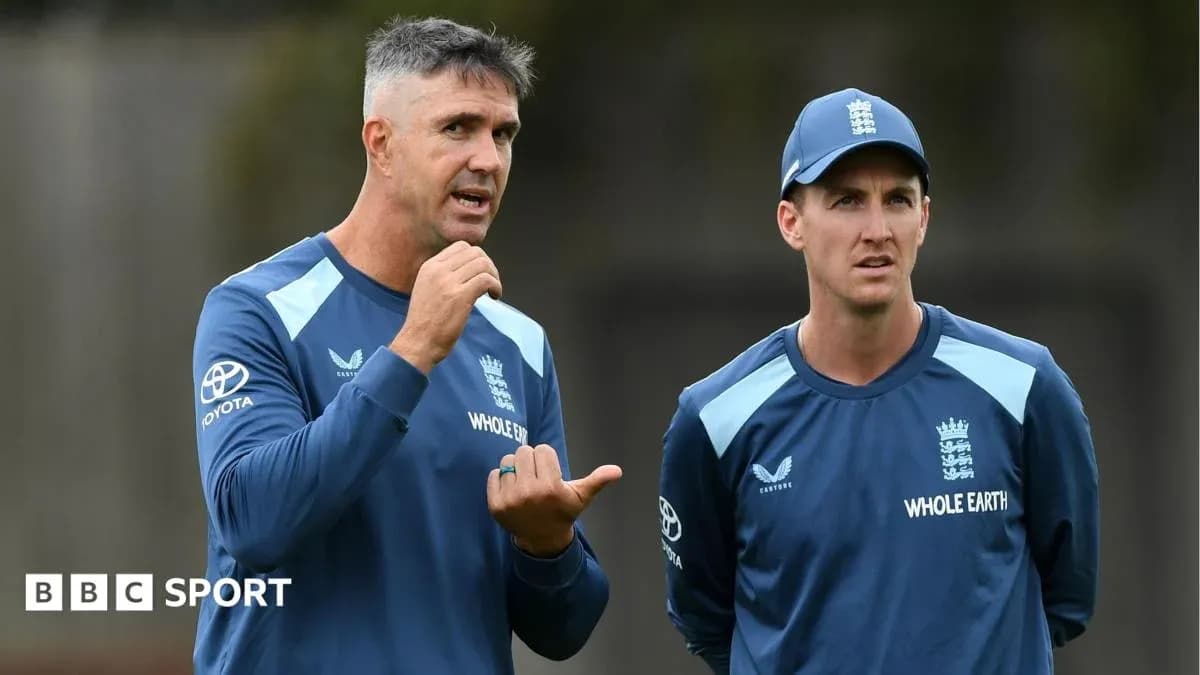
Kevin Pietersen back in England colours. Not in pads, not with bat in hand, but as a mentor guiding a World Cup campaign. For anyone who watched his England career end in a Lord’s office in 2014, the idea would once have sounded absurd.
His last meaningful conversation with the ECB involved being told he would never play for his country again. Since then, he has built a media empire, fronted a successful YouTube channel, The Switch, and carved out a post-playing life that looked far too busy to squeeze in time with an international side.
Yet here we are. And once the surprise settles, the move starts to make a lot of sense.
A dressing-room disruptor – in the best way
Pietersen will not arrive with soft edges. He never did. He is blunt, forthright, and utterly unafraid to say what he thinks. Dressing rooms need that. They cannot survive as echo chambers where every opinion is politely nodded through and nobody challenges the standards.
On England’s white-ball tour of India last year, working as a broadcaster, he was openly frustrated by the lack of extra practice England’s players were doing before games. For Pietersen, preparation was non-negotiable. His sessions were intense, targeted, and laced with competition.
He would stroll into the nets, look a bowler in the eye and announce he was going to smash them everywhere and not get out. It was part wind-up, part challenge. It raised the temperature. Bowlers tried to bowl quicker, sharper, better. The practice suddenly felt closer to the real thing.
Those battles in the nets mattered. Facing one of the best players in the world, with pride on the line, forced standards up. Arguments would break out about field settings, run values, whether a mis-hit would have gone to hand. It all fed into a mindset: this counts.
Ahead of his time, but never satisfied
Pietersen’s game always felt like it had been beamed in from the future. The switch hit. The flamingo flick through mid-wicket in a Test match. The audacity to hit Glenn McGrath back over his head for six at Lord’s in 2005. He embraced the IPL long before it became a standard stop on the modern player’s calendar.
None of that would look out of place in 2026. It barely looked real in 2005.
Yet for all the swagger, he never behaved as though he had solved the game. In Sri Lanka in 2012, at the SSC in Colombo, he was the one already an hour deep into a session against local left-arm spinners when team-mates arrived for a warm-up match. Left-arm spin had troubled him. So he went to work on it.
Ironically, Andy Flower, the coach with whom he would later clash so publicly, oversaw that grind. The payoff came quickly. Pietersen produced a stunning 151 against Rangana Herath in the second Test, taking him apart around the ground. Later that year in India, his runs – especially in Mumbai – formed the backbone of a historic series win. The genius on show in those innings was built in the quiet, unseen sessions when nobody was filming.
That is the mentality England are buying into.
Helping others face the fire
Pietersen’s work ethic was never just about his own game. During the brutal 2013-14 Ashes in Australia, with Mitchell Johnson tearing through England and tailenders visibly shaken at the thought of facing him, Pietersen stepped in.
In Perth, he pulled a team-mate aside – not even one in the starting XI – and took him to the nets. He fired bouncers at his head, over and over, helping him find a method to deal with the short ball, or at least to evade it. Whether Pietersen also fancied a break from the suffocating atmosphere of the dressing room is another question, but the effect was real. It helped.
You can see the template for his mentoring role right there. Spot a weakness, drag it into the open, attack it with hard practice. No hiding.
He was the same in team debriefs. If he thought the approach was wrong, or a session pointless, he said so. Before the 2014 Sydney Test, his dissent towards a fitness-fielding drill was plain for everyone to see. That sort of confrontation splits opinion. Some see it as disruptive. Others call it accountability.
A hard-edged voice for a changing game
There will be those who argue that dropping Pietersen’s full-force personality into a white-ball environment that appears to be evolving well is asking for trouble. Why invite friction when results are trending upwards?
Because friction, handled properly, sharpens edges. Brendon McCullum knows that better than most. Under him, England’s Test side only truly shifted gear when honest conversations met a clear vision and players were forced to own their methods.
Pietersen comes from a different cricketing economy. In his era, Test cricket sat at the top of the food chain. You made your living by mastering technique, by enduring, by doing the hard yards in the nets to survive five days and then expand your game into other formats.
Now, the power has swung towards the globetrotters. Franchise leagues, short tournaments, quick money. The rhythm of the sport has changed. Yet the 50-over game, especially in testing conditions, still leans closer to the tempo of modern Test cricket than to the crash-and-bang of T20. It rewards players who have solid foundations and the discipline to ride out passages where the bowlers are on top.
That is exactly where a figure like Pietersen can add value. He understands how to build an innings and how to attack without losing shape. He understands that work ethic is not optional if you want to dominate across formats.
Unfiltered, and exactly on time
England now have 14 months to shape a World Cup campaign in South Africa. That is a long runway, but also a dangerous one. Teams that win tournaments rarely drift there unchallenged. They arrive having been tested from within.
This is the moment to introduce a voice that questions, prods, occasionally irritates. A voice that refuses to let a side simply maraud on without scrutiny. Pietersen will bring that, and he will not dilute it.
Unfiltered suits him. Right now, it might suit England even more.