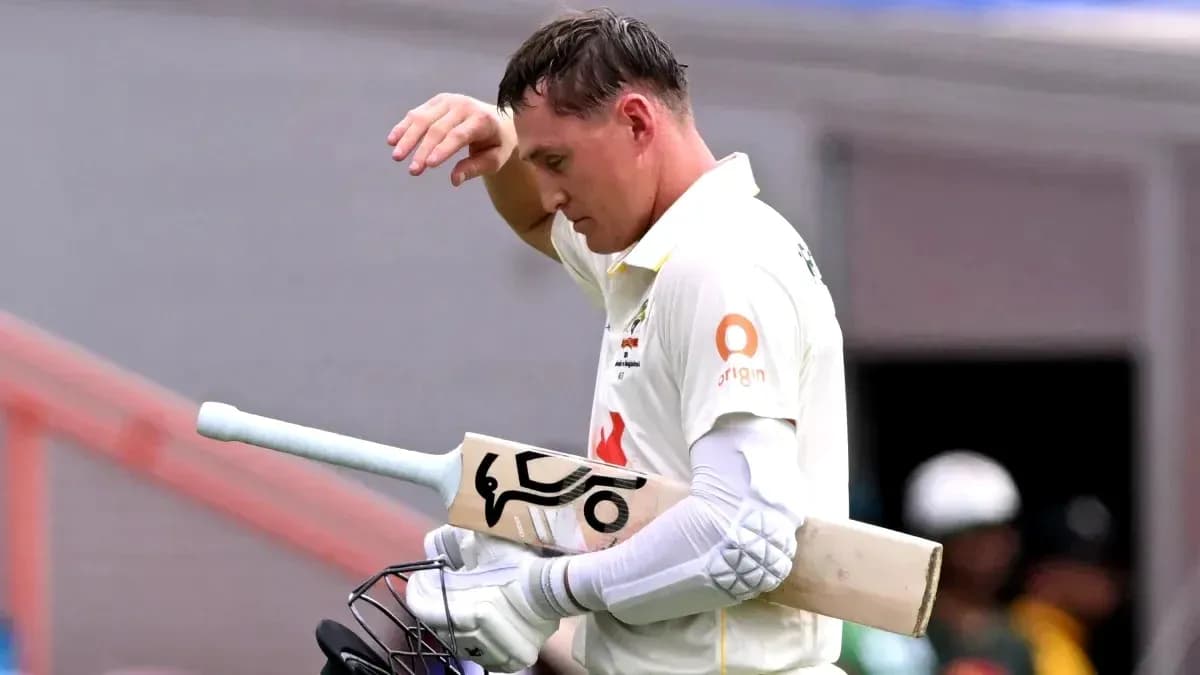
Twelve months out from the next ODI World Cup, Australia have sent a blunt message to Marnus Labuschagne.
He is out.
The batter has been dropped from the ODI squad for the tours of Zimbabwe and South Africa after a lean run in the format, his struggles in Pakistan and Bangladesh proving too costly in a side now tightening its plans for a title tilt.
Labuschagne is one of five players cut from the previous 50-over group, joined on the sidelines by Matt Short, Ben Dwarshuis, Todd Murphy and Liam Scott. With the World Cup to be staged in the same countries, this is not an experimental jaunt. It is a dress rehearsal, and the selectors have picked accordingly.
Core taking shape, doors opening for youth
While Labuschagne’s omission dominates the headlines, the squad also carries a clear note of renewal.
Victorian teenager Ollie Peake has been handed a chance to impress with the bat, a significant show of faith in a player yet to establish himself at international level. NSW all-rounder Joel Davies is in line for an ODI debut as well, with the selectors eager to see how his skill set translates to the highest stage.
Chairman of selectors George Bailey underlined the importance of this block of cricket, describing the six-game series as a crucial lead-in to next year’s World Cup.
With the tournament to be played in Zimbabwe and South Africa, the conditions, venues and rhythms of this tour will mirror what awaits in 12 months’ time. Australia want answers now, not in six months.
That explains the spine of experience running through the squad.
Cummins and Starc signal World Cup intent
Pat Cummins and Mitchell Starc, the twin pace pillars of Australia’s white-ball attack, have both been named, a clear indication they intend to be central figures at the World Cup and fully primed for the Australian summer that follows.
Bailey highlighted the return of Mitch Marsh, Travis Head and Josh Hazlewood, then Cummins and Starc for the South Africa leg, as the moment the “core of players” comes back together, surrounded by emerging talent the panel believes can “continue to make an impression”.
For Peake and Davies, Bailey framed it as “another fantastic opportunity” and a vital step in their “exposure and growth in the Australian team”. The message is simple: the door is open, but performances now will define who walks through it when the World Cup squad is inked.
Fixtures locked, stakes rising
Australia will play three ODIs against Zimbabwe on September 15, 18 and 20, before shifting to South Africa for matches on September 24, 27 and 30.
Six games. Two countries. One year out from a World Cup in the same conditions.
For Labuschagne, the writing is clear. For those on the plane, every innings and every spell now carries the weight of a looming global tournament. Who grabs it?