English cricket has dipped into the Southern Hemisphere talent pool again. This time, it is the women’s game that gets an Australian in charge.
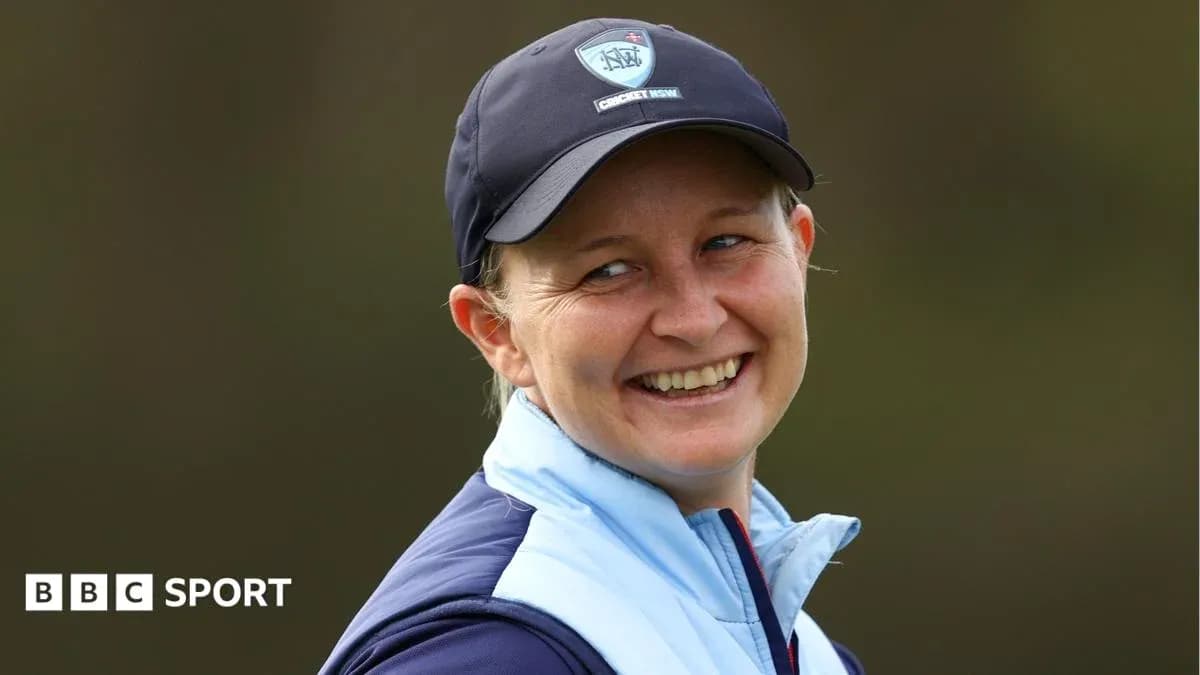
Leah Poulton, the former Australia batter with 90 international appearances to her name, has been appointed managing director of England women by the ECB and will take up the role in November, replacing Clare Connor.
This is no token overseas hire. Poulton arrives with a decade of hard-edged experience in elite female cricket, forged in the fiercely competitive environment of Australian domestic and international structures.
From Big Bash Dugouts to Boardroom Power
Poulton’s coaching journey has run straight through the heart of the Women’s Big Bash League. She served as assistant coach at Sydney Thunder and Sydney Sixers, two clubs that helped redefine the standards of the women’s T20 game.
Her work at Cricket New South Wales sharpened her reputation. As pathway manager and assistant coach for the NSW Breakers, then later as head of elite female cricket at Cricket NSW for the past six years, she built and refined systems designed to churn out international-ready talent. A stint as high performance coach at Cricket Australia added another layer of credibility.
Now, those skills are England’s to tap into.
The ECB has handed her a broad but sharply defined brief: she will be accountable for the performances of England women, England women A and England women U19s, as well as the overall effectiveness and reputation of the women’s high-performance system.
In simple terms, everything that touches the top of the women’s game in England will run through Poulton.
Working with Edwards and Sciver-Brunt
The role will not be a distant, corporate oversight position. Poulton is expected to be close to the cricket.
The ECB has made it clear she will work hand in glove with England women’s head coach Charlotte Edwards and captain Nat Sciver‑Brunt, setting what it calls a “clear, unified vision” for sustained success on the world stage.
Poulton, 42, knows exactly what that world stage looks like. She has played in it. She has coached for it. Now she will build for it.
“I’m incredibly excited and honoured to be joining England and to have the opportunity to help shape our programmes and, most importantly, invest in our people,” she said after the announcement, outlining her priorities as both structural and human.
She spoke of “building on the strong foundations already in place” and “taking the programme forward”, highlighting pathways and the domestic game as non-negotiables for long-term success. Her focus is clear: give the next generation of English players every opportunity to thrive.
A New Shape to the Women’s Set-Up
This appointment lands in the middle of a quiet revolution in the women’s structure at the ECB.
Clare Connor, who has been a central figure in English cricket for years, has stepped away from her role. She wore many hats during her time at the board: deputy chief executive, senior administrator at the International Cricket Council, key figure at Marylebone Cricket Club. She was as much stateswoman as strategist.
Women’s performance manager Jonathan Finch has also left. Poulton effectively replaces both, but with a narrower, more targeted remit.
Her job is not to be the public face of the sport across every corridor of power. It is to own the performance environment of the senior women’s team and the pathways that feed it. That clarity means she is expected to be far more hands-on than Connor, closer to selection debates, development decisions and the day-to-day realities of elite preparation.
Inside the Game, Trusted by Its Leaders
Poulton did not arrive on this shortlist by accident. She is understood to have beaten several heavyweight figures within English cricket to land the job, a reflection of how highly her work in Australia is regarded.
There is already a web of familiarity in place. She has worked with head coach Charlotte Edwards and selector Lydia Greenway in the Big Bash, sharing dressing rooms and decision-making pressure. Those who know her describe a calm, clear communicator, someone unafraid of difficult conversations when standards slip.
That temperament will matter. The women’s side stands at a rare moment of stability. There is no looming crisis, no immediate tour to triage. The senior team does not play again until after Christmas. The early part of the winter will be dominated by work with England women A and U19s, and with the domestic structures that support them.
It is the perfect window for a new managing director to listen, assess and quietly reshape.
An Aussie Charged with Regaining the Urn
Yet the calm is only temporary. The new year brings the sort of challenge that defines regimes.
Next summer, England will host Australia in a women’s Ashes series. The rivalry that shaped Poulton as a player will now test her as an architect of England’s ambitions.
There is a certain irony to it. English cricket already leans heavily on the antipodes on the men’s side. The Test and white-ball head coaches both hail from New Zealand, and Australian Marcus North sits among the selectors. Now, in Leah Poulton, another voice from the southern hemisphere will sit at the top of the women’s game.
This time, though, the stakes are pointed squarely at the Ashes. England want the urn back. And the person tasked with building the system to do it is an Australian.