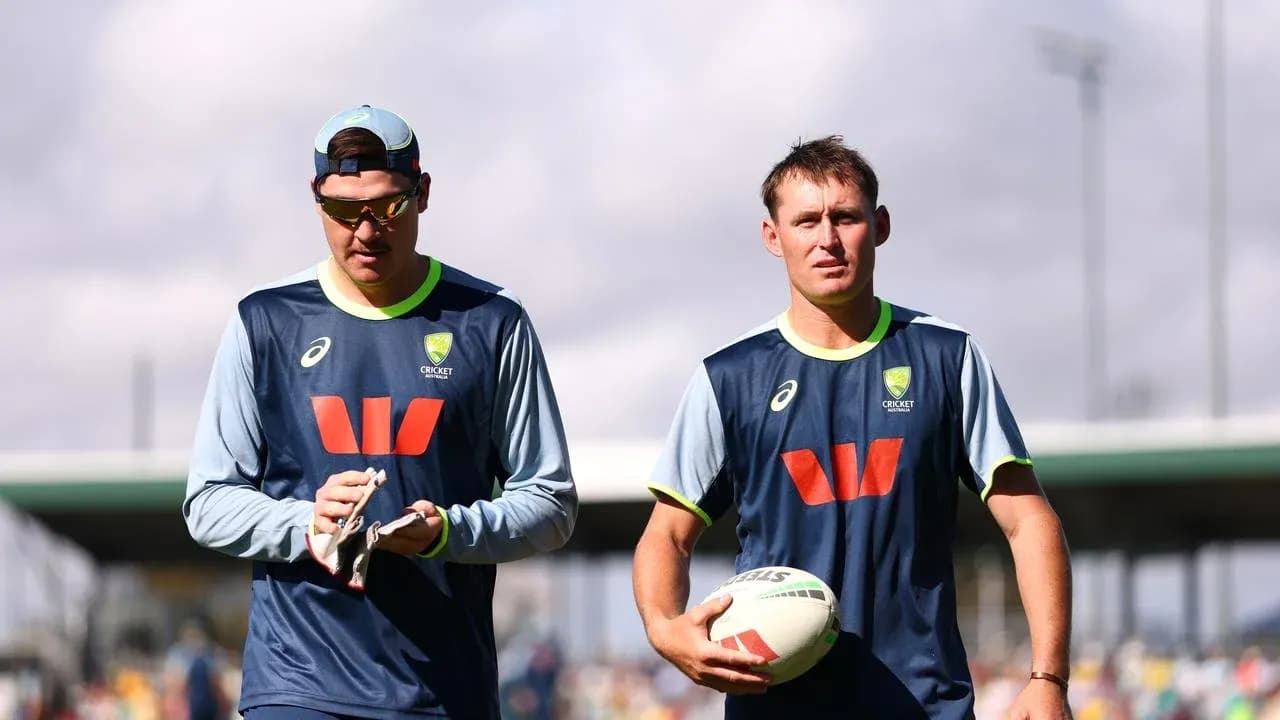
Marnus Labuschagne has been thrown a lifeline – and a challenge – by Australia’s selectors ahead of a high-stakes three-Test tour of South Africa.
The 30-year-old, under pressure after two lean years and a flat Ashes campaign, has kept his place in a 16-man squad that blends familiar faces with a rising all-round star and some hardened fringe quicks. It is a show of faith, but not a guarantee.
George Bailey made that clear.
Labuschagne stays – but nothing is promised
Labuschagne’s grip on the No.3 spot has loosened steadily since his peak as the world’s premier Test batter. His last century came in England in 2023. Since then, runs have dried up, doubts have grown, and his struggles against Bangladesh in the Top End last month only amplified the noise around his position.
“We’re not shying away from the fact that we’d like some more runs from Marn. That’s clear,” Bailey said on Monday.
He stressed, though, that the selectors still see value in Labuschagne’s presence and preparation, especially with the chance to focus solely on red-ball cricket after being left out of the ODI series that precedes the Tests.
“He’ll prepare incredibly well, and specifically for this tour. In that squad of 16, I’m confident that he can still make a positive contribution.”
Confidence, yes. Certainty, no.
Bailey notably stopped short of pencilling him in at first drop for the series opener in Durban on October 9.
“We’ll get a much clearer picture of what that XI looks like once we get over there,” he said, leaving the door ajar for a reshuffle that could see Labuschagne squeezed, shifted, or forced to fight his way back from the sidelines.
Connolly’s rise puts heat on the incumbents
If Labuschagne is the story of survival, Cooper Connolly is the story of ascent.
The 23-year-old West Australian, recalled after a debut in Sri Lanka last year, is one of three new faces compared to the squad that drew 1-1 with Bangladesh in Darwin and Mackay. His inclusion carries a clear message: Australia’s next generation is no longer waiting politely in the corridor.
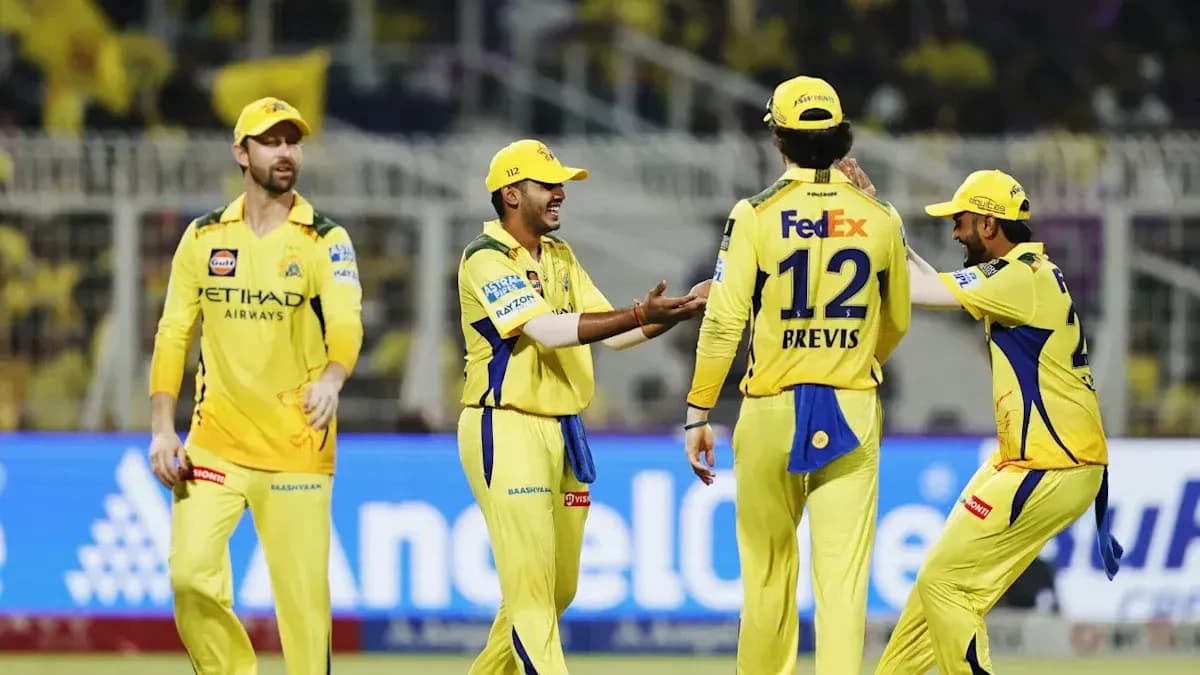
Connolly owns the best first-class average (42.10) among Australia’s emerging batters despite not yet posting a first-class hundred. The weight of promise has come more from his white-ball surge in 2026 – a breakout IPL stint with Punjab Kings and a maiden ODI century in Bangladesh – than from a bulging red-ball record.
He brings more than just runs. His left-arm spin and all-round versatility offer Pat Cummins another option in a squad that already leans heavily on multi-skilled players. Connolly batted at No.8 on Test debut; this time, Bailey has picked him explicitly as a batter and did not rule out a top-order role.
“I think he will be able to,” Bailey said of Connolly stepping up the order. “Whether that’s now, whether that’s in the future. He’s still so young in his career, but I think his ability to bat in a range of positions will continue to grow as he gets more and more experience.”
The subtext is obvious. If Labuschagne stumbles again, Connolly and Josh Inglis stand ready to reshape the top six, even though both have traditionally been middle-order players.
Top-order puzzle: Smith, Head, and the moving parts
Australia’s batting order, long one of the most settled in world cricket, suddenly looks malleable.
Bailey refused to close off any of the big-ticket options: Travis Head dropping back to the middle order, Steve Smith returning to No.3, or Labuschagne sliding out of the XI altogether.
“Any time you do make a move, it’s what are you taking away from where they are performing,” Bailey said, highlighting the delicate balance, particularly around Head. The left-hander has been devastating at No.5 but also impactful at the top, and his role shapes the entire batting structure.
Smith, too, looms as a potential solution if the selectors decide they want their best technician back at first drop.
“Steve has batted at three for a large part of his career. Hasn’t done it for a little while, and has had success there. So absolutely, that’ll be a conversation at some point.”
Those conversations will play out in South African conditions that punish hesitation. For Labuschagne, every net, every warm-up innings, every chance will feel like an audition.
Pace depth for a brutal schedule
Behind the batting intrigue sits a fast-bowling unit that looks both familiar and quietly fortified.
Ashes cult hero Michael Neser returns to bolster the seam stocks behind Cummins, Mitchell Starc, Josh Hazlewood and Scott Boland. With three Tests jammed into a condensed window and six ODIs beforehand, rotation is not just possible; it is likely.
“This is a reasonably condensed three-game series, on the back of six one-day internationals, with only short breaks between each game,” Bailey said in a statement. “The squad provides balance and options for each Test and the variety of conditions we may face.”
The hint was clear: Boland and Neser are not just insurance policies. They are live options in the Rainbow Nation, particularly if conditions favour relentless seam and accuracy over raw pace.
Spin back-up and fringe battles
Nathan Lyon remains the undisputed No.1 spinner, but Matthew Kuhnemann has been named as his understudy and could play his first Test outside the subcontinent. His left-arm orthodox offers variety and a different angle if South African pitches tire or crack late in matches.
At the top of the order, Matthew Renshaw has clung to his place after replacing Jake Weatherald in Mackay. His retention signals a desire for stability at opener, even as the rest of the top order sits under review.
Beau Webster, meanwhile, survives despite a poor series with the bat against Bangladesh. His all-round skillset and flexibility keep him in the frame, a reminder that this squad has been built with adaptability at its core rather than rigid roles.
A tour with scars in the background
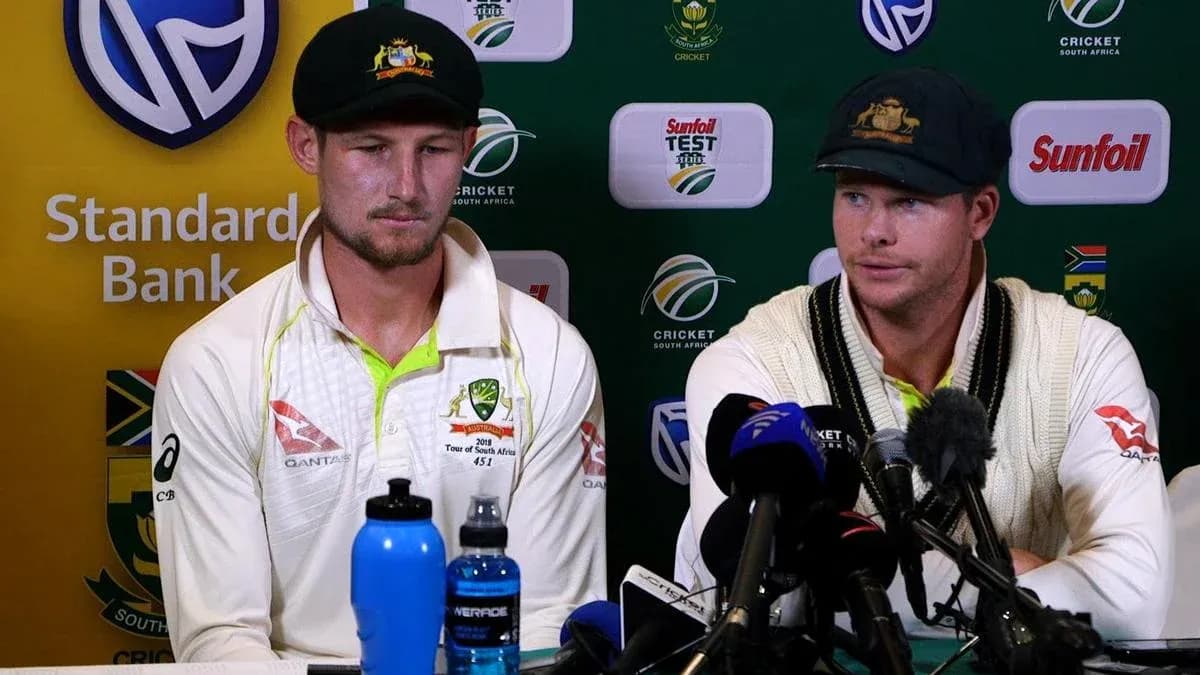
This is Australia’s first Test tour of South Africa since Sandpapergate. The venues – Durban, Gqeberha and Cape Town – carry their own history and scars for several members of this group, even if the squad and leadership have evolved significantly since 2018.
The schedule is clear:
- First Test: Durban, from October 9
- Second Test: Gqeberha (formerly Port Elizabeth)
- Third Test: Cape Town, late October
For Cummins’ team, it is a chance to assert control over a new cycle, to blood Connolly further, to test Neser and Kuhnemann in tough conditions, and to see whether the batting order can withstand sustained scrutiny.
For Marnus Labuschagne, it is something sharper.
A reprieve, yes. But also a countdown.