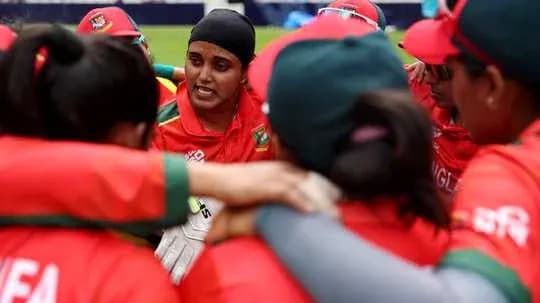
Nigar Sultana, the face of Bangladesh women's cricket in the shortest format for the past few years, is set to walk away from the T20I captaincy after the Asian Games, choosing to pour her energy back into the two roles that first made her indispensable: batting and wicketkeeping.
She has already told the Bangladesh Cricket Board of her decision. BCB president Tamim Iqbal has accepted it, and the move was formally sealed in a letter Nigar sent from Japan on Tuesday, September 15. She will, however, continue to lead the ODI side, underlining that this is a reshaping of responsibility, not a retreat from leadership.
A tenure defined by a long-awaited World Cup win
Nigar took over the T20I captaincy in 2022, inheriting a side searching for identity and consistency. The standout chapter of her reign came at the 2024 T20 World Cup, where Bangladesh finally broke a decade-long drought on the global stage.
Against Scotland, they found the win they had been chasing for ten years at World Cups. It was more than just a group-stage result; it felt like a release. Nigar was central to that campaign, scoring 104 runs in four innings and pulling off seven dismissals behind the stumps, a reminder that her value does not begin and end with the armband.
That tournament showcased the complete cricketer she wants to be again. The decision to step down now is rooted in that desire: to sharpen her batting, to stay sharp with the gloves, and to anchor the team’s ODI ambitions without the constant churn of T20 leadership weighing on every innings.
Highs, lows, and the scrutiny that followed
Her spell in charge has not been straightforward. Bangladesh surged through the World Cup qualifiers earlier in 2026, unbeaten champions and seemingly on an upward curve. That run hinted at a side finally learning how to close out tight games and handle expectation.
Then came the stumbles.
A 2-1 home series defeat to Sri Lanka cut into that momentum and raised questions about tactics and temperament in pressure moments. The Scotland-Netherlands tri-series brought mixed results, offering flashes of promise without the sustained dominance the qualifiers had suggested. At the World Cup itself, two wins from five matches were not enough to silence doubts about the direction of the T20 side.
Those swings in form inevitably dragged Nigar’s captaincy under the microscope. Every selection call, every field change, every conservative or aggressive move was dissected. For a wicketkeeper-batter already juggling two demanding disciplines, the strain was visible in the numbers and in the narrative around the team.
A calculated step, not a backward one
This is not the story of a captain pushed out. It is the story of a senior player choosing where she can serve her team best in the next phase of her career.
By remaining ODI captain, Nigar keeps a firm hand on Bangladesh’s long-format strategy while freeing herself to play with more clarity in T20Is, unburdened by the constant tactical grind. The board’s acceptance of her decision, led by Tamim Iqbal, signals an understanding that modern cricket leadership is as much about managing workloads as it is about winning tosses.
The Asian Games will now double as a farewell chapter for Nigar the T20I captain. What follows is a new balancing act for Bangladesh: finding a fresh voice to lead their T20 revolution while still leaning on the experience and skill of the player who just chose to step aside so she could give even more.