Ollie Robinson walks in, gathers, releases – and the ball seems to know the script before it leaves his hand.
Five years on from his England debut, nothing has dulled the first impression. He still looks the most natural seam bowler of his generation. Everything about him is repeatable, reliable, relentlessly on point. Call it robotic if you like. In his case, it is praise.
Think Glenn McGrath. That same metronomic rhythm. The same groove, over after over, where the action never appears to strain and the wrist stays bolt upright, presenting the seam like a blade. Robinson lives in that space.
This summer has been his stage. Twenty-three wickets in three Tests, capped by England’s clinical victory over Pakistan at Lord’s, have come in conditions he would happily stuff into his kitbag and take around the world. Cloud overhead, grass underfoot, a Dukes ball eager to talk. Perfect, yes. But he has still had to make them sing.
He has done exactly what he wanted with the ball. Swing both ways. Seam movement that wobbles late. No chasing magic deliveries, no desperate change-ups. Just a smooth action, a high release, and a ball that obeys.
Right now he must feel he could bowl blindfolded and still hit the edge. That is the rare air fast bowlers crave.
A bowler who thinks as sharply as he bowls
Robinson is not just a repeatable action and a pretty seam. He reads the game like a strategist.
He spots a weakness quickly – a bat coming down across the line, a tendency to plant the front foot early, a reluctance to drive – and instantly turns that information into a plan. That has been part of his make-up from the start. When he first broke into the England set-up, coaches spoke of a newcomer giving talks in the dressing room about how to get batters out. Not many young quicks dare do that. Fewer still are worth listening to.
All of that feeds into why he has been so effective this summer, and why the debate around last winter’s Ashes has flared again.
Plenty will now argue that Ben Stokes, Brendon McCullum and managing director Rob Key misjudged it by omitting him from the Ashes squad. At the time, amid suggestions of a breakdown in trust between Robinson and the leadership group, they went for pace. They wanted outright speed, even at the cost of guile.
Robinson has not always helped himself. His fitness has dipped at times. Bowling coach Jon Lewis publicly questioned his conditioning in 2022, a rare move that stung. There have been moments when he has not been handled especially gently either.
Maybe being left at home last winter sharpened his focus. Maybe the jolt was necessary. Either way, Joe Root is the captain now cashing in.
The keeper up, the game changes
Australia have played a quiet role in this version of Robinson too.
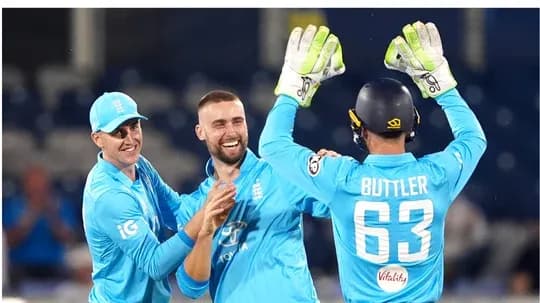
During the Ashes, Alex Carey brought back an old trick and made it fashionable again: the wicketkeeper standing up to the stumps to seamers. It cramped England’s batters, dragged them back into the crease, and forced errors.
England have pinched that idea and given it to Robinson, with Jamie Smith right up behind him. It looks simple. It is anything but.
With the keeper back, modern batters happily march down the pitch, smothering the movement and knocking a metronome like Robinson off his length. With Smith standing up, that option disappears. Walk down, miss, and you are stumped. They know it.
So Robinson can push his length a yard fuller. The ball spends longer in the air, has more time to swing, and more of his deliveries threaten the stumps instead of sailing harmlessly over from a back-of-a-length approach. For a bowler who lives on subtle movement and precision, it is a gift.
None of this works without a keeper good enough to pull it off. Smith deserves his share of the credit. He looked ragged at times during the Ashes, but his improvement since then has been clear.
Before play, wicketkeeping coach Sarah Taylor has been putting him through punishing drills, smashing tennis balls at him with a racket. The ball skids, deviates, clips the bat, misses it, flies low. Smith has to stay down, stay sharp, and take them. Those hours show now. The evidence is on the scorecard and in the confidence of the man running in.
The next examination: flat decks and hard graft
The obvious question hangs in the air. Can Robinson do this when the ball stops talking?
England’s winter tour to South Africa will provide the answer. Harder pitches. Hotter days. Flatter surfaces that test lungs, legs and resolve. On those kinds of tracks, England have often looked elsewhere, preferring bowlers they believe can hit the deck harder or sustain higher speeds.
That cannot continue. Not now. He has earned the right to be thrown into those conditions and told: prove it.
Behind the scenes, England are working to keep his pace around the 82mph mark throughout a spell, rather than starting there and fading to 77–78mph. If he can hold his speed, the extra bounce he extracts should help offset any loss of lateral movement. On truer pitches, that extra lift matters.
Before South Africa, though, comes Edgbaston and the third Test. This is where temptation creeps in: rotation, rest, planning ahead. It is precisely what England should resist.
Robinson, Jofra Archer, Gus Atkinson and Josh Tongue have shown real promise as a unit. They do not have a frontline spinner in this configuration, but Robinson’s economy at Lord’s – conceding just 1.29 runs per over – showed he can play the holding role that a slow bowler usually fills. He ties an end down, dries up scoring, and lets the strike bowlers attack from the other side.
Break that up now and you lose more than just one player. You lose rhythm, shared understanding, the instinct that grows only when a group bowls together over time.
England, after a poor run, simply need wins. But they also need an attack that knows itself, knows its patterns, and knows how to hunt in a pack. Root must learn, quickly, how best to deploy each of these four. Who bowls with the new ball. Who attacks the body. Who comes back after tea. Who can bowl into the wind and still threaten.
At the heart of that discussion sits Robinson.
Right now, this is England’s best bowling attack, with him as its leader. The action is still pure, the seam still upright, the mind still sharp. The only real decision left is whether England trust him not just when the clouds roll in at Lord’s, but when the sun beats down in Johannesburg and the pitch refuses to help.
If they do, we will find out just how far this “robotic” bowler can take them.