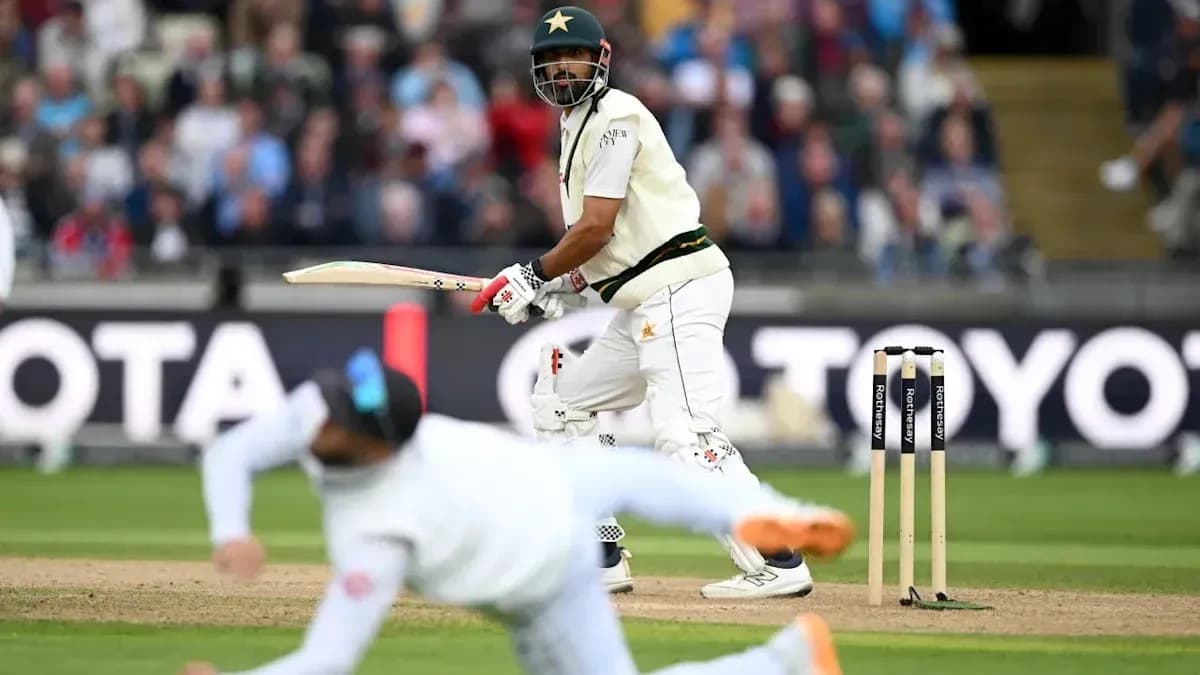
It takes a special kind of collapse to inspire Icelandic optimism about world cricket. Pakistan delivered it at Edgbaston.
On a final day that should have been a procession, England completed a 3-0 whitewash with an eight-wicket win, chasing 130 in just 25 overs. The scoreboard says routine. The story is anything but.
A spark in a lost cause
Pakistan’s tour has been a rolling crisis, but for a brief spell on the last day, they found something resembling defiance.
Razaullah Khan, playing the innings of his life, thrashed a brisk 81 to drag his side away from the humiliation of an innings defeat. His resistance forced England to bat again, and for a few overs, the script threatened to twist.
Mohammad Abbas struck with the very first ball of the chase, Ben Duckett gone. Five balls later, Emilio Gay followed. England, 0 for 2 in pursuit of 130, were suddenly staring at a live contest where there should have been a coronation. Pakistan, bruised and battered all summer, had somehow found a way to make Edgbaston hold its breath.
That was the moment Iceland Cricket pounced.
“We believe we won't be hopeless at cricket forever, and Pakistan's fight in the Third Test gave us exactly that hope. We aim for world cricketing domination by the year 2082. If we can do it sooner than then, we will, because our Board will all be dead in 2082.”
A joke, yes. But it landed because it cut close to the bone.
Root, Cox and the closing of a window
The pressure, such as it was, didn’t last.
Joe Root and Jordan Cox walked into the storm, absorbed it, then calmly dismantled it. Root should have been gone on 23 when Mohammad Ali knocked back his stumps, only for the delivery to be called a no-ball — Ali’s 17th of the series. A gift Pakistan simply could not afford.
Root offered another chance on 38, edging Abbas between first and second slip. Neither fielder committed. Neither moved decisively. The ball bisected them, and with it went Pakistan’s last genuine opening.
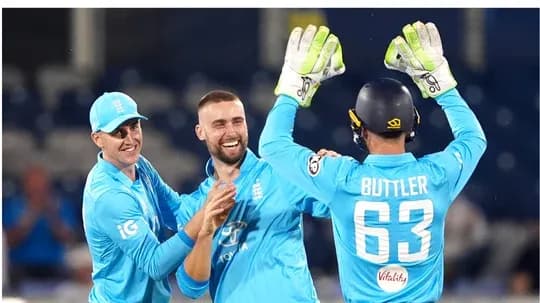
From there, England strolled. Root finished unbeaten on 62, his 110th Test score of fifty or more, a staggering tally that includes 41 centuries. Cox, assured and unflustered, ended 59 not out. The chase was done with eight wickets in hand, the series sealed 3-0, the gulf between the sides brutally clear.
Root, speaking afterwards, acknowledged the awkward truth for England: Pakistan had, for a while, made it hard.
“Fair play to Pakistan, they threw some punches last night,” he said. “They made it very difficult for us and in some ways it's a good thing to go through that.”
England framed it as a useful examination. For Pakistan, it felt like a fleeting high point in a tour defined by chaos.
A joke with a jagged edge
Iceland Cricket’s viral post was the sharpest commentary of the series not because it was cruel, but because it was accurate.
Pakistan’s late fight in the third Test became a source of “hope” for a minnow nation targeting “world cricketing domination by the year 2082.” The humour worked because it spoke to how far Pakistan have slipped. When your most lauded passage of play is a spirited lower-order innings and a brief new-ball burst in a match you still lose by eight wickets, something is badly off.
This isn’t about one bad day, or even one bad series. It’s about a pattern.
The loss at Edgbaston was Pakistan’s 16th defeat in their last 21 Tests. Sixteen. Across that stretch, the team has veered from inconsistency to outright freefall, and this tour of England has turned into a case study in how not to run an elite cricket operation.
Seven players were removed from the squad after the second Test. Head coach Sarfaraz Ahmed and assistant Umar Gul were both sacked mid-tour. A disciplinary inquiry, complete with phone confiscations, tore through the camp. At one point, the off-field drama threatened to overshadow the cricket entirely — no small feat given the margin of the defeats.
Babar Azam, left to front up after another comprehensive loss, didn’t sugar-coat the technical failure.
“We had a couple of good moments. I think we have bowled well, but I think the first innings cost us. Too many soft dismissals,” he said, reflecting on a side skittled for 133 on the best batting surface of the series.
He wasn’t wrong. But the problem runs deeper than soft dismissals.
System failure, not just bad form
This summer has exposed Pakistan not just as a team out of form, but as a system without direction.
A whitewash in England can happen to good sides. What makes this one alarming is the backdrop: revolving-door selections, mid-tour sackings, disciplinary probes, and a captain discovering squad changes through a press release. That isn’t misfortune. That is dysfunction.
The Iceland quip stung because it hinted at something Pakistan would rather not confront — that their standards have dipped so far that even emerging nations see their scraps of resistance as a benchmark. When a proud Test side becomes a punchline, the issue is no longer just tactical, or technical. It’s cultural.
England’s 3-0 scoreline is the loudest evidence yet that Pakistan lack a coherent long-term plan. Until that changes, they won’t just be chasing opponents.
They’ll be chasing their own past.