Pakistan walked into Lord’s looking for a response. They walked back into the pavilion 110 all out, with their batting shredded not just by England’s attack, but by the words of Michael Vaughan.
This was supposed to be a reset. Beaten by an innings and 53 runs in the opening Test, Pakistan had their captain back, their pride stung, and the game’s most storied venue as a stage for redemption. Babar Azam’s return was meant to steady them.
It didn’t.
He made eight. Abdullah Shafique went for 5, Shan Masood for 1, Mohammad Rizwan for 7. The top order folded in a heap, and with it went any illusion that the first Test was an aberration.
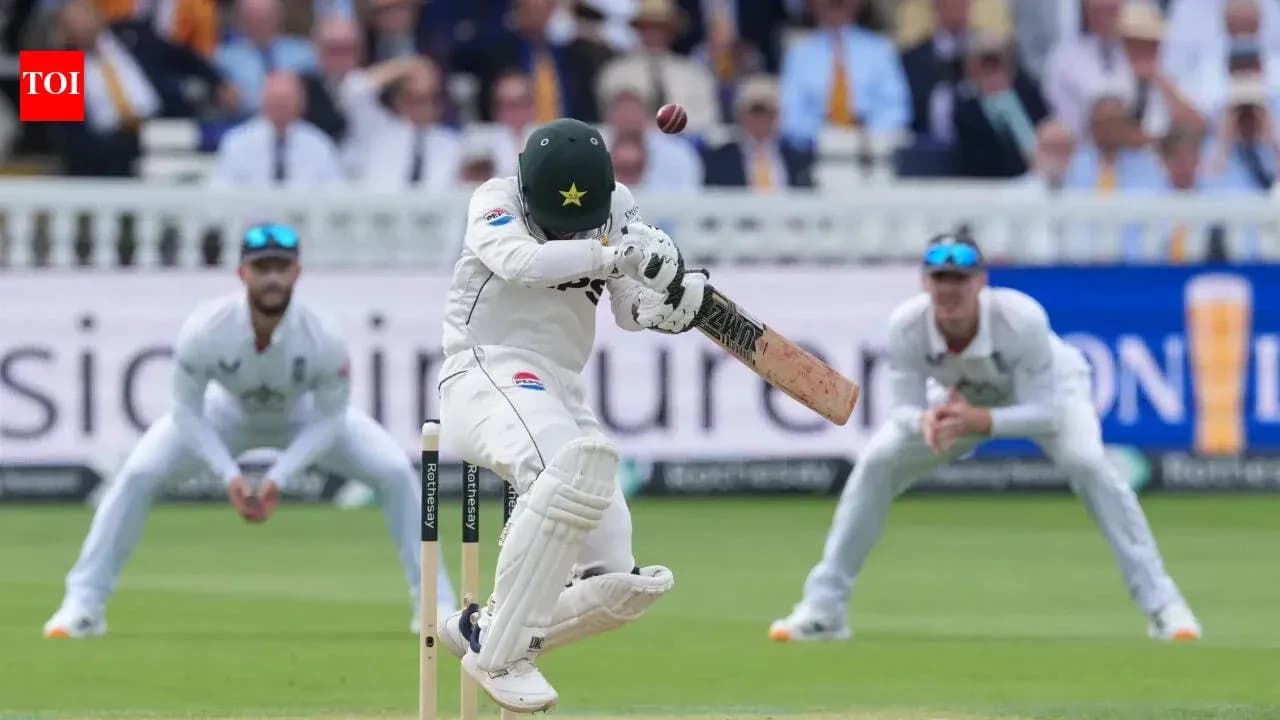
Only Azan Awais, on his first Lord’s Test, looked remotely at ease. The young opener ducked, swayed, rode the bounce and scratched out 46. He resisted, but he couldn’t rebuild. Around him, wickets tumbled. Pakistan were done inside 38 overs.
For Vaughan, watching on BBC Test Match Special, this wasn’t just a bad day. It was a damning pattern.
“I'll be brutally honest. The England bowlers aren't being challenged at all,” he said, as Pakistan’s innings unravelled. “And this Pakistan batting lineup is possibly the easiest batting lineup I've seen in a long time to bowl to.”
The criticism cut deeper with every sentence. He painted a picture of an attack operating in cruise control, hunting wickets without fear of reprisal.
“As a bowler, I think they're all queuing up to bowl because they know there are wickets out there,” Vaughan said. “You're not going to get hurt. There's no batter that's going to hurt them. No one's going to damage their figures, and it's really, 'roll up, roll up, who wants to get the wickets?'”
It wasn’t just about technique or conditions. Vaughan went further, questioning whether this batting group belongs at this level at all. With England’s seamers and spinners picking up regular breakthroughs, he suggested Pakistan had turned a Lord’s Test into something far more modest.
“I think they all know that Pakistan aren't going to get big scores,” he said. “So you're only going to be out there for 40 to 50 overs, so you give everything in every spell, you keep going to Joe Root saying, ‘Err, I'll bowl another one.’ There are so many wickets out there.”
Then came the harshest line of all.
“It's so easy. They're still doing a good job, and they're still looking very threatening. And I think this bowling attack, the way they're bowling, will challenge better batting lineups if they continue in this fashion. But this is Pakistan batting. Is it second division county cricket? There's no way that they are batting in any standard to say that, that is a Test match batting lineup.”
For a country that has produced some of the most gifted batters the game has known, being likened to a second-division county side is a brutal indictment. Yet the scorecard at Lord’s did little to argue back.
Pakistan’s problems were compounded before a ball was even bowled in their innings. Imam-ul-Haq, their regular opener, picked up a calf strain while fielding and did not bat. His absence pushed others up the order and exposed a line-up already short on form and confidence.
England, ruthless and efficient, simply cashed in.
By the close of the second day, the hosts were 81 for 3 in their second innings, the lead stretched to 261. On a surface offering just enough to keep the bowlers interested, that advantage already looked towering. With Pakistan’s first-innings 110 still fresh in the memory, it felt even larger.
The pattern from the first Test has not just repeated; it has hardened. England’s bowlers sense wickets every spell. Pakistan’s batters, outside the defiance of Azan Awais, have yet to show they can absorb pressure, let alone turn it back.
The scoreboard says England are firmly in control of the second Test. Vaughan’s words suggest something more worrying for Pakistan: that this isn’t just a bad tour, but a brutal exposure of a batting unit still searching for a Test-match standard.