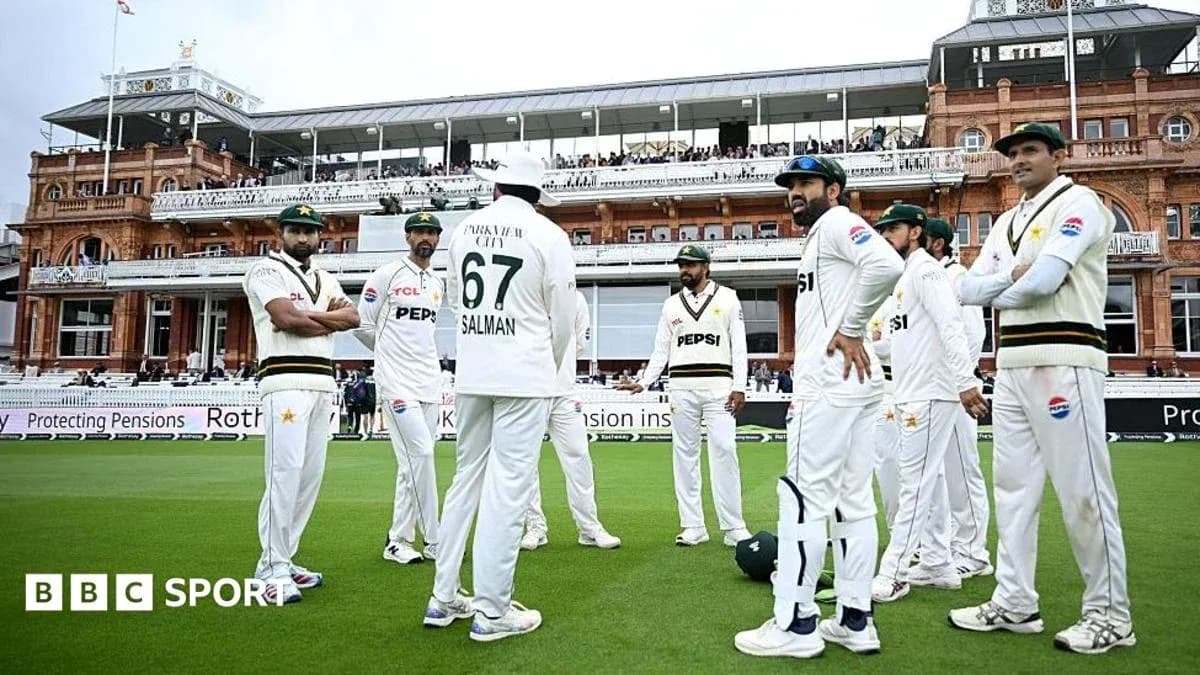
Pakistan have reacted to their bruising series defeat in England with one of the most radical overhauls seen on a modern Test tour: seven players axed, five uncapped cricketers summoned, and the head coach removed before the final match.
Two crushing defeats – an innings loss at Headingley and a 194-run beating at Lord's – have forced the tourists into emergency surgery ahead of the third Test at Edgbaston on 9 September. Four innings, four totals under 200. The response from the Pakistan camp has been as dramatic as their batting has been timid.
Seven out, seven in
The cull is brutal. Muhammad Rizwan, Imam-ul-Haq, Salman Ali Agha, Ali Usman and Khurram Shahzad, all involved in the series, have been sent home. Aamir Jamal and Muhammad Awais Jafar, who did not feature in either Test, have also been released from the tour.
In their place comes an almost entirely new layer of hope.
Batters Saim Ayub and Abdullah Fazal, who both have previous Test experience, return to bolster a top order that has repeatedly folded under England’s relentless attack. Around them, Pakistan have thrown the door open to a clutch of newcomers.
Spin-bowling all-rounder Arafat Minhas, left-arm seamer Mohammed Imran Jr, wicketkeeper Said Baig, and all-rounders Mohammad Imran and Razaullah have all earned call-ups. Five uncapped players, all walking into a dressing room searching for belief as much as runs and wickets.
For any touring side to dispatch seven players mid-series is almost unheard of. To do it after two Tests in a three-match contest underlines the level of alarm within Pakistan’s setup.
Coaching shake-up mid-tour
The shake-up does not stop with the playing squad. Head coach Sarfaraz Ahmed and his assistant Umar Gul have been released from their duties with immediate effect.
Pakistan have turned instead to their white-ball coach Mike Hesson, who steps across formats to take charge for the final Test, with former Australia seamer Ashley Noffke coming in as his assistant. It is a bold mid-tour pivot, swapping the existing brains trust for a fresh pair of eyes just days before the series finale.
The message is clear: no role is safe, no position guaranteed, not after the way this tour has unfolded.
Abject displays force drastic measures
The numbers tell their own story. At Headingley, Pakistan were crushed by an innings, out-batted and out-bowled with alarming ease. At Lord's, they fared little better, losing by 194 runs. Across four innings, they have failed to reach 200 even once.
England have dominated every session that has mattered. Pakistan’s batting has frayed at the first sign of pressure, their bowling has lacked penetration, and their fielding has not been sharp enough to compensate. By the end of the second Test, it felt less like a contest and more like a procession.
So the tour management have reached for the reset button, and then kept pressing.
A familiar streak of eccentricity
Pakistan, of course, are no strangers to dramatic course corrections after defeat. Their cricket history is littered with left-field decisions that veer between inspired and baffling.
On England’s last tour of Pakistan in 2024, the hosts responded to a chastening first Test – when England piled up a total in excess of 800 – with a move that raised eyebrows around the world. They chose to stage the second Test on the same pitch in Multan.
Groundstaff used garden heaters and fans to dry the surface, trying to bake it into something their spinners could exploit. It looked desperate. It turned out decisive. Pakistan won the next two Tests and turned a heavy defeat into a 2-1 series victory.
That history looms large now. This latest upheaval sits squarely in that same tradition: wild on the surface, but potentially transformative if the new faces spark a late surge.
Whether this sweeping clear-out becomes another masterstroke or just another chapter in Pakistan’s long catalogue of chaos will be decided at Edgbaston.