Pakistan’s Test tour of England, already carrying enough sporting intrigue of its own, now finds itself brushing the edges of constitutional protocol and international politics.
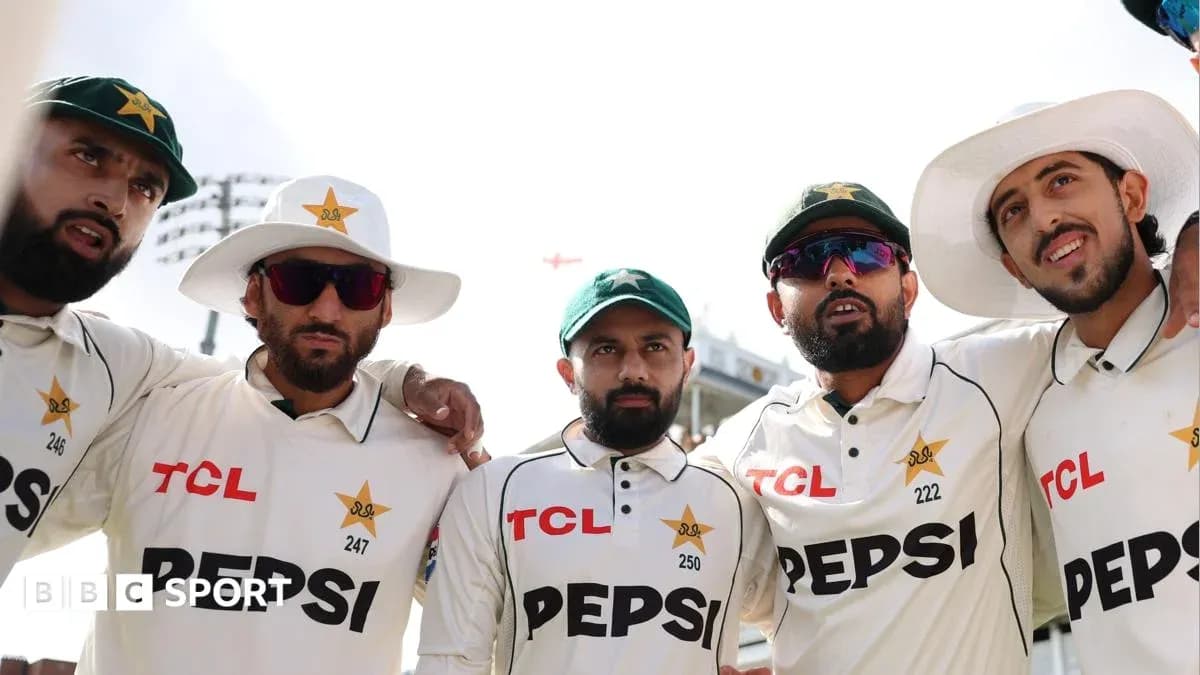
Later this week, the Pakistan men’s Test squad will be received by King Charles in the gardens of Clarence House, an engagement Buckingham Palace says was arranged before a ball was bowled in this three-match series. The audience, expected to last around 15 minutes, comes just days after Pakistan’s tour briefly stood on the brink.
A lunch break, a broadcast, and a threat to walk
The flashpoint arrived at Lord’s on day one of the second Test. During the lunch interval, Sky Sports scheduled an interview with Suleiman and Kasim Khan, the sons of former Pakistan captain and prime minister Imran Khan, conducted by former England skipper Michael Atherton.
Imran Khan, 73, has been in prison for three years on corruption charges he denies. His imprisonment has polarised Pakistan and rippled through the diaspora. That tension reached Lord’s before a single second-session delivery.
Ahead of the broadcast, the Pakistan Cricket Board warned it might not resume the Test and could even cancel the rest of the series if the interview went to air. The threat was serious enough for the England and Wales Cricket Board to seek guidance from the Foreign, Commonwealth and Development Office as the situation escalated during the interval.
Sky had already received a complaint about the interview. The broadcaster pressed on regardless, airing a version of Atherton’s conversation with Suleiman and Kasim.
In it, the brothers voiced fears over their father’s treatment and security, and criticised the UK government’s response to his case. It was powerful, uncomfortable television, cutting straight across the genteel lunchtime rhythms of a Lord’s Test.
The players emerged after the break on schedule. The second Test, and the series, survived.
“We don’t know about the interview”
Out in the middle, Pakistan’s focus appeared to hold. At stumps on day two, head coach Sarfaraz Ahmed insisted he and his players had been unaware of the broadcast as the match unfolded.
“I don’t know anything. I’m just focusing on the match,” he said when asked about the interview. Pressed again, he repeated: “You’re talking about the interview? We don’t know about the interview.”
The message was clear: whatever storms were swirling beyond the boundary, Pakistan’s dressing room wanted to be judged on runs and wickets, not politics and airwaves.
Cricket, the Commonwealth and a King
Those storms now drift towards Clarence House.
Buckingham Palace confirmed the King, in his role as Head of the Commonwealth, will meet the Pakistan team “in the break between the second and third Test matches hosted in England over the summer”.
The symbolism is hard to ignore. Imran Khan, who led Pakistan to World Cup glory in 1992 after a 21-year international career, later became prime minister from 2018 to 2022 before being jailed a year after leaving office. His story has long straddled cricket and politics; this tour has done the same.
In December last year, his sister Aleema Khanum publicly appealed to King Charles in that very Commonwealth capacity. Speaking to The Times, she argued that Pakistan, as a member of the Commonwealth of Nations, was betraying the organisation’s own charter.
“Its key principles in the charter are rule of law, democracy, and human rights. A member nation is busy destroying all three fundamental principles,” she said, questioning the silence of member states and asking: “What is the point of just organisations then?”
That plea now hangs in the background as the King prepares to greet the current generation of Pakistan cricketers.
There is also a political thread running directly into the touring party’s own hierarchy. PCB chairman Mohsin Naqvi serves as interior minister in Pakistan’s current government. The board has been contacted for confirmation of whether Naqvi will attend the audience with the King, a detail that would add another layer to an already delicate occasion.
A relationship tested, but busy
Away from the palace gardens and television controversy, the cricketing relationship between England and Pakistan remains intense and unusually frequent.
In October, England will head to Pakistan again for a one-day tri-series involving the hosts and Sri Lanka. That trip will mark England’s fourth separate tour of Pakistan in four years, a remarkable burst of traffic after a 17-year hiatus brought on by security concerns.
The schedule underlines how far the two boards have come in rebuilding trust and normalising bilateral cricket. It also shows how quickly that trust can be tested when politics and sport collide on live television.
For now, the series continues. Pakistan’s players will step off the team bus and into the manicured calm of Clarence House, shake hands with the King, and then return to the grind of a Test campaign in England.
Whether this brief royal meeting softens any of the wider tensions around Imran Khan’s fate and Pakistan’s political turmoil is another matter entirely. The cricket will move on. The questions won’t.