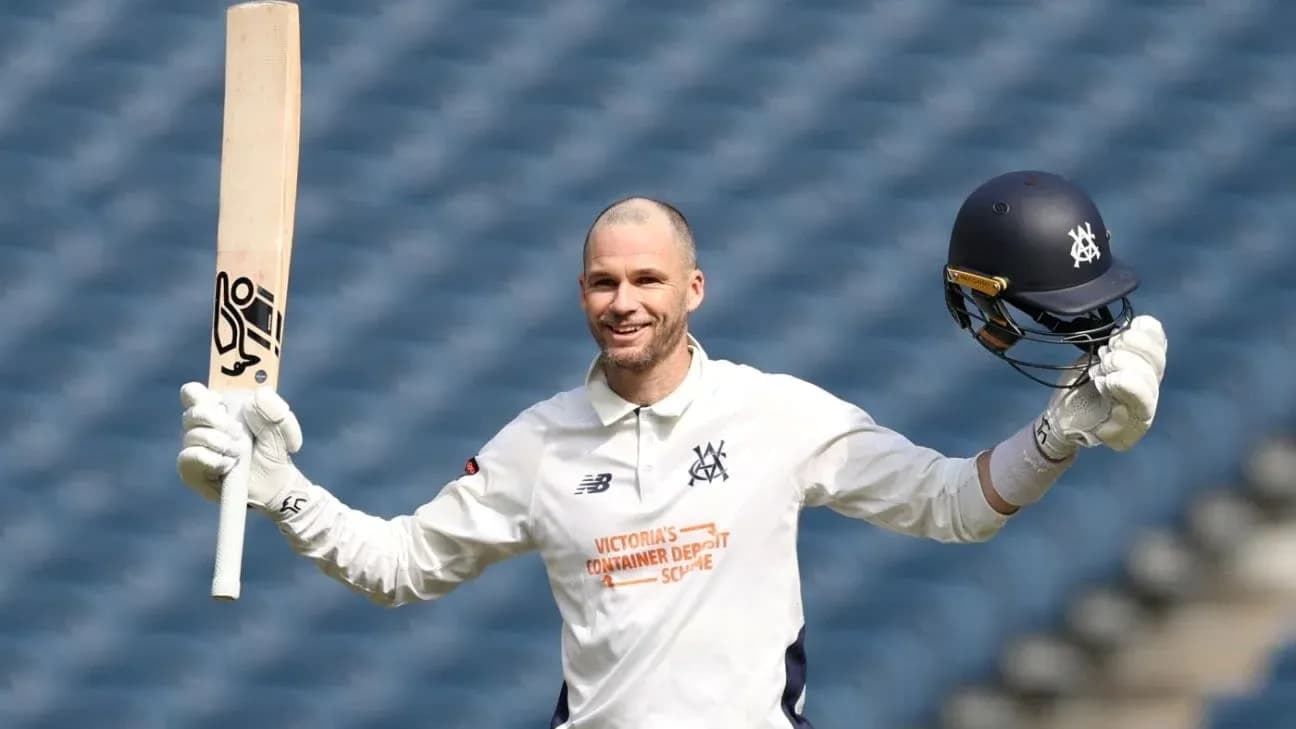
Peter Handscomb has spent much of this summer feeling good without looking it on the scoreboard. At the MCG, on a pitch as flat as a billiard table and under the quiet scrutiny of national selectors, he finally aligned feel with fact.
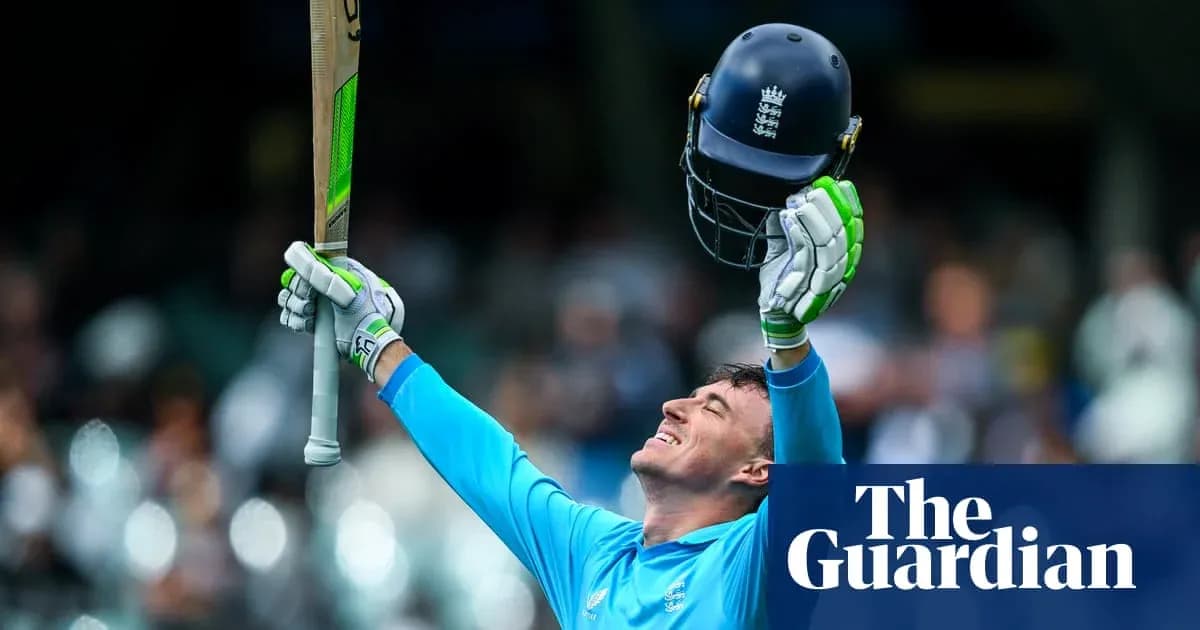
By stumps, Victoria were 292 for 3. Handscomb was unbeaten on 131. His name was back in lights for India.
A statement on a flat MCG
This was no cheap hundred, even on one of the flattest day-one Sheffield Shield surfaces the MCG has seen in years. Victoria chose to bat on a rare straw-coloured strip, curator Matt Page having stripped away almost all live grass and left just 7mm on top, part of a meticulous response to last year’s two-day Ashes debacle.
The Melbourne Cricket Club has even installed ball-tracking cameras to monitor bounce, seam and spin in the lead-up to the 2026 Boxing Day Test and the 150th Anniversary Test in March. On this evidence, they have a truer, more honest surface. Handscomb made it look like paradise.
He walked in at 44 for 2, with Victoria just a touch unsteady despite winning the toss. Marcus Harris had nicked four times in 20 balls for 15. Two edges missed the cordon, one was spilled at first slip, the fourth finally stuck in the gloves of Joel Curtis. Before that, Sam Harper had already gone, the victim of a superb catch from Albert Esterhuysen at wide fine leg off Kieran Elliott.
The scoreboard said “wobble”. Handscomb’s body language said “settle”.
Handscomb’s class, finally on show
He has been waiting for a day like this. A lean, luckless Australia A tour of India in September and a string of starts without substance to begin the Shield season had left him frustrated, but not defeated.
“I felt good, and it's such a shame when you feel good and you don't make runs because you're just kicking yourself the whole time,” he said after play. “Sometimes you're just out of luck, you're not out of form.”
Here, with Corey Rocchiccioli and Ashton Agar – one Australia A spinner, one former Test spinner – probing away, he showed exactly why his name refuses to disappear from Test conversations, particularly when India looms in January.
Handscomb’s innings was almost blemish-free. A crisp straight drive early on announced his timing. A slow outfield stole boundaries from him and Ashley Chandrasinghe before lunch, but not control. When Western Australia tried to shake him after the interval with a short-ball plan from Liam Haskett and Elliott, he rode it comfortably, thumping Elliott through midwicket to reassert authority.
Once the spinners arrived, the gap between him and most domestic players against slow bowling became obvious. He advanced at Rocchiccioli, lifting him with the spin and then against it. He rocked back to carve through the off side, then dropped into well-controlled sweeps. There was method, not just muscle, in every movement.
Chandrasinghe’s grit, Macdonald’s déjà vu
Chandrasinghe, a late inclusion when Campbell Kellaway pulled out with back spasms on match eve, had to graft harder. The left-hander rarely looked rushed, compiling a composed 53 in a 112-run partnership with Handscomb that dragged Victoria away from early trouble.
He was undone by ambition rather than anxiety. Looking to lift the tempo, he aimed a slog sweep at Rocchiccioli against the turn and only managed to sky a catch to mid-on. It was a release Western Australia desperately needed.
It brought back Blake Macdonald, returning to the side and quickly reviving WA’s nightmares from last season, when he peeled off 79 and 109 not out against them at this very ground. The sense of inevitability crept in again as he followed Handscomb’s blueprint: sharp footwork, smart placement, and calm against spin.
Macdonald moved smoothly to a half-century, his only real alarm coming when Agar found extra turn, taking the thick outside edge and brushing the ends of Curtis’ gloves. A fraction more purchase, and WA would have had a lifeline. Instead, Victoria tightened their grip.
Handscomb and Macdonald stitched together a second consecutive century stand for the innings, the partnership hardening into something that looked like a match anchor rather than just a platform.
New ball fightback, old message sent
Western Australia refused to drift. The second new ball finally gave them some teeth late in the day. There was bounce again, and a hint of sideways movement. Macdonald edged one over the slips. Handscomb was beaten three times by Elliott, including a ball that jagged past the inside edge and over off stump, a sharp reminder that the surface still had something to say when the ball was hard.
But the wicket column stayed stuck on three. Victoria walked off with nine wickets in hand and the game in their hands.
For Handscomb, the numbers tell their own story: 131 not out, on day one, against a proper attack, on a pitch that rewarded class as much as it did patience. After weeks of feeling good but walking off early, he finally had the innings to match his conviction.
The selectors will have watched a veteran right-hander, on a truer MCG pitch, dismantle spin, ride the quicks and bat through a day. India in January demands exactly that kind of player.
The question now is simple: has he just turned a strong case into an irresistible one?