Cancel the tee time at The Belfry. Put Cadbury World on hold. The Bullring can wait.
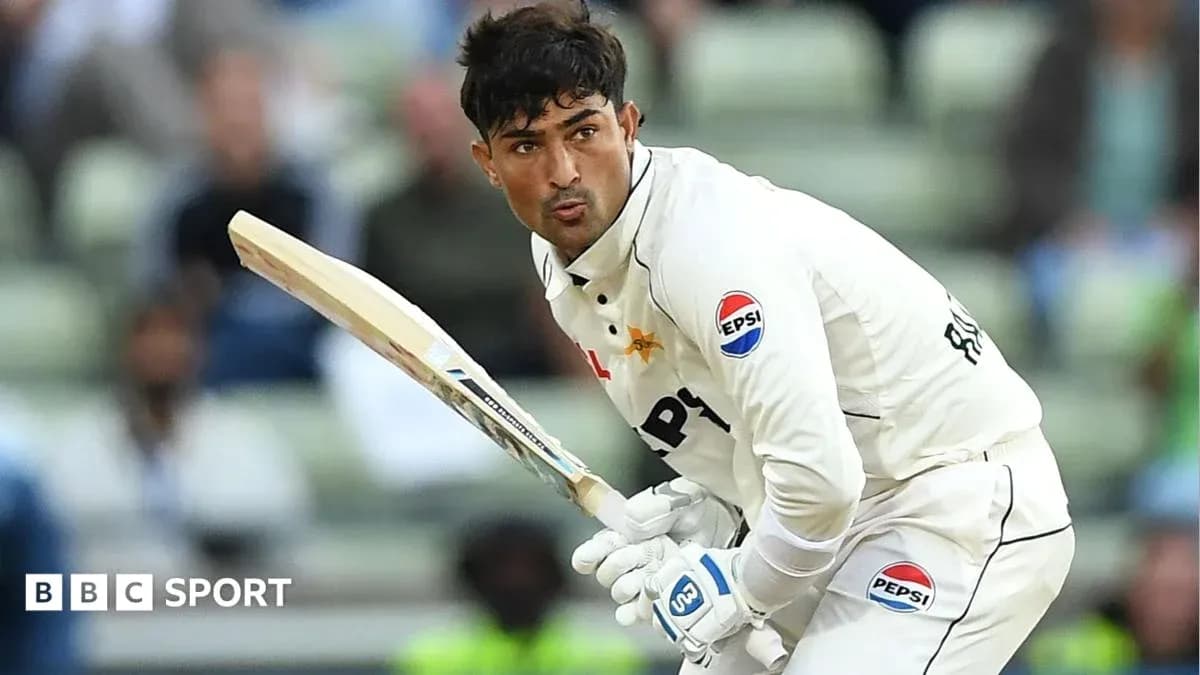
Edgbaston has a new attraction, and his name is Razaullah.
On a grey Birmingham day that looked tailor‑made for a routine England procession, a 21-year-old Pakistan debutant walked in at number nine and tore up the script. He didn’t just delay England’s victory party; he detonated it. For two wild hours, Test cricket was dragged into a different universe.
They are calling it “Razball” already. You could see why.
A debut that shook Edgbaston
Razaullah arrived in this series as a raw, tearaway quick, the sort of bowler whispered about as “a bit Waqar Younis” by those who had seen him in the nets. Eight first-class matches, one century, and almost no billing. England’s batters might have studied his wrist position. Their bowlers almost certainly did not expect what came next.
He strode out with Pakistan miles behind, the match apparently meandering towards a three-day finish. What followed was a dizzying 81 from 63 balls, a blur of bat speed and bravado that turned a dead rubber into a live contest and a quiet Friday into a carnival.
He took three bats with him. He broke two.
The ball flew everywhere. There were echoes of Shahid Afridi in the swagger, a hint of Saeed Anwar in the effortless timing. England’s seamers, so ruthless when Pakistan were steamrollered for 133 on the opening day, suddenly looked like they had stumbled into a street fight.
Ramiz Raja, watching on for BBC Test Match Special, could hardly contain himself. “It’s the first time he’s been out there for Pakistan ever, and absolutely lights up the show. This is the attitude that was needed,” the former captain said, praising his body language, self-belief and the sense that Pakistan had found a player built for all formats. “It was a tremendous fightback.”
He wasn’t alone in that assessment. You could feel it in the stands.
England rattled, Razball rampant
At one point, Joe Root looked less like a captain in control and more like a man stuck in someone else’s nightmare. As Razaullah kept launching, Root scattered eight fielders to the boundary, a ring of blue shirts on the rope. It made no difference.
The young right-hander simply kept swinging, kept clearing them, kept strutting down the pitch with the arrogance of someone too young to know any better and too talented to care.
This wasn’t slogging. It was calculated mayhem. His nine sixes dragged him straight into the record books: the joint-most in a Test innings in England, alongside Ben Stokes’ famed 155 against Australia in the 2023 Ashes. In one manic afternoon, he matched the number of sixes Sir Geoffrey Boycott hit across 108 Tests.
That’s not a stat. That’s a statement.
Pakistan, written off and expected to fold again after their meek first-innings surrender, suddenly batted with a freedom that had been absent all series. The scoreboard pressure that should have suffocated them instead seemed to liberate them.
Shan Masood provided the backbone with a hard-fought 95, all discipline and defiance. Babar Azam, released from the suffocating weight of recent weeks, stroked a fluent 76. Those were fine innings in their own right.
But it was Razaullah who electrified the day. He turned a fightback into a spectacle.
Theatre to the very end
Even his dismissal belonged on a stage, not a scorecard. Given a reprieve when an lbw decision to Dan Lawrence was overturned, he charged again next ball, danced down the track and was stumped. The crowd rose as one, a standing ovation for a kid who had just torn into England and lit up their Friday.
He walked off to the warmest of receptions, head held high, his name already echoing around Edgbaston.
In another life, he might have been quietly turning out for Cleethorpes in the Yorkshire Cricket Southern Premier League next summer, having signed for the 2026 season before Pakistan’s call came in May. Instead, he was standing in the middle of a packed Test ground, sending England’s attack over the ropes and Pakistan fans into delirium.
That is Pakistan cricket in a nutshell: chaos, colour, and a knack for dragging you from despair to hope in the space of three days.
On Wednesday, they looked broken. Rolled for 133 just after lunch, they appeared rudderless, bullied by an England side who piled up 453 and seemed destined to stroll to a comfortable win. Many who held tickets for Saturday had probably resigned themselves to a refund or a token handshake session.
Now? Those same fans are rearranging their weekend plans.
From write-offs to an outside shot
By the close, Pakistan were not just alive. They were in the black, with a lead and something tangible to defend. The cushion stands at 129. On paper, England should still chase that. On paper, they should still close out the series.
But sport is played on grass, not paper, and Michael Vaughan summed up the shift in mood. “England are going to win this Test match, I’m sure,” the former captain said. “But, Razaullah has given Pakistan cricket some hope. They’ve unearthed a gem and he will be a superstar for many years.”
Hope. That word again.
Vaughan also pointed a finger back at England’s own choices: the barrage of short bowling, the token over of spin, the curious decision to take the second new ball with a spinner. On a day when Pakistan roared back, England’s tactics looked muddled, their composure frayed.
“That day today will make the England team realise there is a long way to go to be world class,” Vaughan warned.
Pakistan, for all their recent turmoil, have found a new symbol of their unpredictability and potential in Razaullah. England, for all their talk of revolution and fearlessness, suddenly have questions to answer.
Day four now looms with a different edge. A match that was supposed to be over in three days has a live pulse, a noisy crowd and a rookie fast bowler who bats like a man who has never learned to be afraid.
Razball has arrived. The only question now is how much more damage it can do.