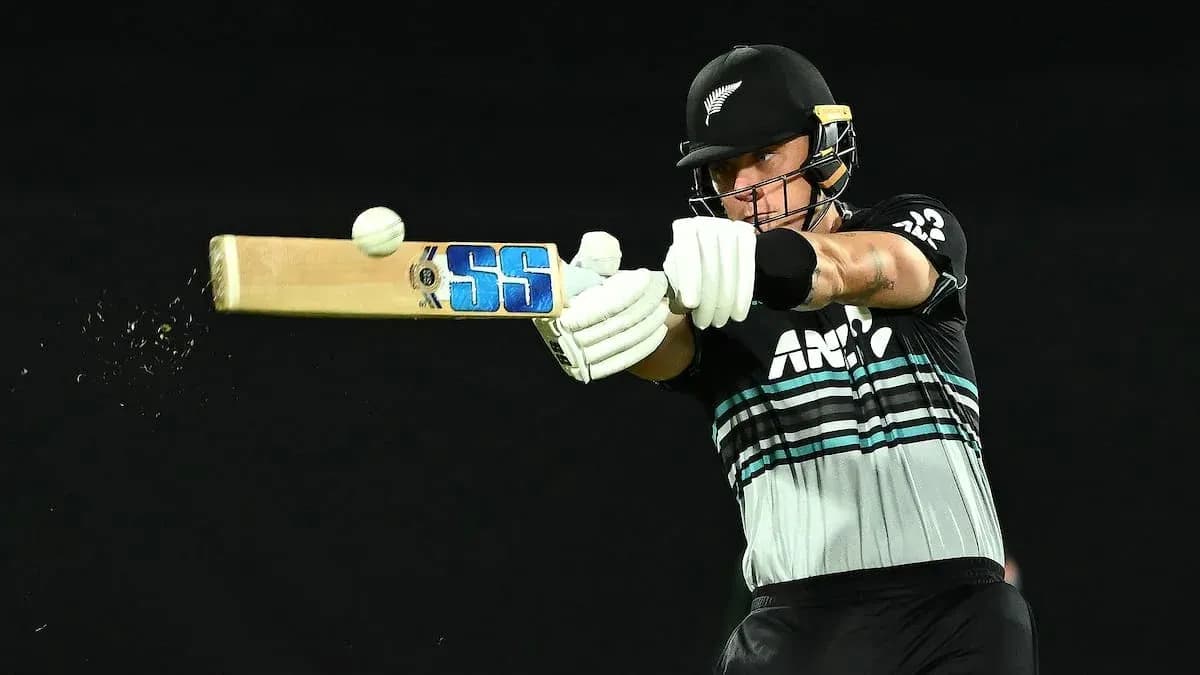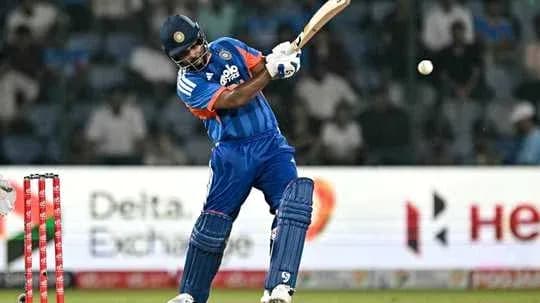
Sanju Samson and the prodigy he once promoted now walk out for the same job, under the same flag, with the same number next to their names on the team sheet. Only one can actually take guard.
From mentor to rival
The story began in the IPL, long before this Delhi night against Afghanistan. Rajasthan Royals lost their captain to injury deep into the 2025 league phase, and a 14-year-old Sooryavanshi was pushed into the deep end. Samson, then the established leader, backed the boy.
The return on that gamble came fast. A century in just his third game. By the time Samson was fit again, the teenager had already rearranged the batting order. Samson walked back into his own team and slid down to No. 3. The kid stayed where he belonged: at the top.
That dynamic shifted once India came calling. Sooryavanshi was fast-tracked into the T20I set-up the following year, and the relationship picked up an edge. Mentor and protege now chase the same role as India’s T20 opener.
Delhi’s call: Samson in, teenager out
At the Arun Jaitley Stadium against Afghanistan, the call went Samson’s way. India chose experience over the 15-year-old phenomenon who had just been Player of the Series in Zimbabwe.
Samson had failed in the series opener. This time, he responded like a man who had heard every word of the debate around him. A 22-ball 57, violent and urgent, dragged the game away and sealed a 2-0 series win with a match to spare. Sooryavanshi watched again, two games in a row, bib on, helmet off.
On the outside, it looks ruthless. Two men, one slot, a calendar packed with T20 cricket and a World Cup cycle always looming. Inside the dressing room, Samson insists it feels different.
“We may be competitors to the outside world, but we are a team and we are playing for a country and we want to win the game first,” he said afterwards. The line was delivered without drama, but it cut through the noise that trails every Indian selection.
Living with the churn
Samson knows this world too well to pretend it doesn’t sting. “We are not robots that it wouldn’t affect us at all,” he admitted. He has his own way of dealing with the scrutiny. “I try to turn off the Wi-Fi,” he joked, and the room broke into laughter. Underneath the humour sits a simple truth: the noise is relentless, and it does get in.
The 31-year-old has grown into that reality. He understands that modern T20 batting, especially at the top, is a high-wire act. The approach is non-negotiable. The risk is baked in. The failures are public.
So he has stopped trying to control what he can’t.
“I think consistency in my process,” he said. “Consistency in my preparation, consistency in how I am practicing, how I am putting my hard yards in. You can't control the consistency in the result in this format… Consistency has to be in the frame of mind, and then whatever happens, happens. I think that's what fearless mindset is.”
The method is clear: don’t dilute the intent, don’t retreat into safety just to protect a place. Keep the bat swing the same, hard and free, and let the numbers land where they may.
Highs, lows and a teenage storm
The irony is that Samson’s recent past is studded with towering highs. At the home T20 World Cup earlier this year, he began on the bench, then roared into the tournament. A 97* off 50 in the semifinal, an 89 in the final, and India became the first team to defend the T20 crown. He walked away with the Player of the Tournament award.
Then came Sooryavanshi’s season.
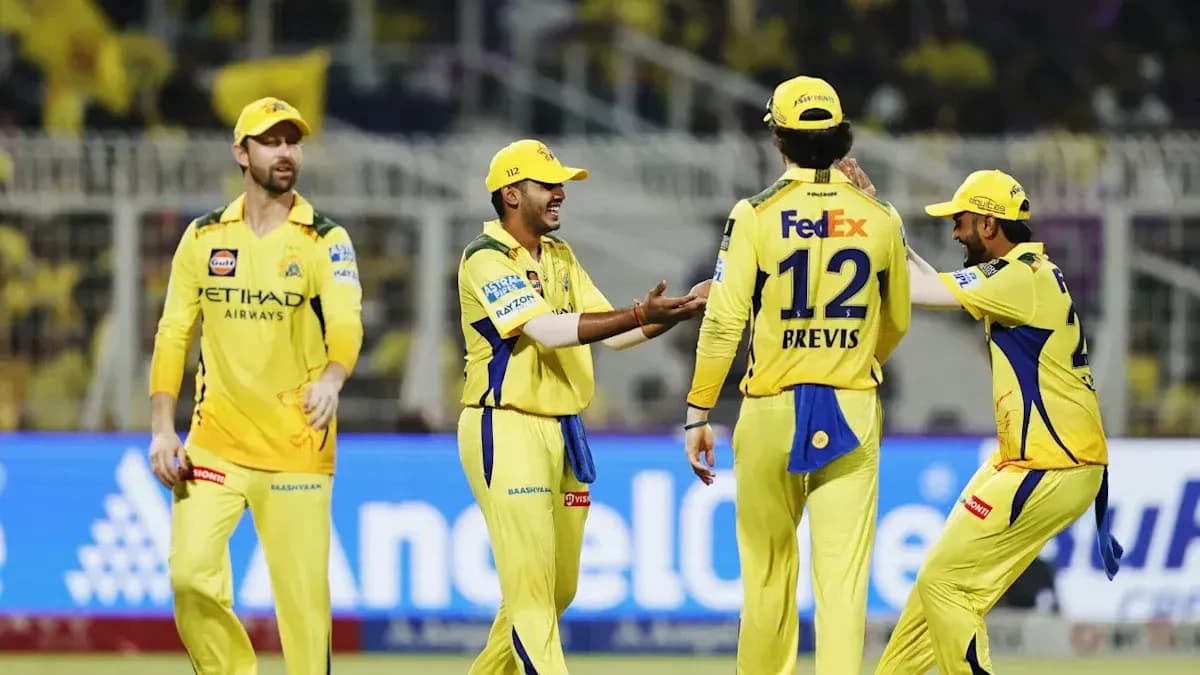
For Chennai Super Kings, Samson endured a feast-or-famine year. The teenager, meanwhile, detonated the IPL. A 776-run season. Average 48.5. Strike-rate 237.3. Numbers that read like a misprint. Every innings felt like a highlight reel, every boundary a nudge at the national door.
The door didn’t just open. It swung wide.
When Samson faltered — twice in Ireland as India slipped to a 0-2 defeat, then again in the first T20I in England — the pressure to pick the teenager became impossible to ignore. Sooryavanshi got three games, a tough initiation against a quality attack, before Samson returned for the final match of a series India lost 0-4.
Then came another turn. Samson sat out the Zimbabwe tour entirely. Sooryavanshi thrived there, took Player of the Series, and seemed to edge ahead in the race against his former IPL captain.
By the time the teams arrived in Delhi, the contest felt like a straight shootout in the public mind. One innings, one decision, one headline at a time.
Inside the decisions
Samson sees it differently. He has captained an IPL franchise; he understands the cold calculations behind hot debates.
“It is a very challenging place to be in,” he said. “For the whole team management and everyone, from the captain, from the coach, from the selectors, it is a very tough choice. I totally understand, myself [having] led an IPL franchise. I know how hard these decisions are when everyone has been performing really well.”
He also refuses to frame Sooryavanshi’s rise as his own downfall.
“You see, a 15-year-old boy has scored 700-800 runs. My Man of the Tournament award [at the 2026 World Cup] was before that. After that he’s performed so well. He had to come in [to the Indian set-up] sooner than later. I didn't perform in 2-3 games and he was in-form and we wanted to win games in that [England] series.”
That is the reality of modern Indian cricket. Perform, and the door opens. Stumble, and someone younger, faster, louder with the bat, is already on the threshold.
Samson stresses the communication behind the scenes. “There was a lot of communication in the middle of the England series. He spoke to me a lot before this series as well… It’s very easy to take very popular decisions. But, as a leadership group, we have been taking some really tough calls keeping the team at the front. That’s where we have to give the credit to the leadership group of our team.”
The message is clear: the choices are not personal, and they are rarely simple.
Two openers, one future
Sooryavanshi’s ascent does not have to come at Samson’s expense. Samson’s failures do not have to be the only door through which the teenager walks. That is how the senior man has chosen to see it, and perhaps that is the only way to stay sane in this environment.
On Tuesday night in Delhi, Samson made his case again, the ball flying off his bat, the scoreboard racing, the series sealed. He left the ground with runs, with clarity, and with his process intact.
There is still no guarantee he walks out first in the next game. The next opportunity may belong to the 15-year-old he once pushed to the front of the line.
That is the battle now: not just for a spot at the top of the order, but for the right to define how India’s T20 future looks when one of them finally has to step aside.