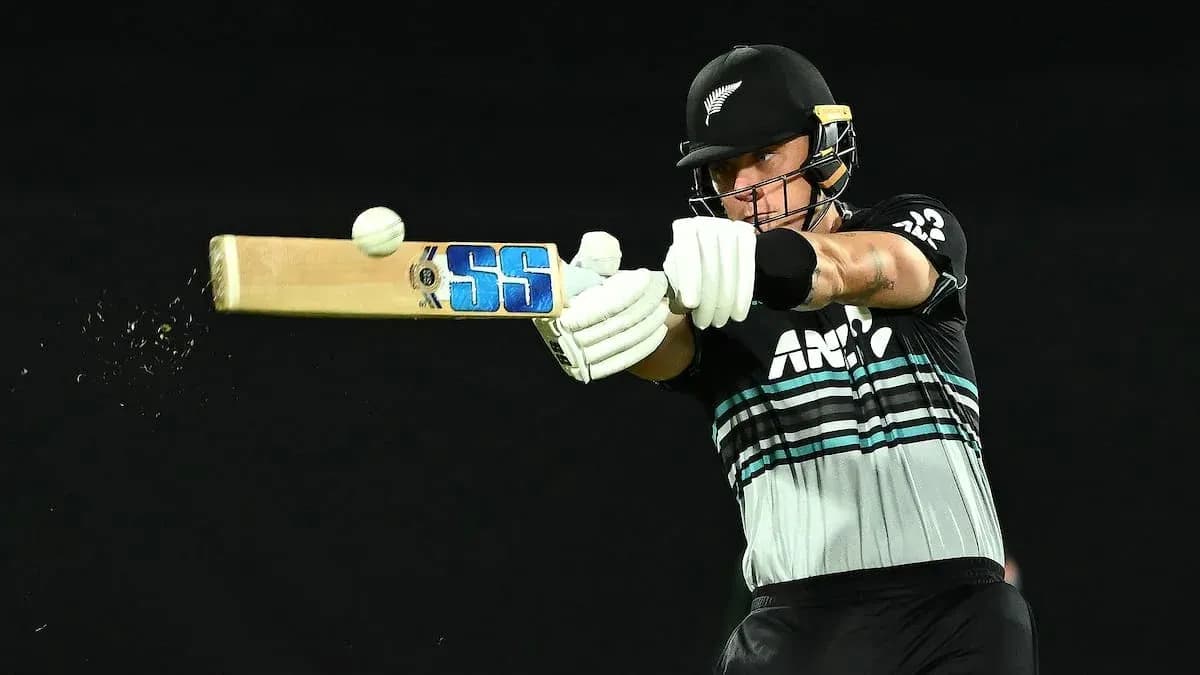
At 19 years and one day, Shreevats Goswami walked into the first-ever IPL game of his life and looked as if he belonged to a different future.
A left-handed wicketkeeper, fresh off an Under-19 World Cup win, facing Glenn McGrath under lights for Royal Challengers Bangalore. He peeled 52 from 42 balls, took Player of the Match in a game his side lost, and seemed to have kicked open every door a young Indian cricketer could dream of.
It never quite worked out that way.
The boy who kept answering every question
Goswami’s rise wasn’t a one-tournament illusion. Before the 2008 Under-19 World Cup in Malaysia, he had already been busy stacking up proof: 97 against South Africa’s youth side, 104 against Bangladesh on the same tour. When the World Cup began, he didn’t just keep his place; he became one of the pillars of Virat Kohli’s team.
The semi-final against New Zealand told you why. Up against a group that would later give world cricket Kane Williamson, Tim Southee, Trent Boult and Corey Anderson, India were in a tense chase. Kohli made 43. Goswami went past him with 51, top-scoring on the day that pushed India into the final and, eventually, the title.
Then came the IPL. Straight after his 19th birthday, he walked into the cauldron and produced that debut fifty against Delhi’s attack. By the end of the season, he had been named the tournament’s Best Under-19 Player — the first winner in a lineage that would morph into the Emerging Player of the Season award.
It felt like a natural sequence: World Cup winner, IPL breakout, national pathway.
The real test, though, came after the spotlight moved on to the next batch of prodigies.
A domestic giant in flashes
In the 2009-10 Vijay Hazare Trophy, Goswami answered again. Seven innings for Bengal, 568 runs. Three centuries, one fifty, and runs when they mattered most. He topped the charts as the leading run-scorer in India’s premier domestic one-day competition and made 81 in the final against Tamil Nadu.
He was 20. He had an Under-19 World Cup, an IPL award, and now a season where no one in the country scored more List A runs than him.
Still, the call that usually follows never came. No India A. Not even a place in the India Emerging squad. Later, Goswami would speak about timing, about how the doors he expected to open stayed just slightly, stubbornly shut.
Locked out by giants
For a wicketkeeper-batter trying to break into India at that time, the context was brutal. MS Dhoni wasn’t just the captain; he was the heartbeat of the side, one of the most influential figures in world cricket, and virtually immovable from the XI.
At home, in Bengal, Goswami found another roadblock: Wriddhiman Saha. Saha would go on to become India’s leading Test wicketkeeper for a period and Bengal’s automatic choice behind the stumps for years. Two of the best glovemen in the country, one at national level, one at state level — and Goswami stuck between them.
His own first-class record didn’t scream for attention either. Across 61 matches, he scored 3,019 runs at an average just above 32. Solid, but not the sort of number that forces selectors to rethink hierarchies. There were peaks, though. In 2016, with Bengal in trouble against Madhya Pradesh, he produced a career-best 225 not out, an innings that underlined the depth of his talent and his ability to play long.
In white-ball cricket, the numbers were even harder to ignore. During the 2014-15 Vijay Hazare Trophy, Goswami piled up 447 runs in six innings at an average of 111.75, with two centuries and two fifties. Only Manish Pandey scored more in the entire tournament.
Two seasons later, he walked into a semi-final against a Jharkhand side captained by Dhoni and stole the stage with 101. He added 198 for the opening wicket with Abhimanyu Easwaran and dragged Bengal into another final. Once again, on a big domestic day, he delivered.
The pattern repeated: performance, promise, then silence from the next level.
The India A door opens too late
The India A chance that should have followed his 568-run season eventually arrived in 2017. Goswami was 28 by then.
The timing cut against him again. Dhoni still hovered in the background, while a new generation of wicketkeepers had already broken through. Rishabh Pant was the flagbearer of that group and part of the India A set-up. Goswami finally had the badge on his shirt but not the runway. The opportunity never turned into a permanent place, and the senior India cap stayed out of reach.
His IPL journey mirrored that arc. After that electric beginning with RCB in 2008, he never quite nailed down a long-term role. He moved across Royal Challengers Bangalore, Kolkata Knight Riders, Rajasthan Royals and Sunrisers Hyderabad, but the appearances came in bursts, not seasons.
Across 31 IPL matches, he scored 293 runs. Useful cameos, the odd start, but no sustained stretch to build a legacy.
There was, however, one neat twist in the tale.
A full circle under lights
In the 2020 IPL Eliminator, Sunrisers Hyderabad turned to Goswami because Saha was unavailable. RCB stood in their way. Kohli at the top again, as he had been at Under-19 level, only now as one of the modern greats.
Early in the chase, Goswami moved behind the stumps and took the catch that dismissed Kohli. A tiny moment, but a full-circle one. More than 12 years after they had lifted the Under-19 World Cup together, their careers briefly intersected again on a high-stakes night, heading in utterly different directions.
Goswami would eventually draw the curtain on his first-class career in 2023. There was no single injury that derailed him, no scandal, no dramatic fall. His story is quieter and more complicated: a blend of fierce competition, awkward timing and just enough inconsistency to keep him on the wrong side of selection meetings.
Look at the ledger and it still startles. Under-19 World Cup winner. IPL debut half-centurion against an attack led by Glenn McGrath. First-ever recipient of the award that would become the Emerging Player of the Season. Leading run-scorer in a Vijay Hazare Trophy campaign.
All of that, and yet the India cap never arrived. In an era obsessed with potential fulfilled, his career lingers as a different kind of question: how much talent can a system afford to leave just outside the door?