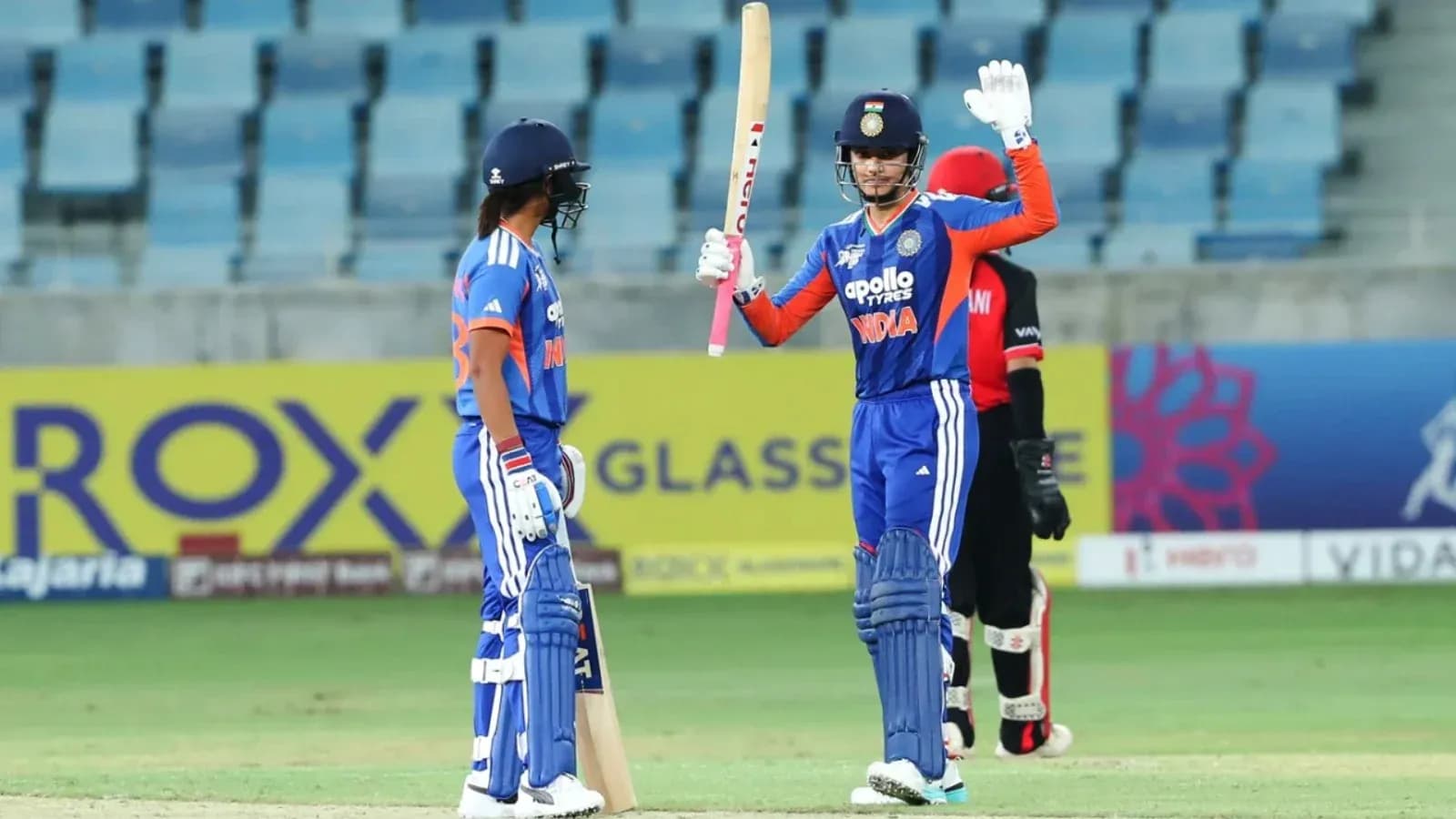
At the Dubai International Stadium, under lights that have seen some serious batting over the years, Smriti Mandhana walked out, rewrote the record books, and walked off to a standing ovation. By the time she left, almost reluctantly, India had 193 on the board. Hong Kong never came close.
India won by 137 runs, the first side to book a place in the Women’s Asia Cup 2026 semifinals. The margin tells one story. Mandhana told another.
Mandhana’s night: records, range and ruthless control
India were sent in after Hong Kong captain Natasha Miles chose to bowl, hoping to “restrict them under 150.” That plan evaporated in the space of six overs.
Mandhana and Shafali Verma opened with a watchful first over, then tore into a rotating cast of bowlers. Once Mandhana picked out the unguarded leg side against Kary Chan and Maryam Bibi, the pattern was set. A slog sweep here, a drag over square leg there, the classical cover drive always lurking.
By the end of the powerplay, India were 60 without loss. Shafali had gone ballistic in the sixth over, taking Marina Lamplough for 4, 6, 4, 6 to rip the innings open. Mandhana, meanwhile, was still climbing through the gears.
The first landmark came quietly. She moved into the 40s, toyed with the field, then launched Iqra Sahar for a six to bring up a 50 that never looked in doubt. The next boundary pushed India to 100/1 after 11 overs and confirmed what Hong Kong already knew: the premier left-hander in the women’s game was in full command.
Then came the history.
In the 18th over, with Ruchitha Venkatesh under siege, Mandhana cleared the ropes three times in quick succession. The first six dragged her closer to Mithali Raj’s all-format record. The second took her past it. The third carried her beyond her own previous highest score in international cricket.
On a tricky surface that had already shown cracks and variable bounce in the third over, she made batting look absurdly simple. She went past Mithali to become the highest run-scorer in women’s international cricket across formats, and did it with a sequence of strokes that summed up her career: timing first, power when needed, complete authority.
She reached her century with a crisp cut for four off Lamplough, barely celebrating as the ball sped away. There was still work to do. India wanted a total that would bury Hong Kong.
Harmanpreet Kaur arrived to keep the tempo high, striking a boundary before falling for 10 off 9, caught by Joyleen Kaur in the deep in the 19th over. Richa Ghosh had earlier chipped in with a brisk cameo, including a boundary off Lamplough before holing out to the bowler.
The only jarring note in India’s innings came at the very end. In the final over, bowled by Alison Siu, a mix-up left Mandhana stranded. On 124, she turned, hesitated, and suddenly the record-breaking epic ended in an anti-climactic run-out. No flourish, no lap of honour. Just a rueful walk back and a scoreboard that read 193/5.
The job, though, was done.
Hong Kong’s chase never leaves first gear
To chase 194, Hong Kong needed a powerplay to match India’s. They never got close.
Kranti Gaud opened with a miserly first over, conceding just a single to Miles. Nandni Sharma then struck in the second, cleaning up Mariko Hill for 0. From there, the innings never recovered.
Dots piled up. The third over from Kranti was a maiden, Yasmin Daswani repeatedly beaten as she tried to improvise. Nandni followed with another tight set, the ball hitting the stumps on her follow-through at one point, a small reminder of how frantically Hong Kong were scrambling.
After five overs, Hong Kong were 8/1. After six, 16/1. The required rate soared past 10, then 13. India’s spinners simply squeezed.
Daswani tried to break free against Deepti Sharma and picked out Bharti Fulmali for 11 off 23. Miles, who had battled to 15 off 27, feathered a cut behind off Prema Rawat. Kary Chan lasted six balls before she, too, holed out to Shafali in the deep.
Hong Kong’s first boundary after the powerplay did not arrive until the 11th over, when Lamplough finally cashed in on a short ball from Kranti. By then, the chase was already a formality.
Lamplough did offer brief resistance, striking consecutive boundaries off Shree Charani and later clearing long-on to momentarily lift the mood in the Hong Kong dugout. But every small surge ran straight into another Indian intervention.
Maryam Bibi tried to hit her way out of trouble and picked out Shafali off Nandni for 7. Lamplough, having moved to 14 off 15, was undone by turn from Charani and a sharp diving catch from Nandni.
From 50/4 after 13 overs, the slide turned into a collapse.
Deepti’s milestone and the final crumble
The pressure finally told on Hong Kong’s lower order, and Deepti Sharma chose this moment to etch her own line into the record books.
First, she knocked back Alison Siu’s stumps for 1. Two balls later, she drew an edge from Iqra Sahar, Richa Ghosh doing the rest behind the stumps. With that wicket, Deepti became the highest wicket-taker in women’s T20I history, a milestone that fitted seamlessly into a night dominated by Indian records.
Hong Kong, already out of the contest, now looked simply to bat out the overs. India refused to loosen their grip.
Joyleen Kaur’s brief stay ended in a run-out, Smriti Mandhana and Richa Ghosh combining to whip off the bails as Hong Kong “fell like a house of cards,” the description from the live commentary barely exaggerating the scene. Finally, Shanzeen Shahzad’s trailing leg hung in the air for a fraction too long, Richa gathered cleanly, and the third umpire confirmed what everyone in the ground already knew: it was over.
Hong Kong were bundled out well short of their target. India had won by 137 runs, a demolition that underlined the gulf in class and confidence.
Mandhana left Dubai with a new world record, Deepti with another crown in T20I bowling, and India with a place in the semifinals secured.
If this is how they play on a “tricky” pitch they weren’t sure about, how much more damage can this side do when the stakes rise and the surfaces get truer?