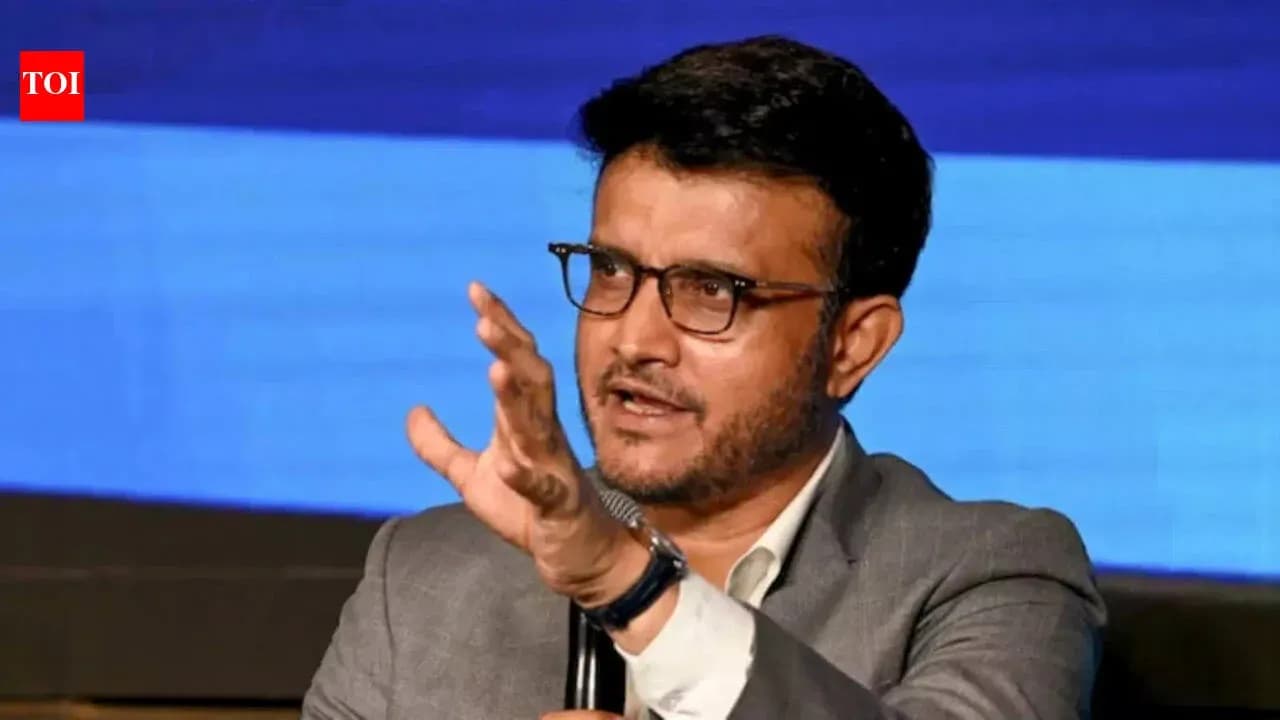
NEW DELHI: Deep Dasgupta still remembers the sound of it. The barbs, the sniggers, the needling from opposition fielders that once used to swirl around an Indian batting line-up conditioned to swallow the insults and let the scoreboard answer.
Then Sourav Ganguly took over. And the tone of Indian cricket changed.
The former India wicketkeeper-batter, who played eight Tests and five ODIs, has traced that cultural shift back to the left-hander from Kolkata who walked into every contest with a simple, disarming belief: “I am the king.” Over time, that attitude stopped being just Ganguly’s. It seeped into the dressing room.
Under Ganguly, India stopped looking away
Dasgupta, speaking on The Great Indian Cricket Show on Doordarshan, drew a sharp contrast between the India he first toured with and the one that went back to Australia in 2003-04.
Earlier, he said, the team treated sledging as a kind of twisted fuel. They would absorb the anger, bottle it up, and try to respond only with runs and wickets. Confrontation was rare, almost frowned upon.
“Under Ganguly, if someone sledged, we started to give it back,” Dasgupta recalled. The mindset shifted from quiet endurance to open defiance. “Rather than saying, ‘I will channel it’, while we used to channel it, we would give it back as well.”
That change was no accident. Ganguly’s nickname in domestic circles was “Maharaj”. The regal streak wasn’t just a joke; it defined how he carried himself in the middle. He strutted to the toss, glared from the balcony, and made it clear that India would no longer accept a secondary role in world cricket.
“So, he’s always had that idea that ‘I am the king.’ And it started reflecting on the team as well,” Dasgupta said.
Australia tours: from internal fire to visible edge
For Dasgupta, the clearest evidence lay in the gap between his first and last tours of Australia. The venues were the same. The opponents were the same. The body language was not.
“Now, while we were still doing that, we were expressing it as well,” he said. The inner fire remained, but the lid came off. “I think between my first tour and my last tour in Australia in 2003, you could see that change. Earlier, it was controlled and internal. But by the time we came to 2003, if someone said something, we would give it back.”
This was the India that stared down quicks, matched word for word at slip, and refused to retreat into silence. It was still a team that drew strength from provocation, but no longer felt obliged to suffer it in silence.
Ganguly’s numbers – and the statement wins
The attitude shift under Ganguly did not exist in a vacuum. It ran alongside a record that underlined his impact as captain.
He led India in 196 international matches, winning 97, losing 79 and drawing 15. In Tests, he captained in 49 games, with 21 wins, 13 defeats and 15 draws.
Those bare numbers are laced with some of Indian cricket’s defining modern moments: the 2001 Border-Gavaskar Trophy triumph, built on that epic comeback against Australia; the emphatic Test win at Leeds in 2002; and the gritty victory in Adelaide in 2003, another statement performance overseas.
In one-day cricket, his India reached the 2003 World Cup final, a campaign that re-established the side as a major force on the global stage. His team also pulled off the unforgettable NatWest Trophy win at Lord’s, capped by Ganguly’s shirt-waving celebration on the balcony, and shared the 2002 Champions Trophy with Sri Lanka after the final was washed out.
Those results did more than fill a résumé. They gave weight to the snarl, legitimacy to the glare. When India answered back, it did so as a team that could win in Leeds, Adelaide and at World Cups, not just at home.
For Dasgupta and many of his generation, that was the real legacy of Ganguly’s captaincy: a side that no longer just endured the world’s best, but looked them in the eye and spoke their language.