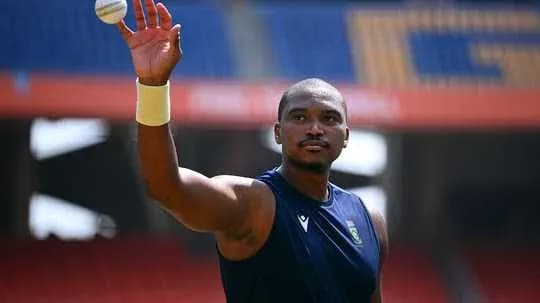
South Africa’s fast-bowling crisis has claimed another victim. Lungi Ngidi has limped into an exclusive, unwanted club – a growing list of injured Proteas quicks, most of them felled by the same fragile strip of muscle.
Cricket South Africa confirmed on Friday that Ngidi has been ruled out of the ODI series against Australia, which starts at Kingsmead on Thursday. The diagnosis is depressingly familiar: hamstring trouble, the same fate that has already sidelined Kagiso Rabada, Ottneil Baartman and Lutho Sipamla. Only Nandré Burger, battling a recurring back problem, has broken the pattern.
It raises the obvious question. Why all the broken hamstrings at once?
Shuaib Manjra, CSA’s former chief medical officer and national men’s team doctor, doesn’t flinch at the trend. To him, this is sport’s old story playing out on cue.
“It’s not surprising, because if you look at any sport there are two peaks in hamstring injuries — the beginning of the season and the end of the season,” Manjra told Cricbuzz. Early in the campaign, he explained, players jump from relative rest into high-intensity competition. The workload spikes, the muscles aren’t fully conditioned, and something gives. Late in the season, it’s the opposite problem: fatigue erodes resilience, and the strain tells.
Ngidi’s injury fits the calendar. He pulled up in Centurion last Friday, during the opening round of first-class fixtures, turning out for the Titans against the Dolphins. CSA have stopped short of putting a date on his return, just as they have with Rabada. Both quicks are now racing a clock that matters far more than a handful of September ODIs.
Because this isn’t really about a white-ball series.
The real prize sits in October: a Test campaign against Australia starting in Durban on the 9th, with South Africa defending the World Test Championship title they secured at Lord’s in June last year. For a team whose only senior global trophy lives in the longest format, every over in that series will carry more weight than anything bowled in the upcoming ODIs.
That is why a five-second clip of Rabada gently running in and bowling, posted to his social media accounts on Wednesday, landed like a small jolt of electricity among South African fans. The pace was reduced, the run-up short, but the sight of him back at the crease offered something the medical bulletins haven’t: hope.
There is another layer to the concern. Many of these bowlers haven’t just been injured; they’ve been inactive. Rabada hasn’t played any form of cricket since May. Burger last turned out in June. Sipamla only bowled again last month after being out since July. Baartman also hadn’t been on the park since July before his latest setback.
For fast bowlers, that kind of gap isn’t fixed by a quick net. They need overs, rhythm, a gradual climb in workload. “Getting the overs in the legs,” as the old phrase goes. And when the hamstring has already failed once, the climb becomes a tightrope.
“The other risk for a hamstring injury is a previous injury,” Manjra said. “You’re more likely to pick up another injury if you go back too early. Doctors have a saying that the highest risk of an injury is a previous unrehabilitated injury. So we have to ensure that the player is fully rehabilitated, otherwise they are vulnerable.”
Ngidi’s situation complicates the narrative. Unlike some of his fellow quicks, he hasn’t been short of cricket. Between August 27 and September 6, he played six ETPL games for Glasgow Cosmic, sending down 120 of a possible 144 deliveries. That’s a solid but not outrageous workload. On paper, it looks like the kind of preparation a professional fast bowler should welcome.
Yet the injury arrived anyway.
That opens a different argument. Should Ngidi have been in franchise cricket at all so close to a major home season, one stacked with eight Tests? Was he sharpening his tools or spending his fitness in the wrong place at the wrong time?
The counter is blunt and real-world. Would those questioning his schedule be willing to replace the income he would have lost by skipping the ETPL? Ngidi is not a hobbyist. He earns his living with that right arm. For modern players, the calendar is a marketplace as much as a training plan.
In the short term, South Africa have had to reshuffle. Nqobani Mokoena comes into the ODI squad in Ngidi’s place. Gerald Coetzee fills the gap left by Rabada, while Duan Jansen steps in for Baartman. Sipamla and Burger weren’t in the original ODI group, but if they had been fit, the injuries ahead of them would likely have dragged them into the frame.
Instead, the one-day attack to face Australia will lean on Marco Jansen’s left-arm threat, with Corbin Bosch and teenager Kwena Maphaka also in the mix. It’s a glimpse of the future, but not one the selectors wanted to fast-track quite this way.
The real judgment on this period won’t come in the ODIs, though. It will arrive when Australia walk out in Durban and South Africa look down at their team sheet. How many of their thoroughbreds will be fit enough to take the new ball then?