The scars of Ireland and England are still showing. At least, that’s how Kris Srikkanth sees it.
India’s decision to roll out a full-strength squad for the three-match T20I series against Afghanistan in New Delhi has left the former opener and ex-selector distinctly unimpressed. For him, this is not a show of intent. It’s a sign of insecurity.
“They are going all guns blazing, but this is a mistake,” Srikkanth said on his YouTube channel, calling the move a missed chance to blood more youngsters in familiar home conditions. “It’s against teams like Afghanistan that you should try out youngsters. Instead, you’ve picked a full-strength squad out of fear.”
Ireland, England Defeats Loom Large
The backdrop matters. India were beaten 0-2 in a T20I series in Ireland, then swept 0-4 by England in July. Those results, Srikkanth believes, have pushed the selectors into retreat rather than renewal.
“After the series losses in Ireland and England, the selectors have decided not to take a chance and picked a full-strength squad for Afghanistan,” he said, suggesting the defeats have driven a conservative, almost panicked response. He went further, branding it “a desperation move after the Ireland and England losses,” pointing out that the squad is “almost the same as the one they picked for England.”
Instead of treating Afghanistan at home as a controlled environment to stretch the bench, India have circled back to their tried-and-tested core.
Strong Squad, Softer Opposition
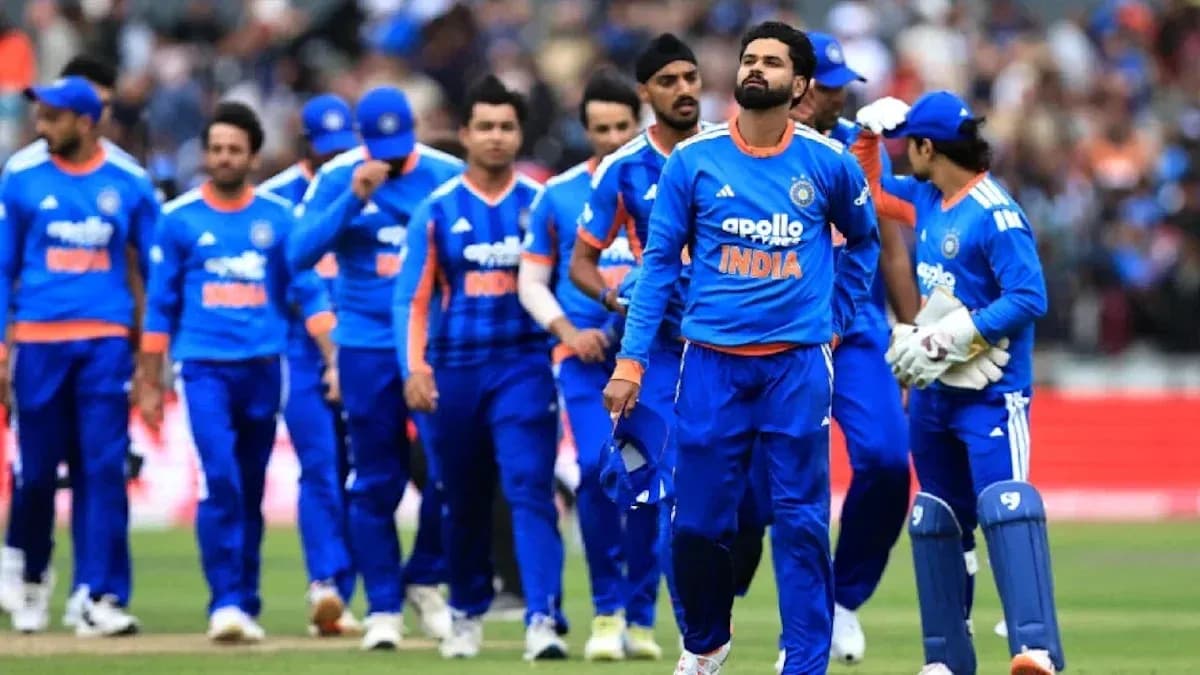
The 15-member squad for the Afghanistan series, to be played at the Arun Jaitley Stadium on September 13, 15 and 17, carries a distinctly senior feel.
Shreyas Iyer continues as captain, with Tilak Varma as his deputy. Jasprit Bumrah, Sanju Samson, Ishan Kishan, Axar Patel, Arshdeep Singh, Shivam Dube and Varun Chakaravarthy are all in, bringing experience and familiarity back into the dressing room.
There is at least one nod to the future. Fifteen-year-old Vaibhav Sooryavanshi, who impressed during the Zimbabwe series, keeps his place. But for Srikkanth, one teenager in a largely established group does not amount to a genuine investment in youth.
His central complaint is about opportunity cost. Three T20Is at home, against opposition India know well, offered a rare stretch to test the next layer of talent. Instead, the selectors have doubled down on the same names who carried the burden in England.
Fitness Questions Cloud the Returnees
The selection has raised another red flag for Srikkanth: match fitness, or the lack of evidence of it.
Bumrah’s return is subject to fitness clearance, as are Nitish Kumar Reddy, Washington Sundar and Harshit Rana. All four have been named with an asterisk, their availability dependent on medical green lights before the series begins. Hardik Pandya, meanwhile, misses out after another setback during his rehabilitation.
Srikkanth is not convinced by the process.
“These four have not proved match-fitness. So on what basis are they subject to fitness?” he asked, taking aim at the reliance on clearance from the Bengaluru CoE. “Just because you prove your fitness at the Bengaluru CoE, are you fit? That’s how Harshit Rana went to England, and then what happened to him there? So match fitness is important.”
His criticism cuts at a familiar tension in Indian cricket: the gap between controlled training environments and the demands of international cricket. For him, ticking boxes at a centre of excellence is not the same as proving readiness in competitive games.
Familiar Names, Familiar Comfort Zone
Strip away the asterisks and the message from the selectors is clear: steady the ship with experience.
India’s squad for the Afghanistan T20Is reads:
Shreyas Iyer (C), Abhishek Sharma, Vaibhav Sooryavanshi, Sanju Samson (WK), Ishan Kishan (WK), Tilak Varma (VC), Shivam Dube, Nitish Kumar Reddy*, Axar Patel, Washington Sundar*, Varun Chakaravarthy, Ravi Bishnoi, Jasprit Bumrah*, Arshdeep Singh, Harshit Rana*
(*Subject to fitness clearance)
It is a group built to win now, not to experiment. That is exactly what troubles Srikkanth. After using the Zimbabwe tour to test players outside the regular setup, the selectors have swung sharply back to the comfort of known quantities at the first sign of turbulence.
For a board and a team that often speak of long-term planning and depth-building, Afghanistan at home looked like the perfect laboratory. Instead, it has become a damage-control exercise.
When the first ball is bowled at the Arun Jaitley Stadium, the scoreboard will only care about runs and wickets. But the real question for India lies beyond this series: are they building a squad for the next phase, or simply reaching for the same names every time the pressure rises?