Steve Smith still hears it.
Not the boos from English crowds. Not the barbs from pundits. The click and crack of cameras. The sound that takes him straight back to Johannesburg airport in March 2018, to a walk through chaos that changed his life and Australian cricket.
As Australia prepare for their first Test series in South Africa since the ‘sandpapergate’ scandal, Smith admits the scars have not fully healed.
“I’m not a big fan of cameras, I get anxious around cameras,” he told News Corp. “That was a traumatic experience in my life and when I hear the flash of a camera it makes me revisit that, in a way.”
Haunted by Johannesburg
The series in South Africa is remembered less for the cricket and more for one grainy shot: Cameron Bancroft, yellow sandpaper in hand, caught trying to alter the condition of the ball during the third Test.
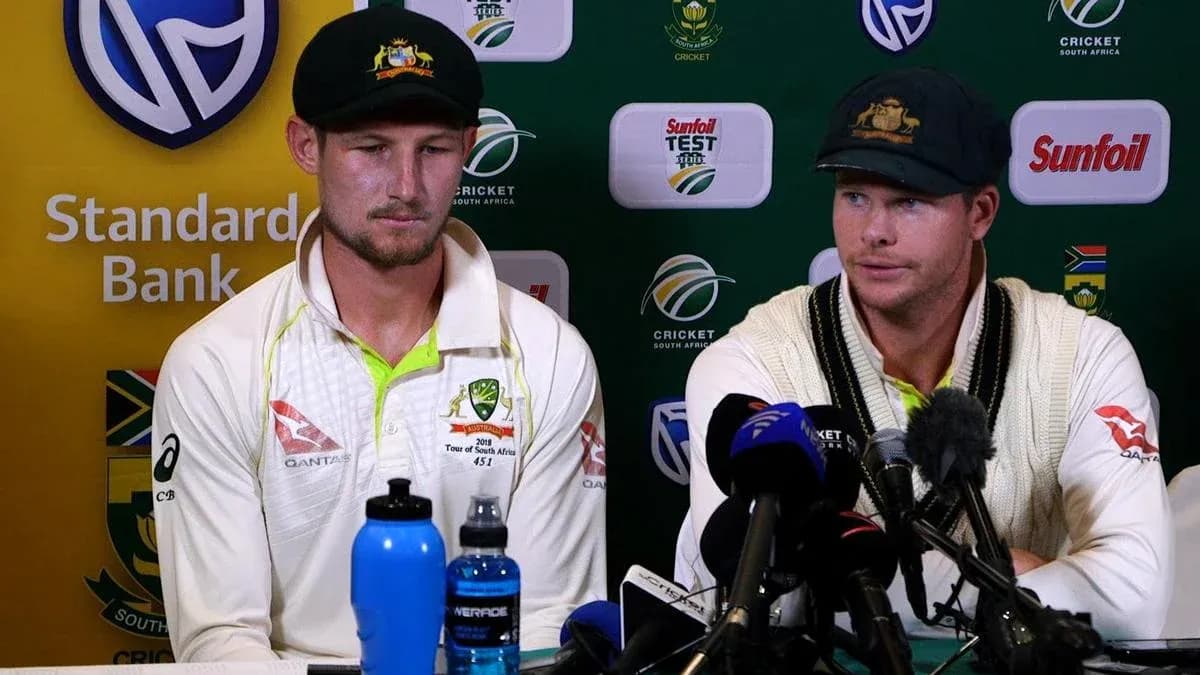
By the end of that day’s play, Bancroft had confessed. Smith, then Australia captain, admitted he knew of the plan. Within 24 hours, the fallout had begun to swallow them whole.
Smith, Bancroft and vice-captain David Warner were sent home before the final Test. The condemnation was swift and ferocious. Australia’s then prime minister Malcolm Turnbull said the affair “bitterly disappointed the whole nation”. The team’s leadership was shredded. So was Smith’s public image.
He still sees those hours in brutal flashes.
“The 24-48 hours after being told by James Sutherland that I was getting banned for a year, going through the airport in Johannesburg getting absolutely mobbed, and then flying back and doing that press conference... I still have little flashbacks here and there of it,” Smith said.
“I felt like I was kind of thrown to the wolves through [Johannesburg] airport. I didn’t have any support there at all.”
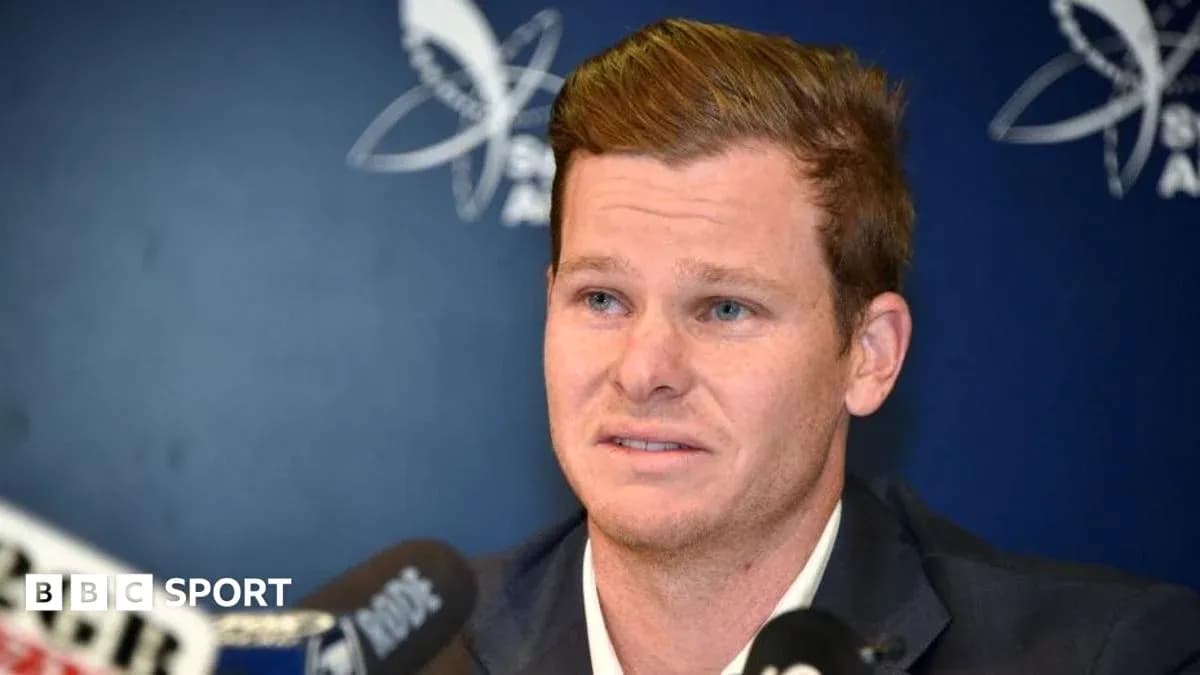
The vision of him breaking down in tears at Sydney airport, stripped of the captaincy and banned for a year by Cricket Australia, became one of the defining images of modern Australian sport. He was 28, the best batter in the world, and suddenly a symbol of national shame.
“The mental state I was in was not great,” he admitted. “That’s somewhere I’d like not to get to again.”
Erasing 2018, living with 2018
Smith has tried to push much of that year into a locked room in his mind.
“I’ve tried to kind of erase a lot of 2018 and what happened,” he said. “I can’t remember a lot about the series. I’ve tried to block most of it out of my memory bank.”
Yet the game will not let him forget. Nor will the cameras. Nor will the calendar.
Australia return to South Africa in October for a three-Test series, starting in Durban on 9 October. It is their first Test tour there since the scandal. For Smith, now 37, it is another step in a long, complicated journey back to something like normality.
He has already been back to South Africa once, for a one-day series in 2020. He has walked into hostile arenas on multiple Ashes tours to England, where the taunts have been relentless and inventive. He has learned to live with the noise.
“It’s something I’m kind of used to,” Smith said. “I’ve copped a lot at times away from home, at different venues across my career, and it’s something that I take in my own stride.
“I use it as motivation to try and go out and do well, and try and take a positive from it.”
From exile to elder statesman
If 2018 nearly broke him, 2019 rebuilt him as a cricketer.
After serving his 12-month ban, Smith returned to the Australia side and quickly reminded the world why he had been so highly regarded in the first place. His run-scoring in the 2019 Ashes in England bordered on the absurd, re-establishing him as one of the finest batters of his generation.
The leadership question lingered. Cricket Australia imposed a two-year leadership ban on Smith, wary of the optics of a rapid restoration. When that period expired, the conversation shifted. Could he ever be trusted with an official role again?
The answer came before the 2021-22 Ashes. Smith was named Test vice-captain and has since stepped in as captain when Pat Cummins has been unavailable. The man once banished as the face of a scandal now sits back at the heart of Australia’s leadership group.
He insists he has learned, and moved on, but the edges of that trauma remain sharp.
“It was certainly a difficult period, particularly the initial few days after,” he said. “That’s somewhere I’d like not to get to again, but I certainly learned from that and have been able to move forward with my life.”
Moving forward, though, does not mean forgetting. Not when every camera flash still drags him back to that walk through Johannesburg airport. Not when every return to South Africa carries echoes of sandpaper and shame.
The series in October will not be sold as a redemption tour. Australia have long since rebuilt their reputation, won a World Test Championship, lifted another World Cup. Smith has stacked up runs, centuries, match-winning innings.
Yet when he walks out in Durban, Cape Town, or Johannesburg again, the past will be there, just behind him, just out of shot. The question now is not whether he can outrun it.
It’s whether he even needs to anymore.