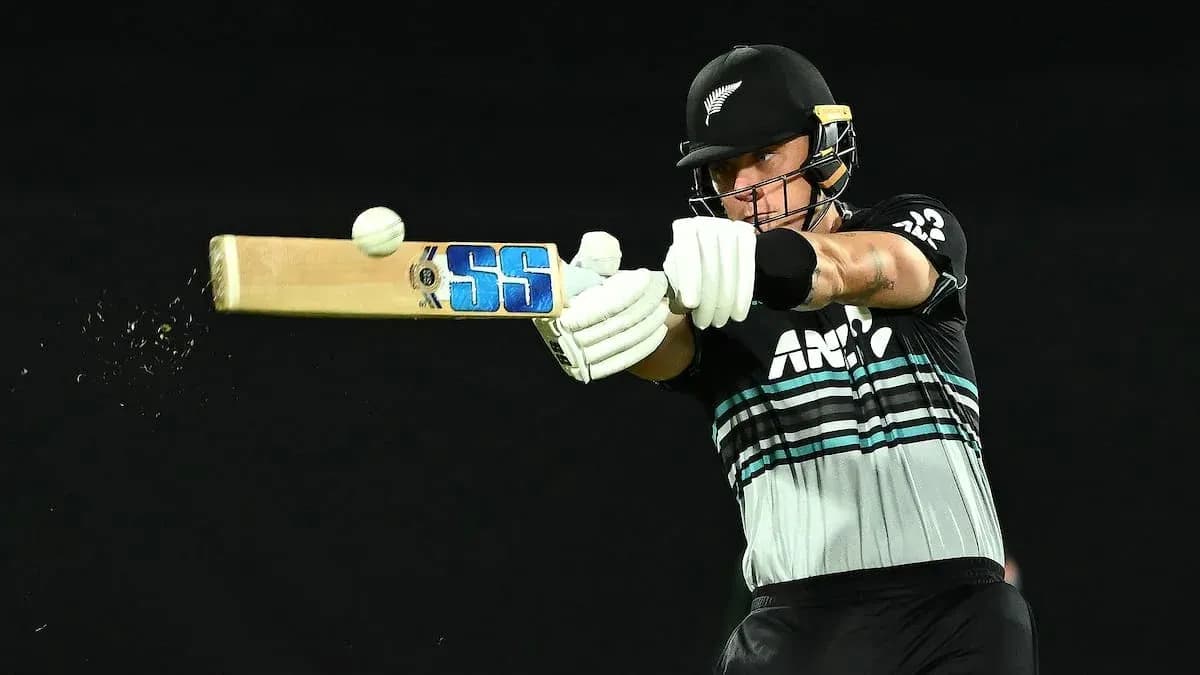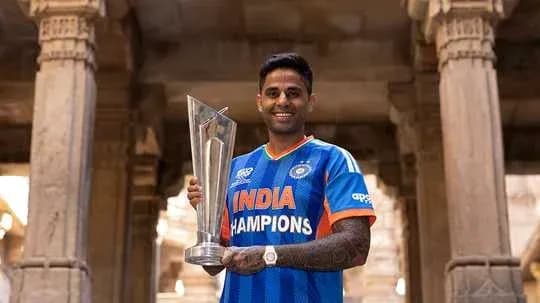
Suryakumar Yadav thought he was plotting India’s future. Instead, he discovered he wasn’t even part of its present.
The 35-year-old, who only months ago lifted the T20 World Cup trophy as India captain on home soil, has revealed he was stunned to learn he had been cut from the country’s T20I plans – despite already eyeing the 2028 Los Angeles Olympics and the next T20 World Cup later that year as his next big targets.
From world champion to cast aside
The call came two or three days before the squads for the Ireland and England tours were announced in June. No warning. No gentle build-up.
“They said, ‘I think it's time to move on,’” Suryakumar recalled on Aakash Chopra's Baith and Bol show on YouTube. He remembered looking at the team sheet, spotting the omission, and smiling.
It wasn’t bravado. It was his coping mechanism.
“Whenever I have been in pressure situations or when things aren't going in my favour, I've always smiled, relaxed,” he said. “I have looked back at the moments and been grateful.”
Gratitude, though, doesn’t erase shock. Suryakumar had assumed he was steering this team for at least two more years – through an Olympic campaign and a T20 World Cup defence – before the next phase of his career.
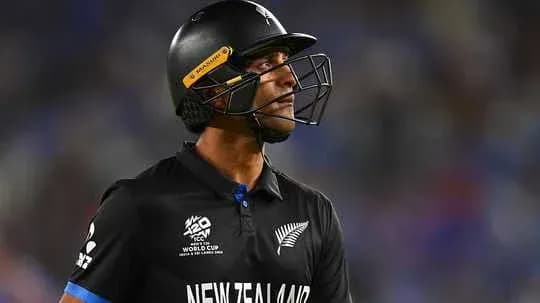
Instead, his last act in India colours remains the World Cup final against New Zealand in March, a night that should have cemented his reign. It quietly closed it.
A dominant reign cut short
The numbers underline how brutal the decision feels.
Since taking over the T20I captaincy full-time after Rohit Sharma’s retirement from the format following the 2024 T20 World Cup, Suryakumar oversaw a golden run. India won 42 of 50 completed T20Is under him. They became the first men’s side to defend the T20 World Cup and the first to win it at home.
Across that period, they did not lose a single T20I series for two years. Asia Cup? Won. World Cup? Won. A team humming, a captain entrenched.
Then came the reset.
The selectors turned to Shreyas Iyer as the new T20I captain, ending a tenure that, in results alone, left almost no room for complaint.
“The guy they've picked, I have played a lot of cricket with him,” Suryakumar said. “I know he's a good player, good human being, good captain also. So, I didn't resent the decision but was disappointed because we didn't lose a series for two years, won Asia Cup, T20 World Cup – you want the same thing to go forward. When everything is going well, then why the change?”
It’s the question that hangs over his exit.
Form, fallout and a harsh timing
For the selectors, the answer lay partly in form and partly in planning.
Ajit Agarkar, India’s chief selector, framed it as a difficult but necessary move.
“Obviously, it's a tough one... having just won the World Cup,” he said when announcing the decision to move on from Suryakumar. “But as it happens after most World Cups, we try and reassess what the best way forward is.
“Partly his own form, but also looking at the next two-year cycle or a little bit more than two years now till the next World Cup, we thought this was the best way forward.”
The numbers back up the concerns, if not the ruthlessness of the timing.
Leading into the World Cup, Suryakumar endured a lean patch with the bat. On the global stage itself, he still produced – 242 runs, the third-highest tally for India in the tournament, including a crucial unbeaten 84 against USA. It was not vintage Suryakumar, but it was far from a collapse.
The IPL told a different story. After a towering 717-run season in IPL 2025, he slipped to just 270 runs in 2026 for Mumbai Indians, a return that fell well below his established standards. For a selection panel plotting a new cycle, that decline became impossible to ignore.
Processing the shock
Even so, the abruptness of the call left him reeling.
“For one-and-a-half months I kept thinking, how can this happen? How is it possible? We just won the World Cup. Yes, IPL wasn't as good as how I wanted,” he said.
Friends and family tried to soften the blow, reminding him that this, too, is part of a sporting life. The noise fades, though, when the door closes.
“But once they leave, you are alone with your family. We were thinking, how is it possible?”
He chose not to argue with the selectors.
“I didn't react because it's not my forte,” he said. “Whatever call was taken, the person must have felt it was in the best interest of the team. You took the call, informed me, no harm done.”
That doesn’t mean it didn’t hurt. It means he refused to let the hurt define his response.
Not done yet
If the selectors have moved on, Suryakumar hasn’t. Not from the game, and not from the idea of an India comeback.
There is no retirement talk, no farewell tour, no soft landing.
“I am ready, I am still playing, will continue to do so,” he said. “Whenever you feel the time is right, things are right, call me.”
A captain who thought he had two more years to shape India’s white-ball future now waits on the outside, training, playing, hoping.
He once smiled his way through pressure at the crease. Now he does it in the face of the harshest reality in elite sport: sometimes, even as a world champion, the game moves on without you. The question is whether India’s selectors will ever feel the need to turn back.