India’s T20I calendar rolls on, but the questions refuse to go away. A three-match series against Afghanistan, starting September 13, offers another chance to chase something that has eluded them since their back-to-back T20 World Cup titles: consistency.
The wins have come in bursts. The doubts have lingered.
After their second straight world crown earlier this year, India, now led in the format by Shreyas Iyer, crashed to six defeats in six T20Is against Ireland and England. A 3-0 sweep of Zimbabwe steadied the mood, but not the narrative. This is still a side trying to work out what its best version looks like.
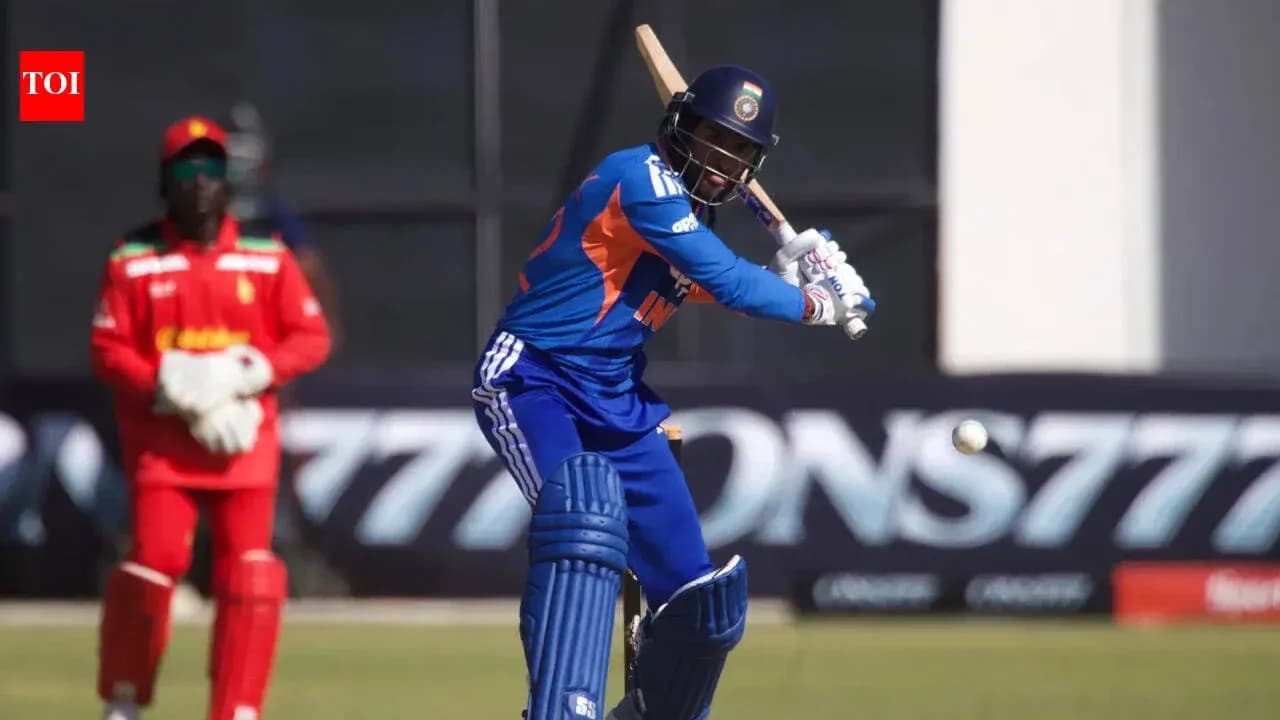
At the heart of that uncertainty sits Tilak Varma.
A vice-captain without a fixed address
Tilak carries the status of vice-captain. What he does not yet carry is a clearly defined role.
He has the numbers to demand attention: since the 2026 T20 World Cup, the left-hander has piled up 255 runs in 10 innings at a strike rate of 159.36, with three fifties. On paper, that reads like a young batter accelerating into his prime.
Look a little closer, and the story is more complicated.
One of those half-centuries came in the recent Zimbabwe series, a mismatch in terms of experience and depth. Another arrived in the fifth T20I against England, by which time India had already surrendered the series. The runs have sparkled in patches, but the overall pattern has been streaky rather than commanding.
Tilak’s tour of the UK underlined that. He endured a tough stretch there, struggling to stitch together innings of substance while the team around him faltered. The occasional big score has not yet erased the sense of inconsistency.
So where does a high-impact, left-handed stroke-maker, still ironing out his game, fit into a batting order already crowded with reputations?
AB de Villiers sounds the alarm on balance
AB de Villiers has seen enough T20 cricket, and enough T20 dressing rooms, to know when a side is wrestling with balance. Looking ahead to the Afghanistan series on his YouTube channel, the former South Africa great zeroed in on India’s top and middle order as a potential flashpoint.
“There will definitely be some selection issues with regard to the batters,” de Villiers said, listing out the options: Shreyas Iyer as captain, Ishan Kishan, Sanju Samson, Vaibhav Sooryavanshi, Abhishek Sharma, and then the all-rounders, with Tilak Varma right in that congested lane.
His question was blunt and telling: “Where will he bat?”
That is the crux of India’s current dilemma. This is not a squad short on talent. It is a squad overflowing with it, especially from Nos. 2 to 6. Each player brings a specific skillset — left-right combinations, powerplay aggression, spin-hitting, finishing ability, part-time bowling. But roles blur when everyone can, in theory, do a bit of everything.
For de Villiers, the danger is clear: pick the best names on paper, and you might still end up with the wrong team on the field.
Role clarity or more confusion?
The Afghanistan series now becomes a live experiment in role definition.
Shreyas Iyer is expected to anchor the top order, a stabilising presence amid the chaos of T20. Ishan Kishan and Sanju Samson are both natural top-three batters who like to dictate terms early. Abhishek Sharma offers left-handed power and an additional bowling option. Vaibhav Sooryavanshi adds another aggressive gear.
Somewhere in that mix, India must carve out a space where Tilak Varma’s game makes sense — not just for one match, but as part of a broader plan.
Is he the enforcer at No. 3, walking in early to attack? A flexible middle-order batter who targets spin between overs 7 and 15? A finisher trusted to close out tight chases? The numbers suggest he has the range to do any of those jobs on his day. The recent inconsistency suggests he needs one of them to be his job, not all of them at once.
De Villiers framed it as a question of balance, but also of identity. He acknowledged the strength of India’s squad and backed them to have enough firepower for Afghanistan. At the same time, he underlined that this is no soft launch for experimentation.
“Really, really strong squad, but the balance will be tricky to figure out,” he said, adding that while T20 cricket allows some room to “play around” with combinations, role clarity remains “incredibly important” — especially against what he called a dangerous team.
Afghanistan, with their fearless batting and high-class spin attack, are precisely the sort of side that punishes muddled thinking.
A dangerous opponent, a delicate phase
This series is more than just three games squeezed into a packed schedule. It is the next chapter in India’s post-World Cup T20I story.
Ireland and England exposed their fragility. Zimbabwe allowed them to breathe again. Afghanistan will test whether those lessons have actually sunk in.
Under Iyer, India are trying to build something more durable than a hot streak. That means accepting some short-term turbulence in selection, but it also demands conviction. Constant shuffling can quickly look like uncertainty rather than flexibility.
Tilak Varma sits at the intersection of promise and pressure. His strike rate since the World Cup screams modern T20 intent. His scatter of scores and the context around them whisper caution. India have handed him responsibility with the vice-captaincy. Now they must decide exactly what that responsibility looks like with bat in hand.
After Afghanistan, a historic T20I against Japan awaits, followed by the Asian Games 2026. The fixtures will keep coming. The scrutiny on India’s batting order will not ease.
The question is simple and unavoidable: will this be the stretch where Tilak Varma finds a permanent home in India’s T20I plans, or another stop on a tour of roles that never quite belonged to him?