The BCCI’s Annual General Meeting in Mumbai ended with more questions than answers around one of Indian cricket’s most influential positions. Ajit Agarkar’s future as chairman of selectors remains unresolved, the suspense deepened rather than cleared, even as the board quietly handed its office bearers the authority to decide the fate of the senior men’s selection committee.
No announcement. No formal endorsement. Just a deliberate pause at a time when the role has rarely been under more scrutiny.
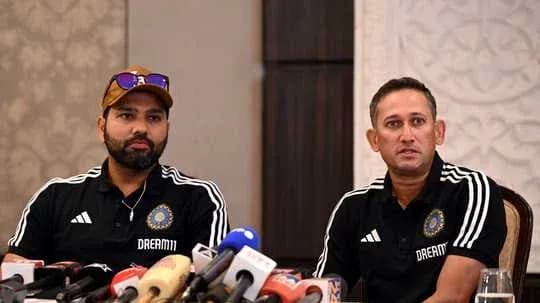
Agarkar’s absence from a recent high-level review meeting on India’s UK tour had already set tongues wagging. The board tried to brush it off, but the timing was awkward, coming so soon after the flashpoint involving Rohit Sharma ahead of the Lord’s ODI.
That episode, where selectors reportedly conveyed to the former captain that he was no longer in the team’s plans before the BCCI stepped in, has become the defining subplot of Agarkar’s tenure so far. It raised a blunt question: who really runs selection in Indian cricket?
For now, Agarkar is still officially in the chair. Appointed in July 2023, he is understood to be contracted until October 2026. Inside the selection room, the wheels are still turning.
Earlier this week, the panel met to pick squads for the West Indies ODIs, the Irani Cup and the India A sides. Those close to the process insist it was “business as usual”, no sign of a committee in limbo, no visible disruption to the routine of selection.
Yet the backdrop is impossible to ignore. If the BCCI does decide to move on from Agarkar, it cannot simply slot a new chairman into the role overnight. The board will have to go back to the start line: issue a public advertisement, shortlist candidates, conduct interviews, and only then make an appointment. That machinery takes time.
In that vacuum, one name has quietly surfaced. Former India wicketkeeper-batter Parthiv Patel is understood to be a potential contender should the BCCI opt for a change at the top. There is no formal move yet, no offer on the table, but his candidacy is being spoken of in the corridors that matter.
Junior Selection Puzzle Drags On
The uncertainty is not confined to the senior panel. The junior selection committee, crucial to India’s age-group and pathway cricket, is also in a holding pattern.
The BCCI advertised for five positions on August 24. Since then, silence. Interviews are yet to begin, and the expectation that a new committee would be unveiled soon after the AGM has quietly faded.
The latest word from inside the board is that the process will stretch towards the end of the month. Another delay, at a time when the pipeline feeding the senior team is more important than ever.
Ranchi Keeps Its Border-Gavaskar Test
Away from the selection intrigue, one issue was firmly put to bed. Ranchi will host a Test in next year’s Border Gavaskar Trophy, despite whispers that the venue might be replaced.
Saurabh Tiwary, secretary of the Jharkhand State Cricket Association (JSCA), moved quickly to kill the speculation.
"There is no change in the venue. If anybody has to write to the BCCI about it, it should be me and I have not written it," he told the media, leaving little room for doubt.
The marquee five-Test series will begin in Nagpur on January 21. Chennai, Guwahati, Ranchi and Ahmedabad will stage the remaining matches, in that order. For Ranchi, still building its Test-match identity, that confirmation matters.
BCCI Braces for Governance Battle
Inside the AGM hall, another conversation hinted at a longer, more complex contest: the National Sports Governance Act.
The Supreme Court has asked the BCCI to clarify its stance on the proposed legislation, a move that could force the board to formally define its position on how far government regulation can reach into cricket’s domain.
So far, the BCCI has been consistent. In the Odisha Cricket Association case and elsewhere, it has argued that cricket does not fall under the category of a “designated sport” under the Act. That line of defence may soon be tested again, this time under the direct gaze of the country’s highest court.
Between a chairman of selectors whose future hangs in the balance and a looming legal tussle over governance, Indian cricket finds itself at an intriguing crossroads. The squads will still be named, the series will still be played, the Border Gavaskar Trophy will still roll into Nagpur on schedule.
But who will be picking the teams by then—and under what framework of power—may define the next phase of the BCCI’s grip on the game.